
On 11 October 1896, a hurricane slammed the Outer Banks of North Carolina, and a schooner carrying nine people was forced aground in the perilous seas. In the howling winds, the captain sent out a distress flare, praying for rescue. His wife and three year old son were among those on board.
As the storm screamed around them, a group of brave rescuers arrived at the scene. This team, made up entirely of Black men, had to be on point. Their leader, Richard Etheridge, knew that, if they made the slightest error, their station would be shut down. This was the Pea Island Life-Saving Station.
Let’s go back in time a bit. Richard Etheridge had grown up as a slave in the Outer Banks, where he learned the ways of the sea. He could fish, pilot boats, and comb beaches for shipwrecks. During this time, he also learned to read and write.
When the Civil War broke out, he gained his freedom and served in the Union Army, participating in battles in North Carolina, Virginia, and Maryland. At the end of the war, he spent a year in Texas as a Buffalo Solider before returning to the Outer Banks to start a family in December 1866.
There, he made a living fishing and serving in the US Life-Saving Service at Oregon Inlet and Bodie Island. The US Life-Saving Service (along with the US Revenue Cutter Service) was a government organization that preceded the US Coast Guard.
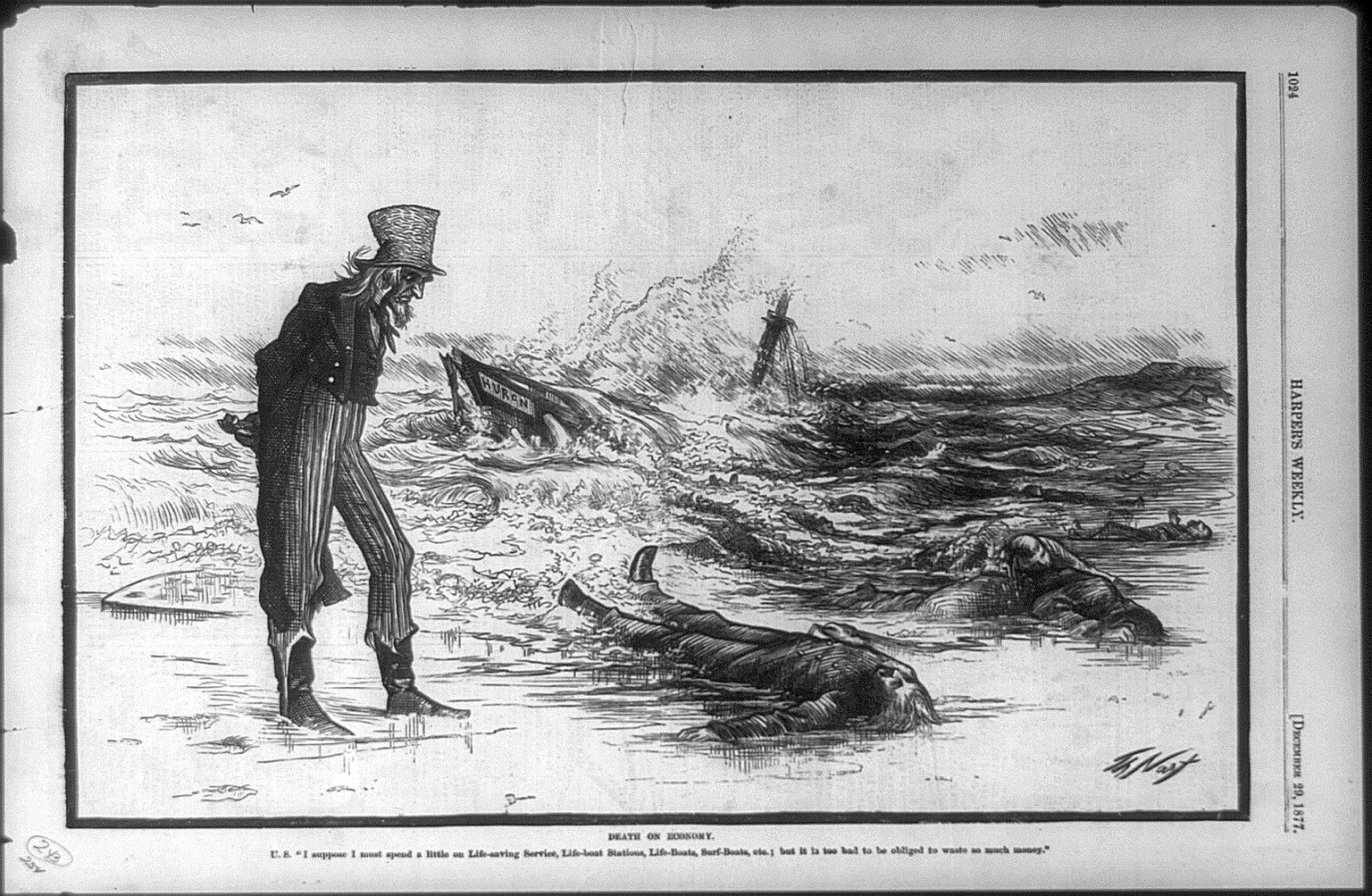
In the 1870s, the Life-Saving Service was having issues in the Outer Banks. The white station keepers were corrupt and incompetent, and they were bungling their rescues. In just two months, they had lost 188 lives and more than a half million dollars in property.
At Pea Island Life-Saving Station, the white keeper was notoriously inept, so he was fired and replaced by Richard Etheridge, who had developed a reputation as skilled surfman at Bodie Island. He was the first Black station keeper in the Life-Saving Service, and one of only eight Black people in the entire organization.
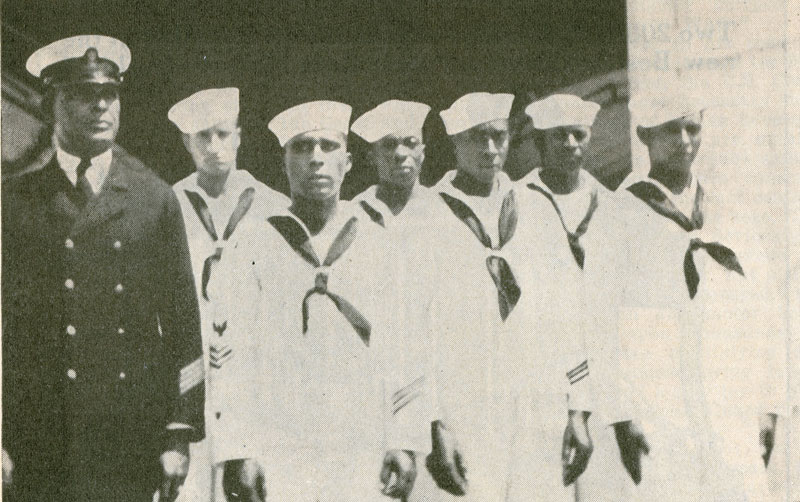
Richard Etheridge (far left) and his crew at Pea Island Life-Saving Station.
Despite his impressive resume, he faced racist pushback. All of the white men at Pea Island refused to serve under him, leaving him with an all Black crew. Then, five months after he became keeper, arsonists burned his station to the ground. Under the crushing pressure of white supremacy, Etheridge knew that even the tiniest error could get them all fired.
Fast forward to the hurricane in October 1896. South of the station, the schooner E.S. Newman had run aground, and nine people were trapped in the violent waves. One of the surfmen named Theodore Meekins thought he saw a distress signal in the darkness and fired a Coston flare in response. The schooner replied with a flare of her own.
When the rescuers arrived at the beach with their equipment, they realized that the waves were too strong for them to launch their surfboat or use a breeches buoy. Instead, they had to swim. Two surfmen volunteered to go, and they braved the heavy seas to run a line out to the schooner.
In total, they made ten trips out to the boat, rescuing all nine people from the wrecked schooner. Theodore Meekins, who was reputedly the best swimmer, is believed to have made all ten trips.
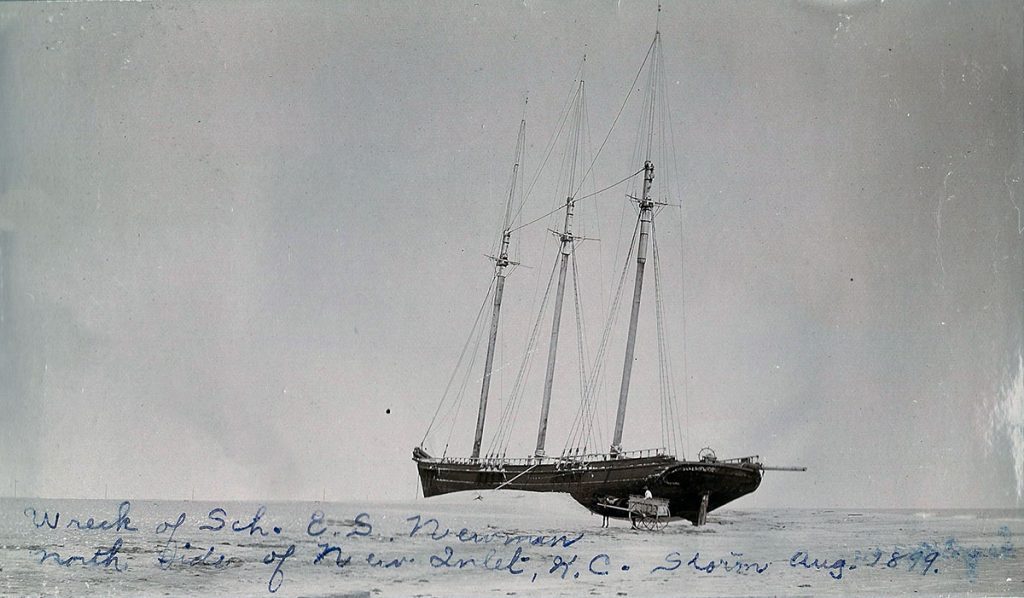
When the storm passed, the schooner’s captain spent the next few days searching the wreckage and found a piece of the vessel that contained its name. He donated it to the Pea Island crew, who then voted to give it to Theodore Meekins due to his discernment and bravery.
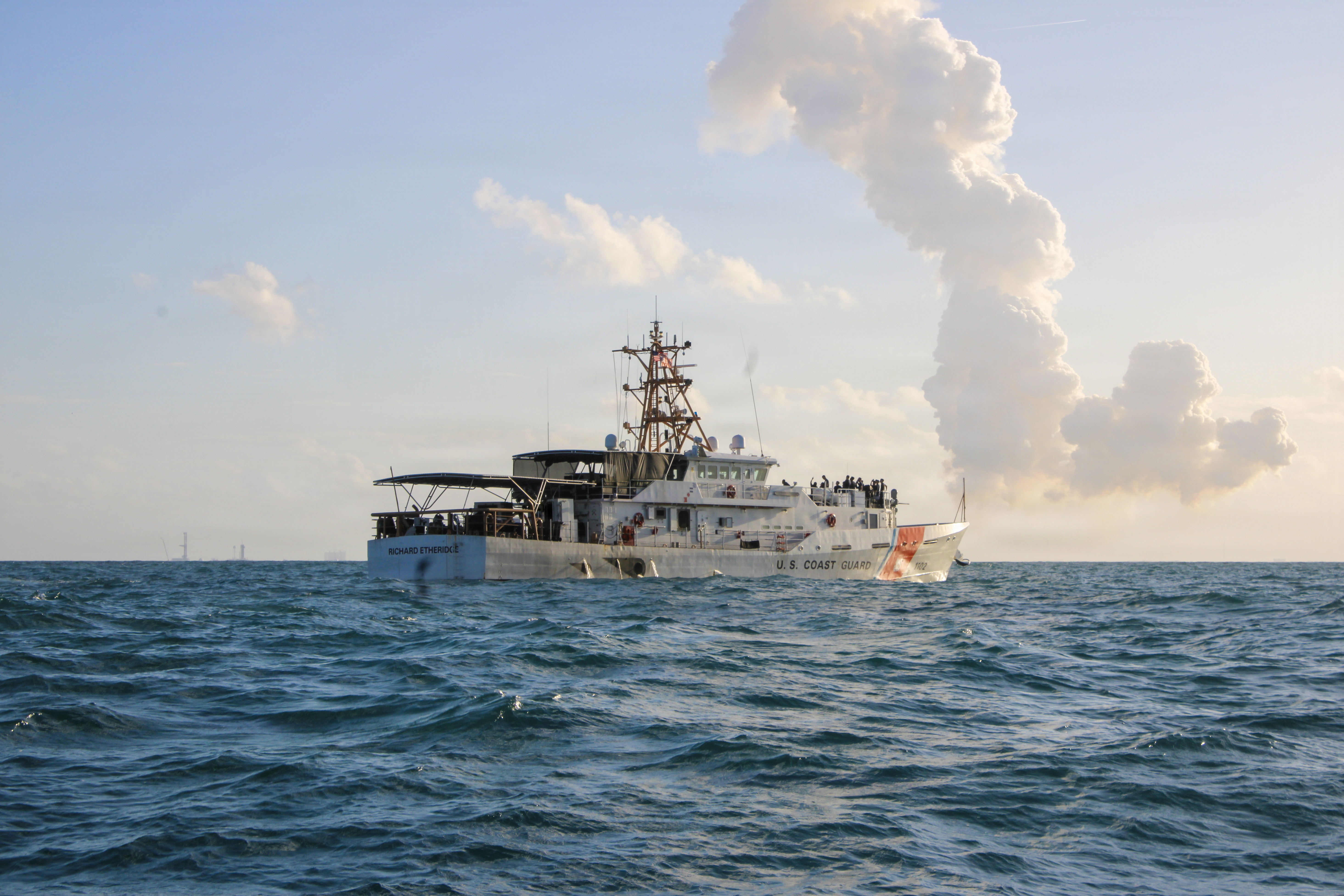
For the next 100 years, this small memento would be the only award the Pea Island crew would receive. It wasn’t until 1996 that the US Coast Guard awarded the Gold Life-Saving Medal to Richard Etheridge and his crew. Later on, in 2012, the US Coast Guard commissioned a cutter named after Richard Etheridge, over 100 years after his death.
These men never received the accolades they deserved during their lifetimes, but their stories should never be forgotten. History may be ugly at times, but the ugly truth is always better than the sanitized lies.
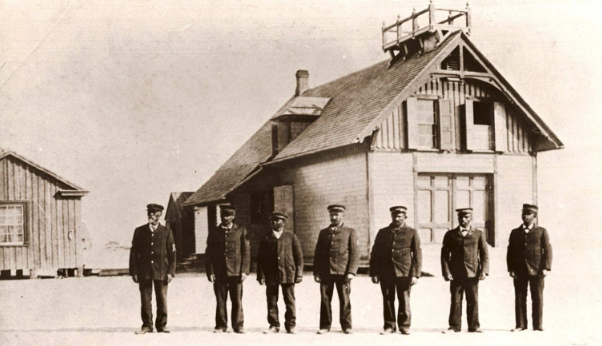
These are the names of the brave men who risked their lives saving the people aboard the E.S. Newman in October 1896:
- Richard Etheridge, Keeper
- Benjamin Bowser, Surfman
- Lewis Wescott, Surfman
- Dorman Pugh, Surfman
- Theodore Meekins, Surfman
- Stanley Wise, Surfman
- William Irving, Surfman


