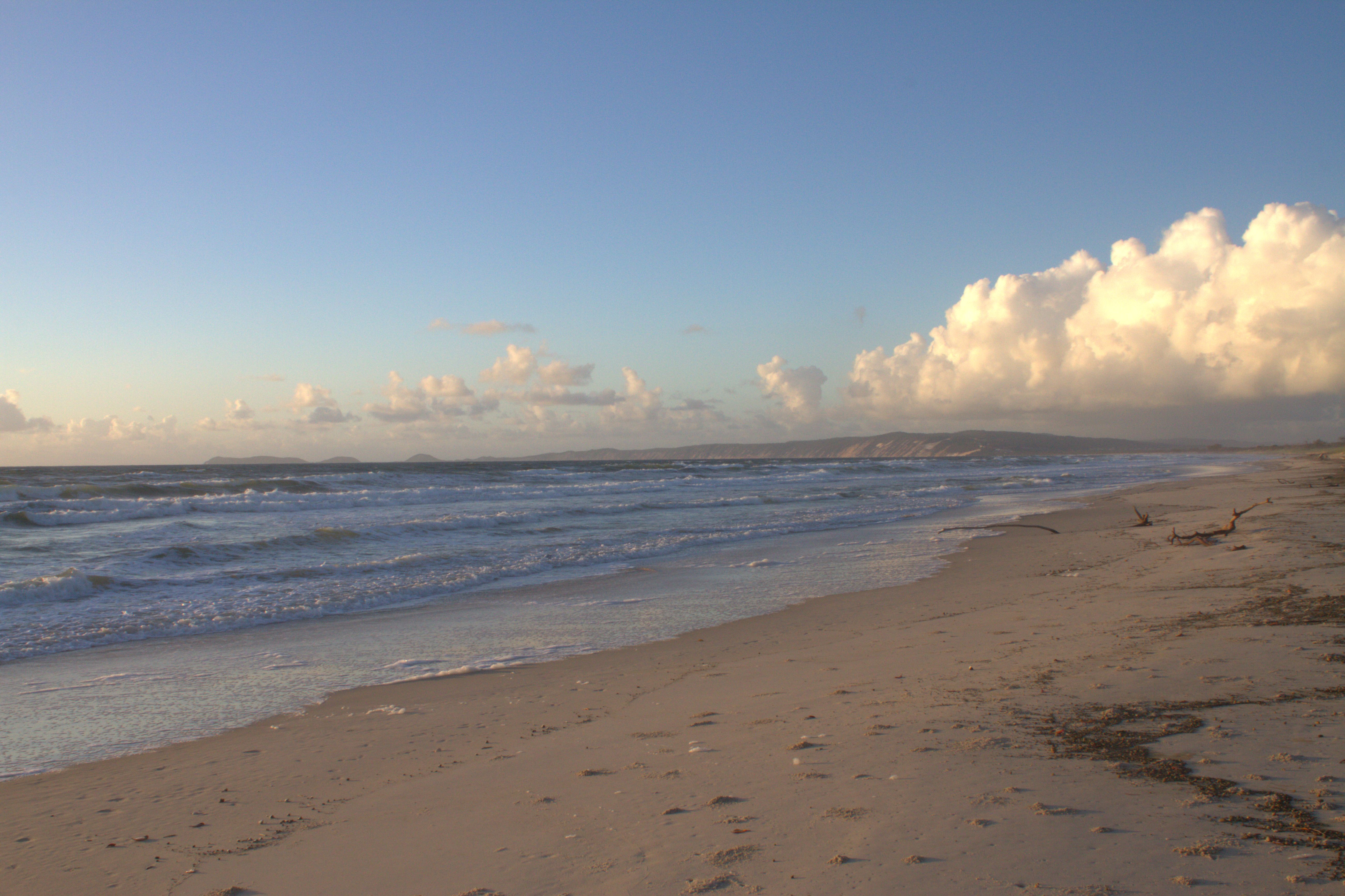
Years ago, I went a hike on an Australian beach that became one of the scariest experiences of my life. This beach, known as Rainbow Beach, appears and disappears with the tides. If you’re caught on this beach during a rising tide, you are effectively trapped between steep cliffs and and a rising sea, making it a dangerous place for unknowing tourists such as myself. At that time, I was a 23 year old American dude 2 weeks into a year long working holiday in Australia, and I had very little life experience or survival skills.
In March 2013, I took a road trip up the east coast of Australia, and Rainbow Beach, Queensland was one of my stops. On Wednesday, March 27, I camped out on a nearby peninsula called Inskip Point, which is one of two places where you can access K’gari, formerly known as Fraser Island. K’gari is the northern section of Great Sandy National Park and is the largest sand island in the world.
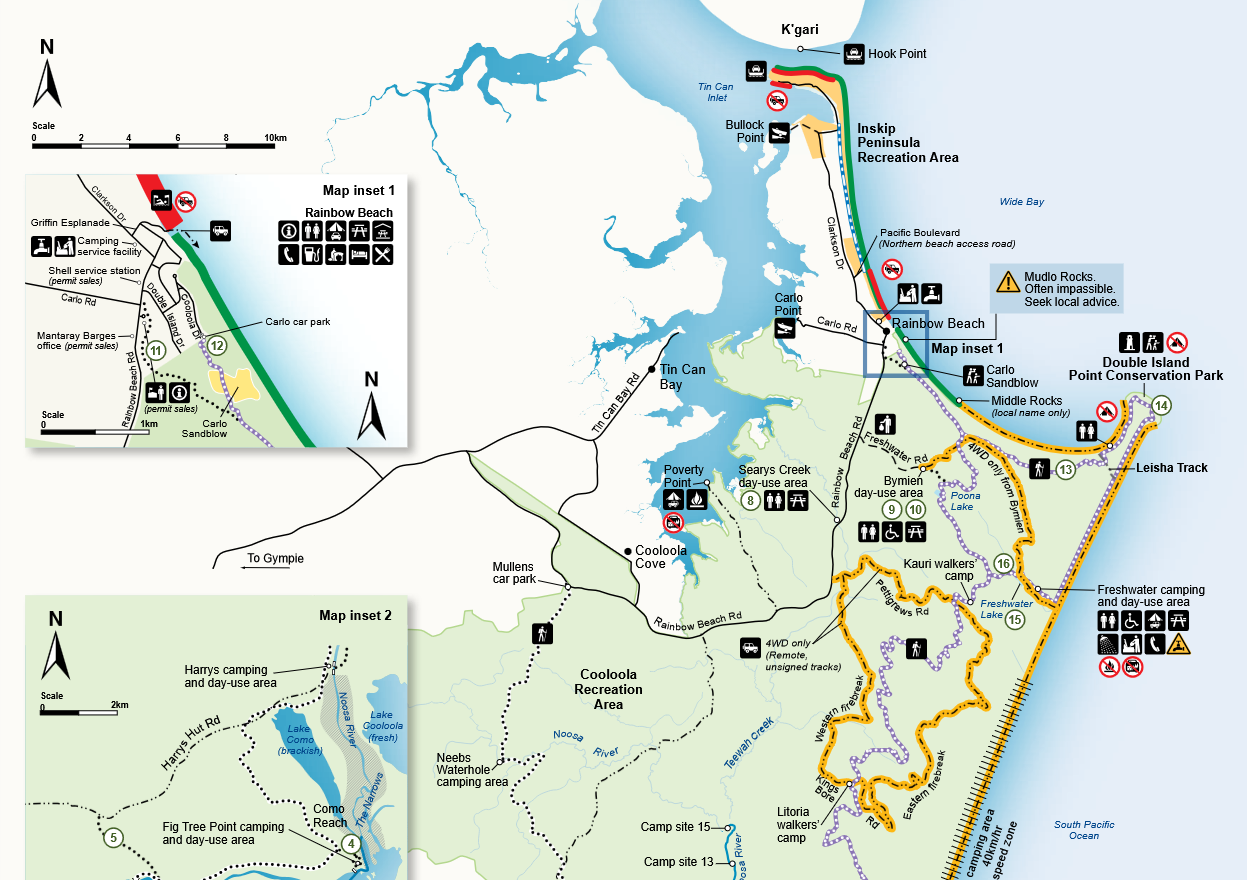
I had booked an island tour for Friday, so on Thursday, I had a whole day to kill. I drove to the nearby Rainbow Beach information center and asked about trails, where I could photograph wildlife. The staff suggested a trail through the Cooloola section of Great Sandy National Park to a lighthouse at Double Island Point. The trail to the lighthouse is 15.5 kilometers, so if you factor in the trip back, the total hike to and from the lighthouse is 31 kilometers.
The distance seemed serious, but I shrugged and decided to “give it a go”. After all, it was only noon, and I could probably tackle the trail in a few hours. I really wanted to photograph that lighthouse!
‘And, besides,’ I thought, ‘kilometers are a greater number than miles, so 31 kilometers can’t be as bad as they seem.’ Man, was I wrong about that.
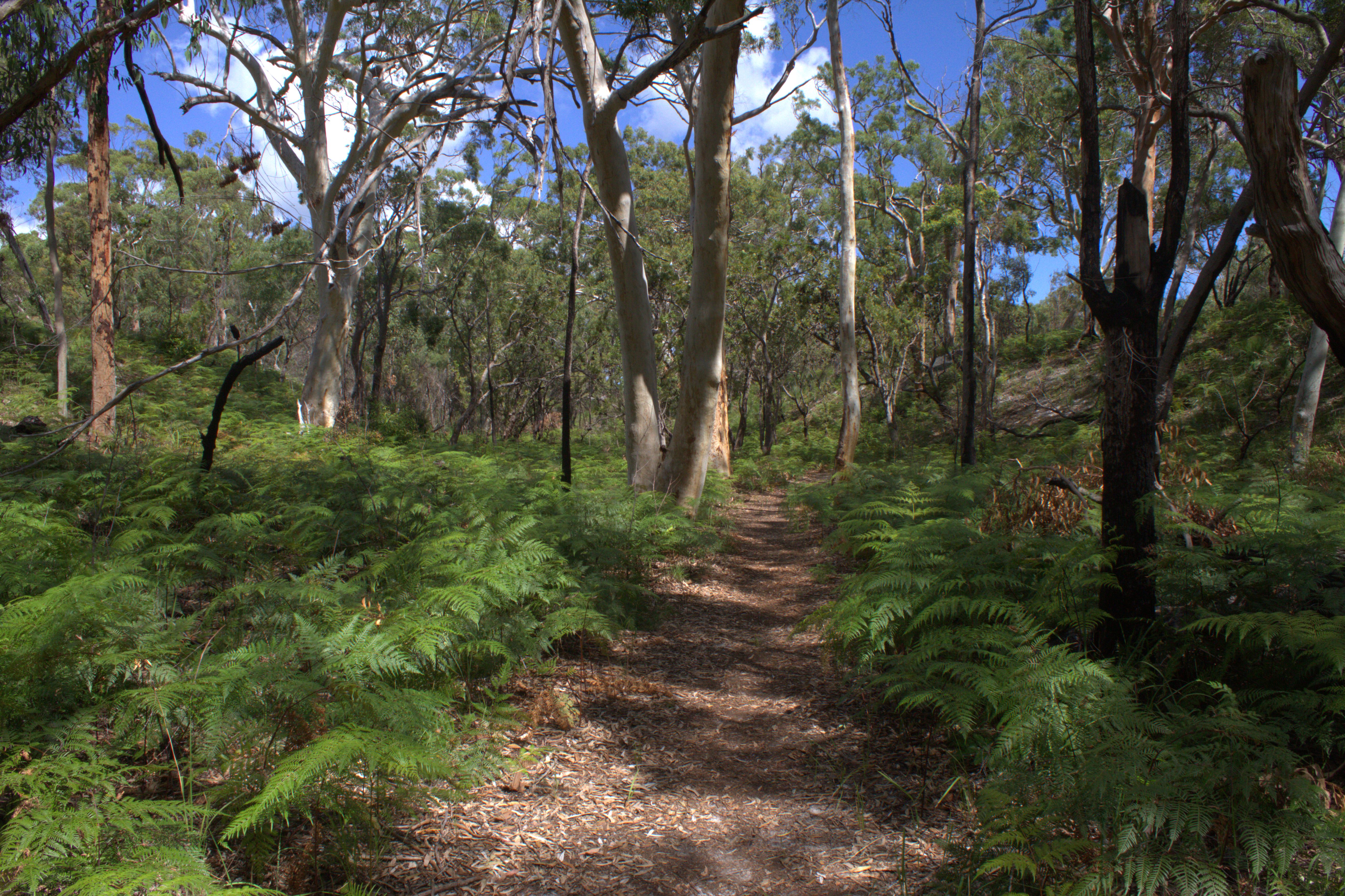
I stopped at my van and ate lunch. Then, I stuffed a couple bottles of water in my pack and left the Rainbow Beach information center. I plunged into the forest and was immediately reminded of home.
Yet, this was not the flat coastal plains of the eastern United States. The terrain was very hilly and had many steep drops and inclines. A few times, I had to grind my boots against the ground to keep myself from sliding down the trail. A leisurely hike became a tremendous chore, and with every step, I resented the forest. Hours passed, and I wasn’t even looking for wildlife anymore. I just wanted to get out of those horrid woods.
For the entire hike, I didn’t see anyone else on the forest trail. Nobody coming from the lighthouse. Nobody going to the lighthouse. I heard a couple faint voices some distance behind me, but we never crossed paths.
At this point, I decided to check my phone to see how far 31 kilometers was in miles. I converted the distance: 19 miles. Dang. Maybe this was a bad idea. But, despite my hesitation, I pressed forward.
The trees cast longer and longer shadows, and I was wondering when I would reach the beach. Every now-and-then, I thought I heard waves, but it was just the wind. How much longer was this trail? I had to get out of here before nightfall because I didn’t have a flashlight, and the trail would be much more dangerous without one.
You see, Australia is known for deadly snakes, and eastern Queensland is home to some of the worst: death adders, taipans, brown snakes, and tiger snakes. During the day, I would have been thrilled to find and photograph these awesome animals (from a safe distance). But not during the night. I’d be more likely to find one with my foot.
Finally, after much more walking, I emerged from the woods and made it to the beach. There, I found a restroom. I’d been rationing my water as best as I could, but I was hoping to acquire more at the restroom’s faucet (you gotta do what you’ve gotta do). However, I was greeted with this sign:
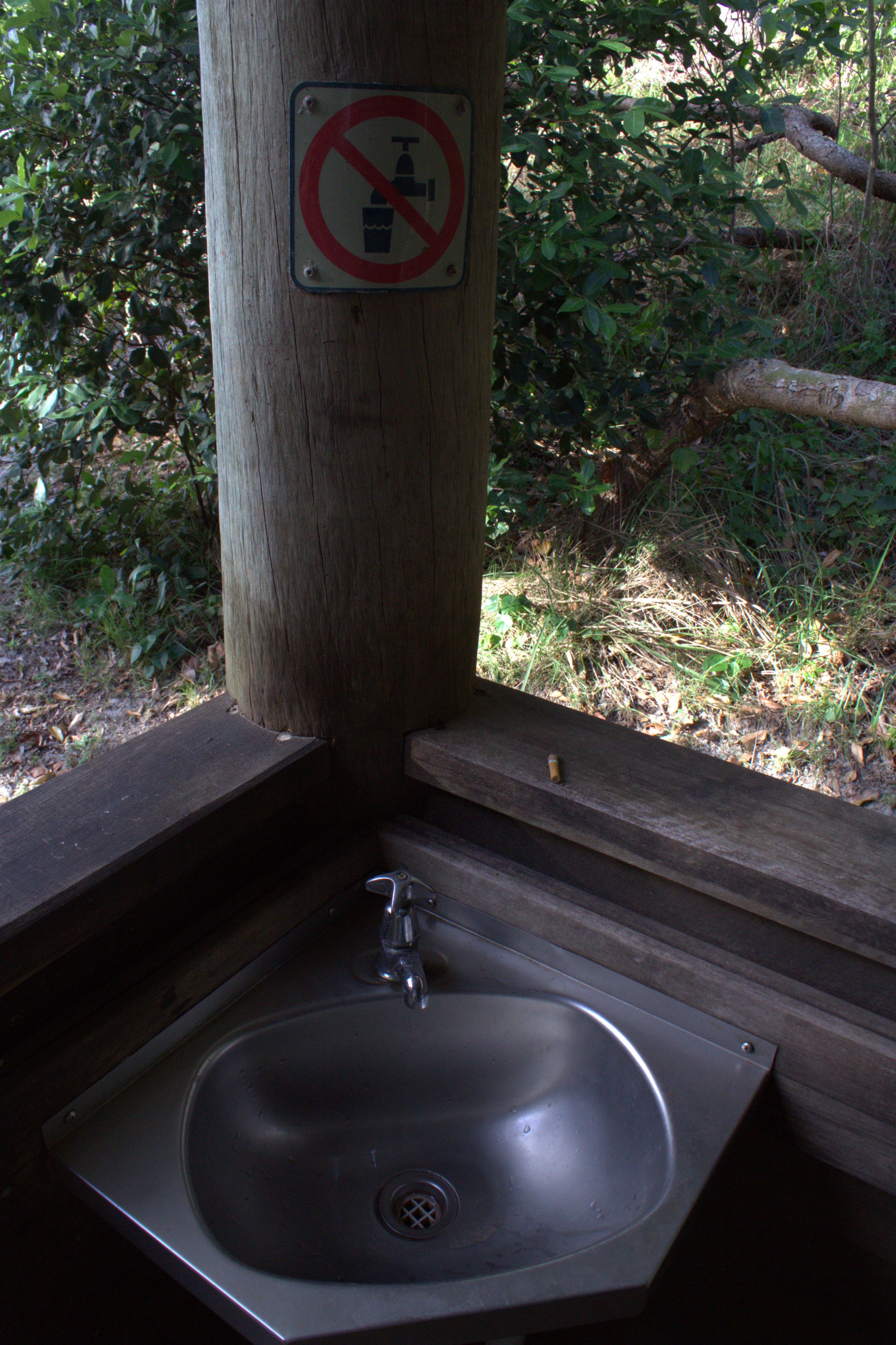
It was completely undrinkable. Well, no water for me.
‘I’ll be fine,’ I thought. ‘I’m at the beach now. The sun will be setting, and the walk will be easy.’ I glanced at a nearby marker that read “Double Island Point Lighthouse 3.4 kilometres —>”. ‘Nope. Forget that lighthouse. Not worth the effort.’
So, I turned left and stepped out onto the beach. I arrived just in time to see a lone Landcruiser, humming away from me in a hurry. Soon, it was out of sight.
I turned to the ocean–the Coral Sea. Out on the water, a crimson catamaran sailed along the coast, but it was quite far away. I doubt they noticed me, a small speck among the sand.
I stared at the sand. Here and there, a few footprints intermingled with tire tracks, but there were no people around. Not even one. Once again, I was alone.
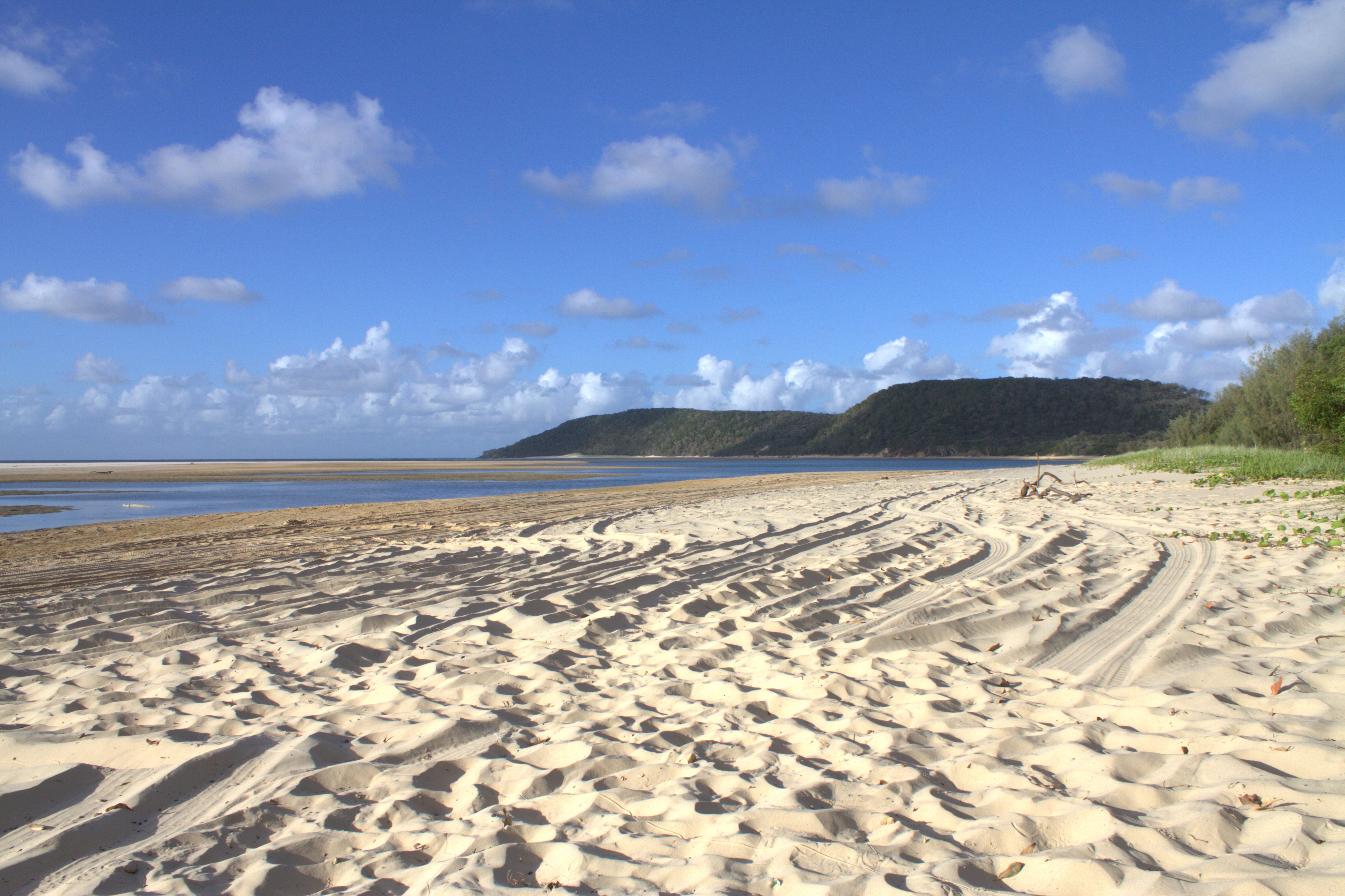
I mostly enjoy solitude, but this time, I had a terrible feeling. This solitude was not the peaceful, energizing kind. This solitude was ominous and unsettling, and it grated my soul.
Yet, I shrugged off the feeling and started up the beach. The surf was strong, and the waves were creeping rather close, but I didn’t care. I was just glad to be out of the forest.
‘Everything will be fine,’ I thought and chugged my last bottle of water.
I trudged along, following the footprints in the sand.
Behind me, I heard a rock tumble down a hillside, and I spun around. High up on the hill, a lace monitor (or a “goanna” as the Aussies call them) looked back down at me. I’d seen many of the big lizards already, but the afternoon light was just right for photography. I raised my big telephoto lens and snapped several shots.
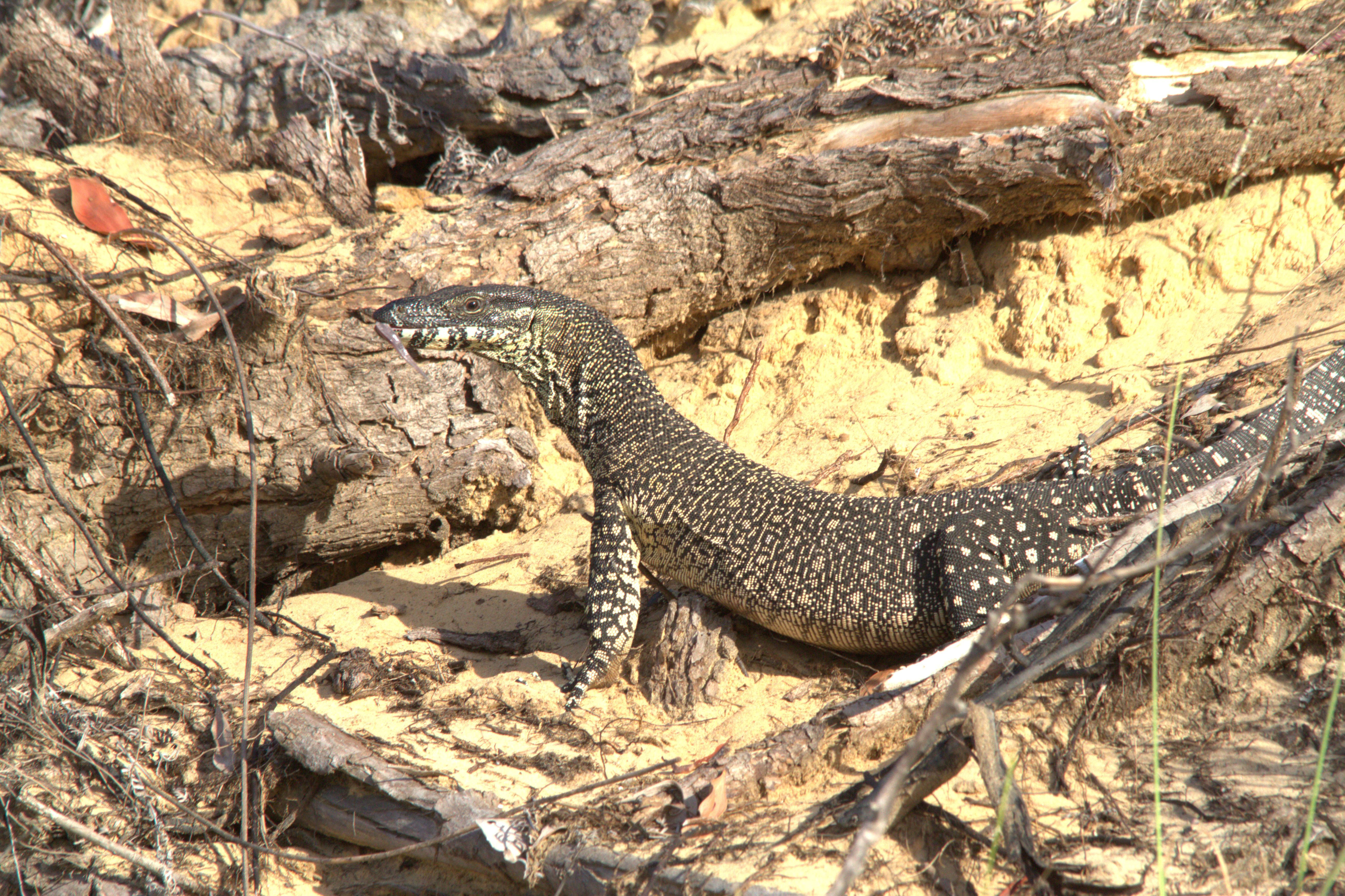
‘Well,’ I finally have some wildlife shots for today,’ I mused. ‘He’s right up on the hill, too. Maybe this hike was worthwhile after all.’
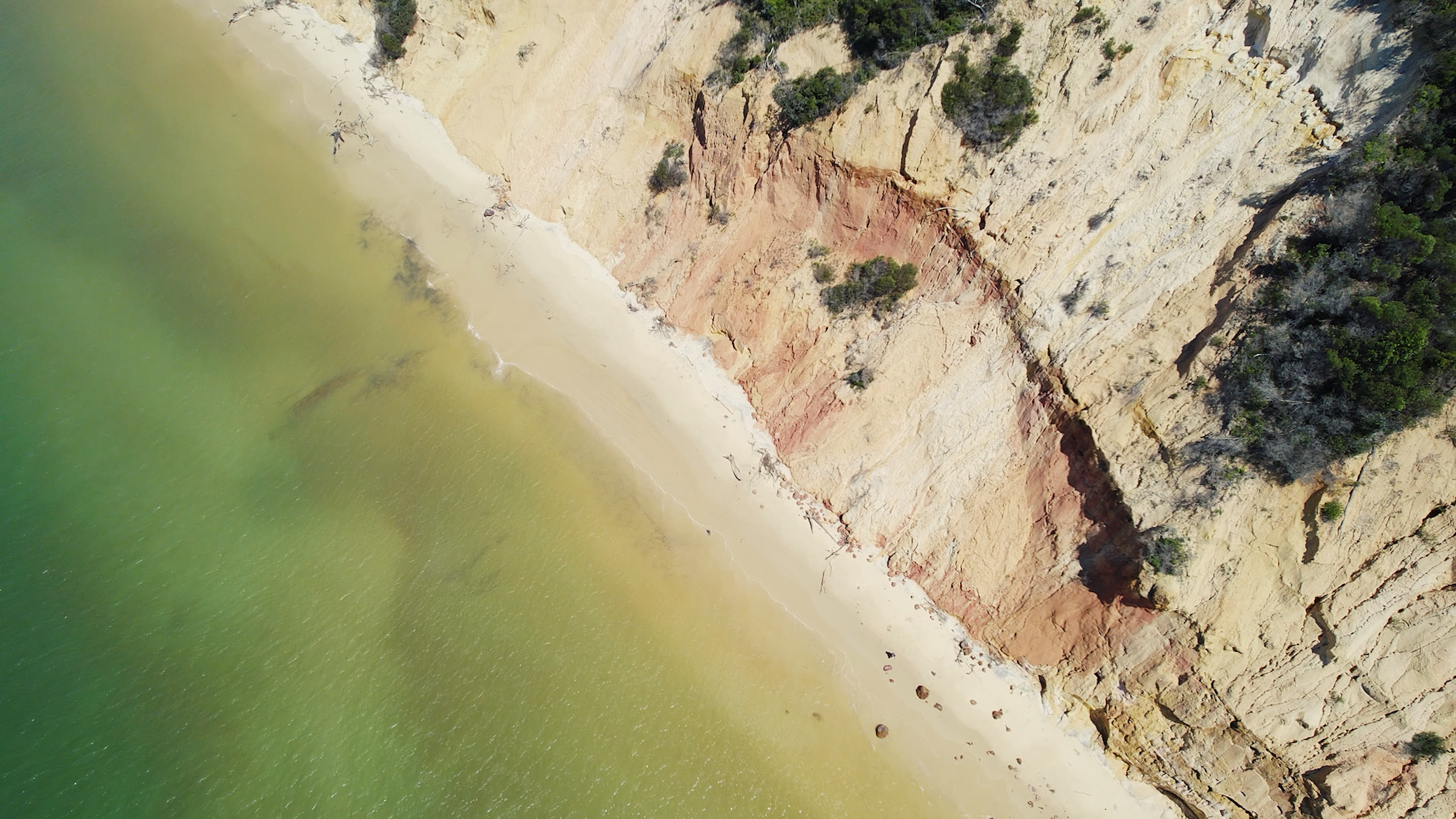
Then, I realized that these huge hills paralleled the beach for as far as I could see. The hills were steep and covered in roots, bushes, and trees. They were also quite colorful, flecked with red, brown, white, tan, and cream. These were the Coloured Sands.
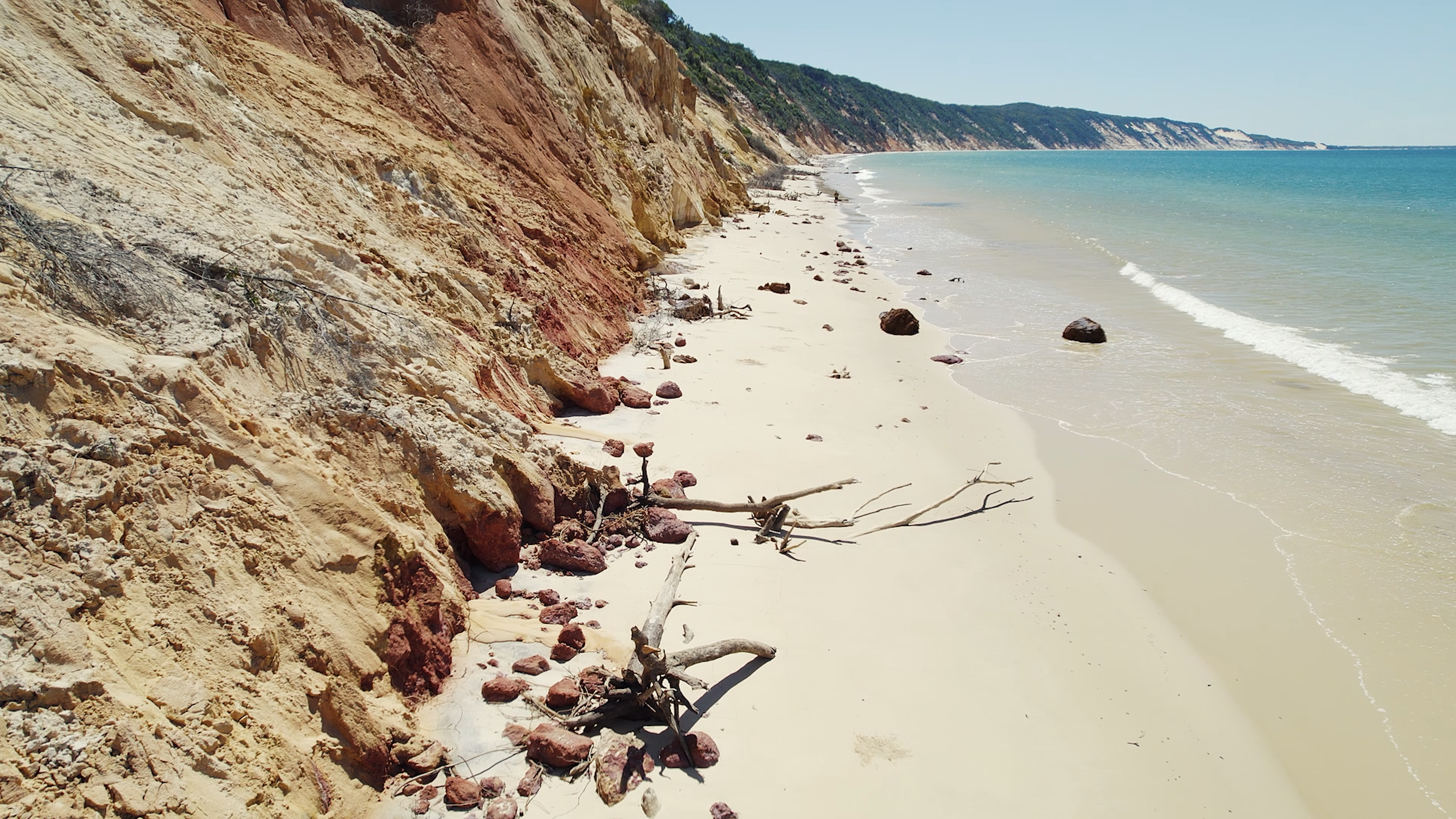
The name “Rainbow Beach” comes from an Aboriginal legend, where a rainbow spirit protects a woman from an evil tribesman. The rainbow spirit died battling the evil tribesman, and his shattered body spread across these cliffs, coloring the sands. For this reason, they are called “Coloured Sands”.
Despite their beauty, unless you are a goanna, a bird, or a free-climber, you could not climb the Coloured Sands. This was definitely not Virginia Beach or the Outer Banks. If the tide came in right now, the beach would disappear under my feet.
As I reached a narrow strip of sand ahead, I noticed the tide WAS coming in, and the beach was rapidly shrinking. I climbed over a fallen tree, and my boots splashed into the rising sea. Now, my feet were soaked. Great.
Thankfully, these narrow patches were few and far in between, although that did not relieve my troubled mind. These waters were a playground for the three most dangerous shark species. Bull sharks actively roamed the tidal zone and rivers; tiger sharks had been caught just offshore; and great whites had been spotted close to shore.
Sharks are always around, but they are most active at dawn, dusk, and night because those are their primary feeding hours. This did not bode well for an inept, bipedal mammal stumbling through knee deep water.
‘I need to get the heck off this beach,’ I thought. Compared to this, those horrid woods were Candyland. ‘Snakes? I was worried about snakes? I haven’t even SEEN a snake, since I arrived over two weeks ago. I should’ve just hiked to Carlo Sandblow.’
I began to panic. I pulled out my phone and dialed 000, the Australian emergency number, and asked for the police. The dispatcher redirected me to Rainbow Beach Police. An Aussie fellow on the other end of the line inquired about my situation, and I explained everything.
“I reckon you’ll be alright,” he said. “Just keep on walking up the beach. There are some stairs up near Carlo Sandblow.”
I thanked him and apologized for calling. I felt a little better now. I had been walking for quite some time, and I was pretty sure I was close to Carlo Sandblow. Yet, the tide seemed to be rising faster now, as if the sea was alive and could hear me.
The sun flicked out like a flame burning through the last bit of wick. But darkness did not consume me. The moon was out, and there were no clouds. Had I been less stressed, I would’ve admired the beautiful sight.
Back then, my faith was on shaky ground, but that night, I clasped the cross around my neck. Had the moon been shrouded, I don’t know what I would’ve done.
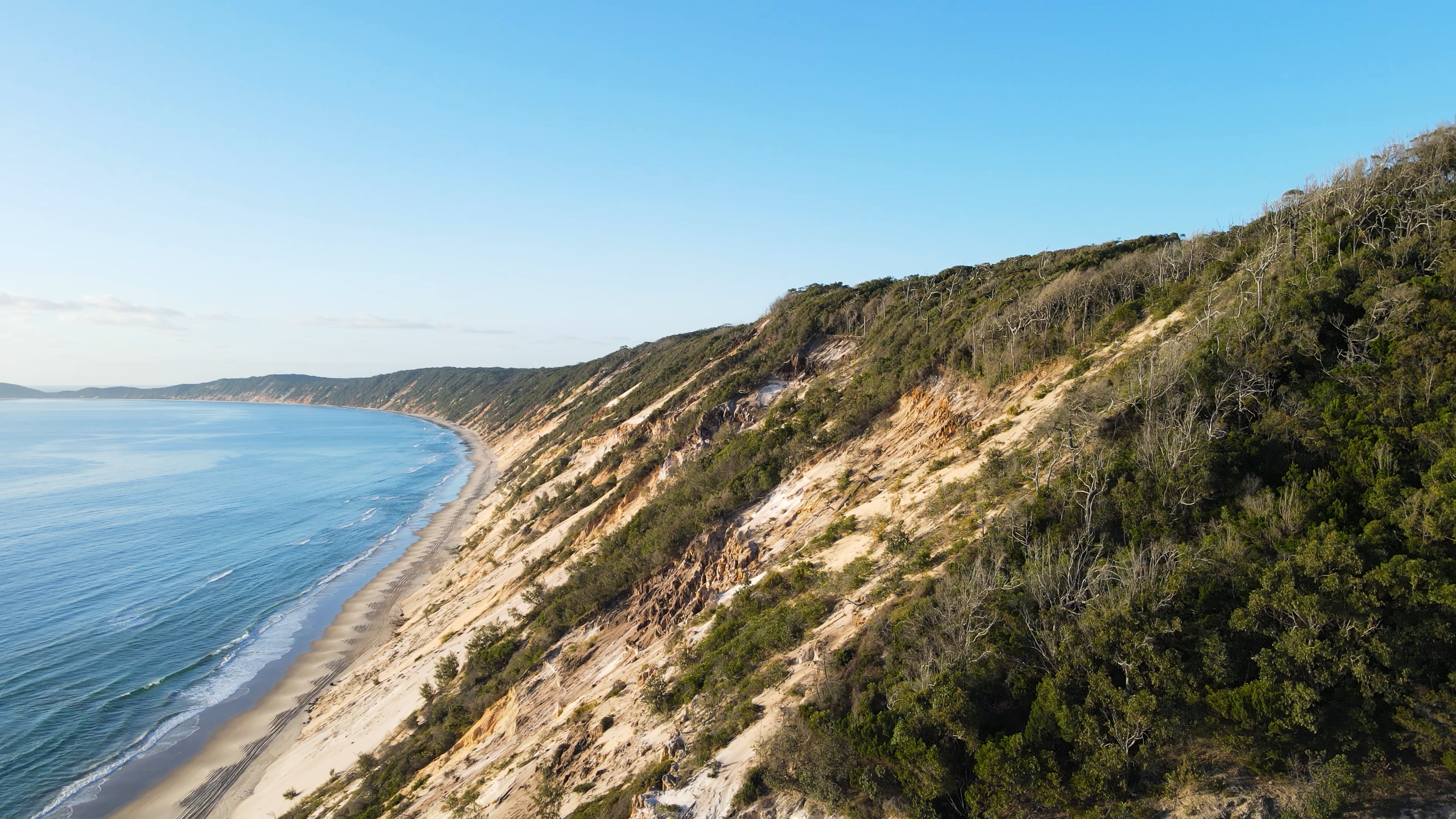
The woods were far behind me, and the tide had blocked my way back, but Carlo Sandblow was not far ahead. Or so I thought. After slogging for another hour, I realized I was not as close to Carlo Sandblow as I’d assumed.
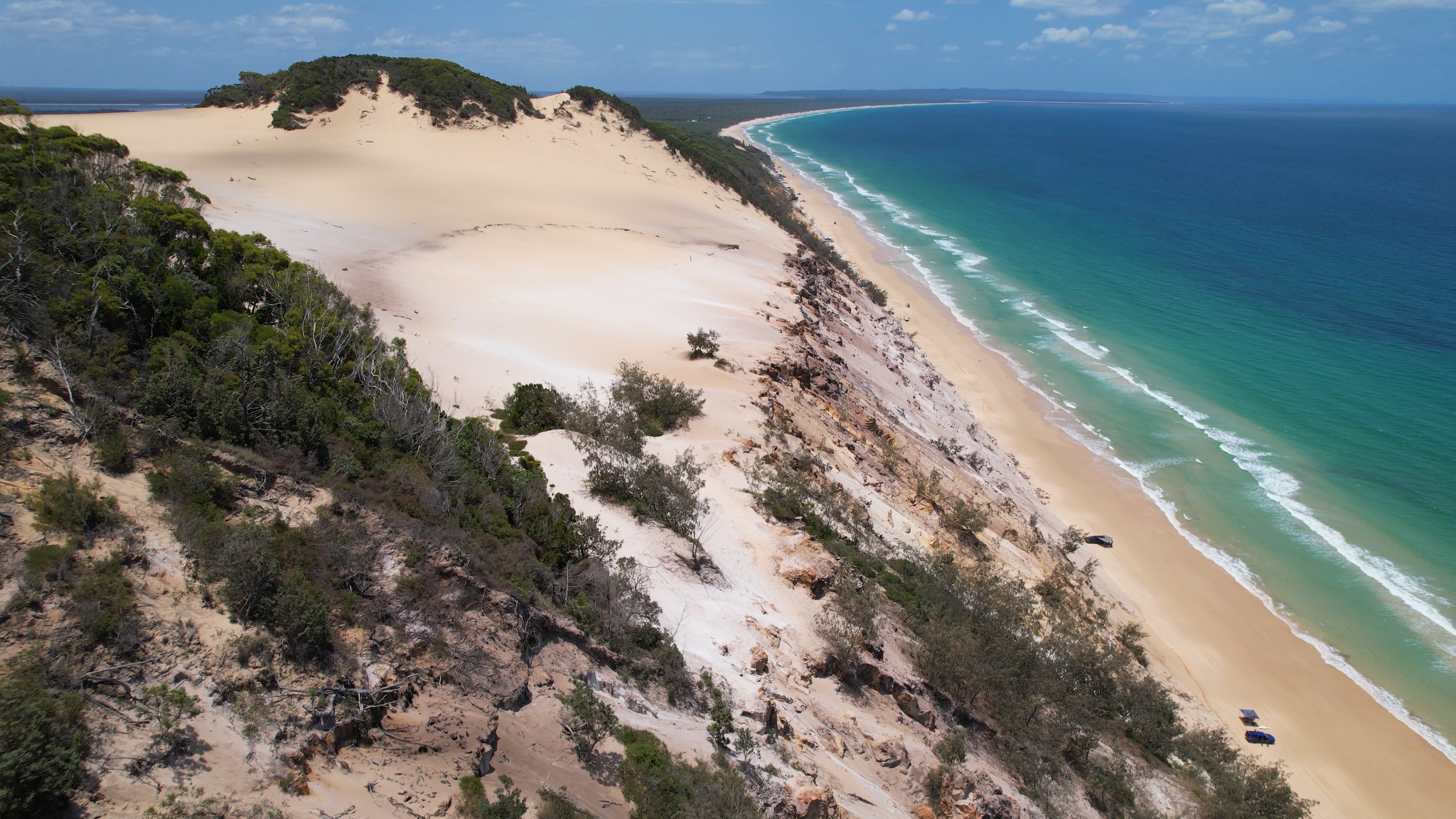
I had left the Coloured Sands behind, and there were now huge, white sandy dunes in their place, but no sign of Carlo Sandblow or stairs. This was not good.
The beach ahead had practically disappeared, and only slippery rocks remained. Cautiously, I crossed them, my heavy camera around my neck, my big lens around my shoulder, and my tripod and pack on my back. If I slipped or lost my balance, I’d tumble into the water, destroying thousands of dollars of electronics.
Once I’d reached another patch of beach that hadn’t disappeared yet, I decided to follow some footprints up the dunes and attempted to climb them. The going was slow, but I managed to make it halfway up. I stowed my gear in my bag and kept climbing, but I soon reached a particularly steep point that I could not scale. I had nothing to grab, so I could hoist myself up, aside from thin, brittle roots that could not hold my weight, and the dune was too steep to dig my feet in.
Defeated, I made my way back down. I was parched and wished I still had some water. I kept imagining drinking big bottles of crisp, ice cold water. But those fantasies quickly dissipated when I lost my grip on my backpack, containing all of my photography equipment, and watched it slide down the dune onto the beach. Quickly, I grabbed the rest of my belongings and slid down after it.
On the beach again, I found my bag, which had–fortunately–not slid into the ocean. At this point, I decided to try running the rest of the way. But, encumbered by my heavy equipment, I could only manage short bursts. So much for that.
Ahead, another section of slippery, surf-washed rocks waited. I clutched my bag and tripod dearly and carefully weaved through the rocks as the sea receded.
Suddenly, a surprise wave rushed up past my knees, splashing over the bottom of my pack, where my camera gear was stored. Remembering that water + electronics = bad, I headed back up into the dunes.
Footprints lead up that way, so I followed them. I tried scaling another dune, but that one was no more climbable than the previous one. More footprints went around the dunes, and I traced them up into an immense sandblow, which turned out to be Carlo Sandblow. Further up, I found the stairs. The stairs that the policeman had told me about I-don’t-know-how-many-hours-ago. Sanctuary, at last.
I hopped onto the stairs and scurried up. Once I’d reached the road at the top, I fell flat on my back and lay on the asphalt. Sand and seawater caked my body, and I looked as if I’d been wandering the wilderness for days, not hours. Across the street, people were enjoying a nice meal on a patio, completely unaware of my existence.
Unfortunately, my story didn’t end there. I checked my wallet, which also contained my passport. Guess what? It was soaked, and the pages were wrinkled. Normally, I would’ve been pretty freaked out, but at the moment, I was just happy to be alive.


