
This is a baby tugboat. At 25 feet long, she is the size of a pleasure boat and can be put on a trailer. But don’t let her small size fool you. She has two John Deere engines that give her a maximum of 400 horsepower. That’s stronger than most pickup trucks and 4x more powerful than your average pleasure boat.
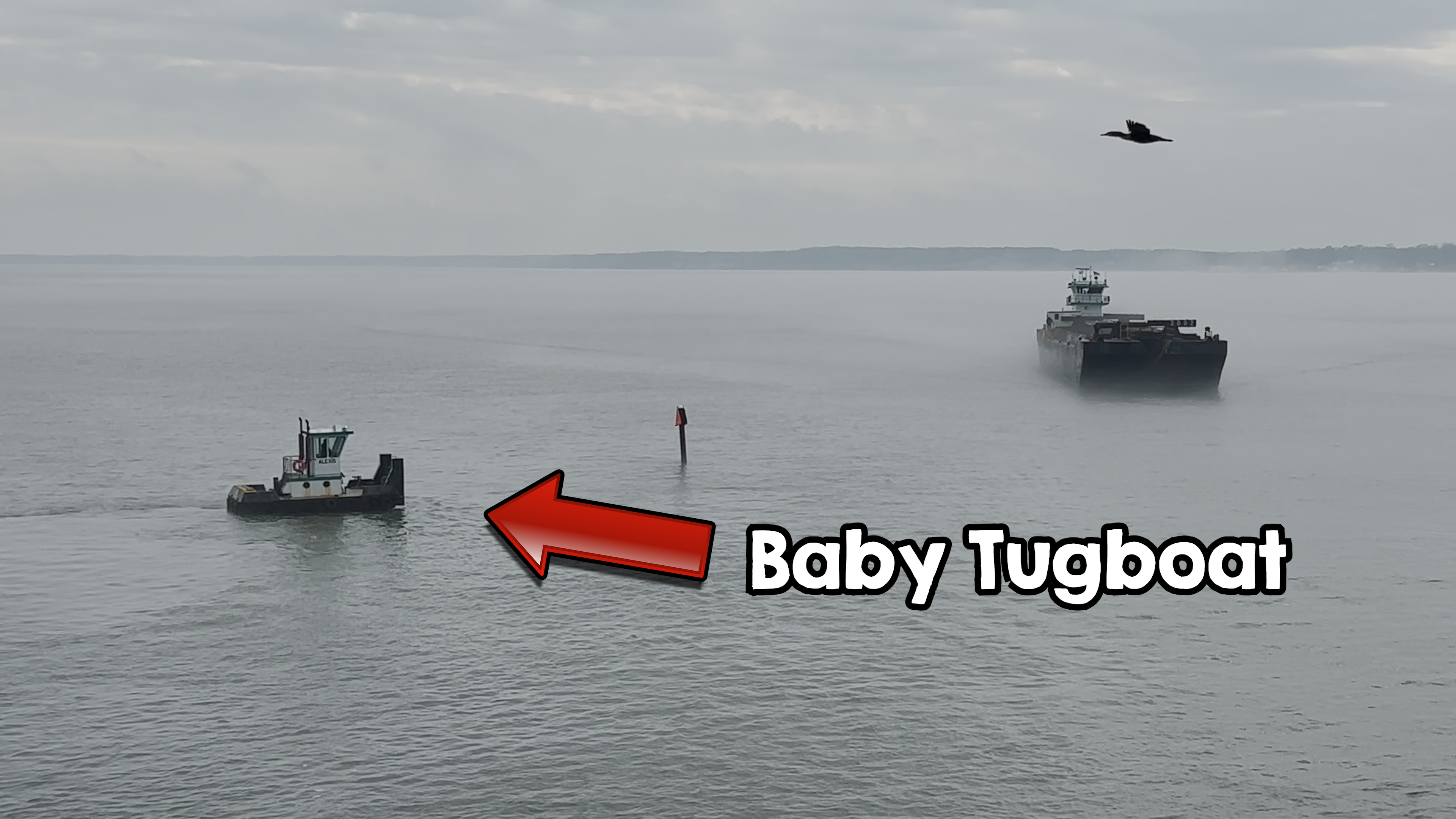
The bigger tug is 71 feet long and has two Volvo engines that give her over 1,000 horsepower. That’s stronger than a semi-truck! But, even with all that power, this mama tug needs a little help every now and then.
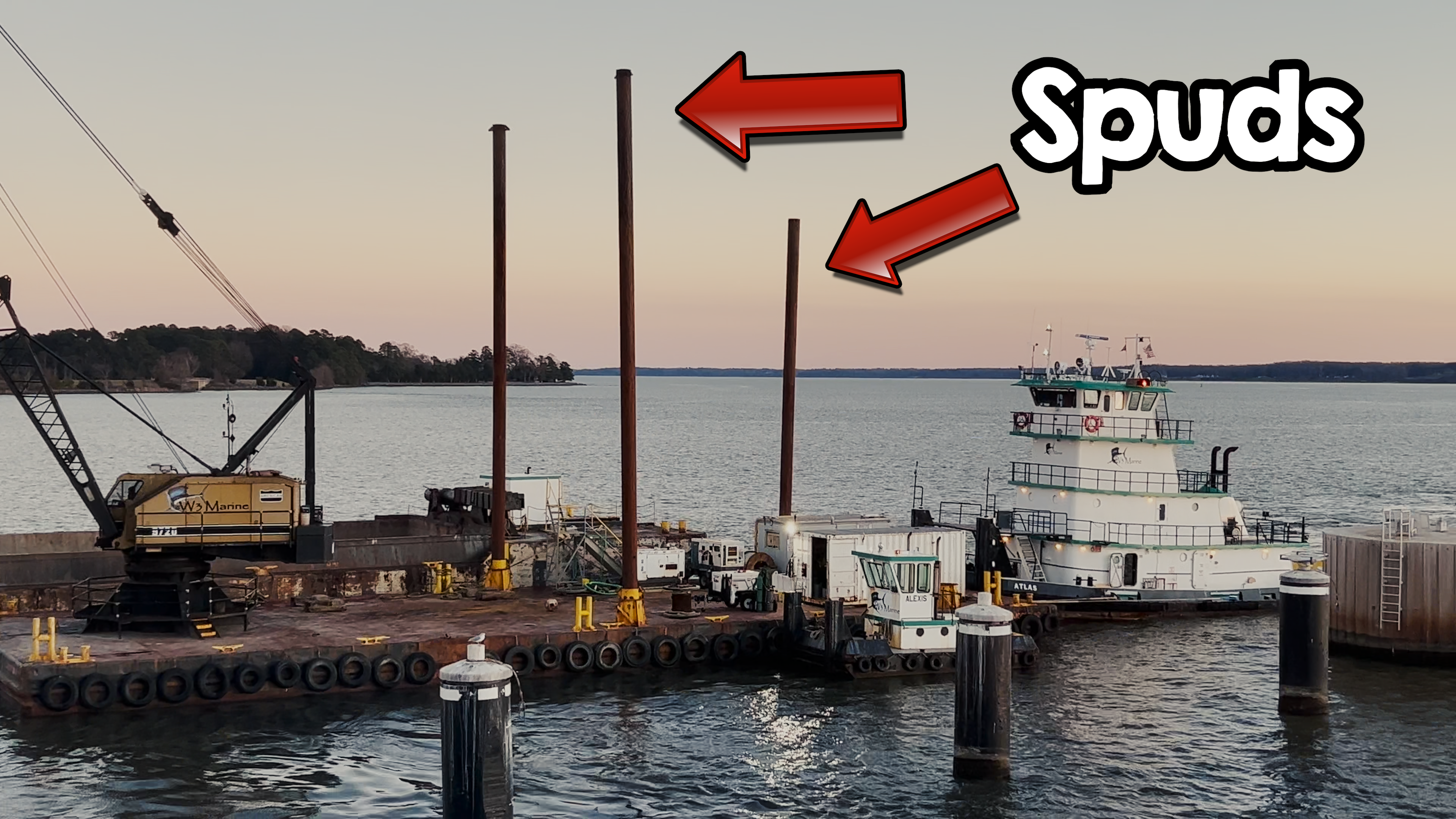
Today, mama tug is pushing around a pair of dredge barges. One barge has the crane used to dig up mud from the river and make the channel deeper for ships. This barge has tall pipes called “spuds” that it drives into the riverbed to keep the barge from floating away.
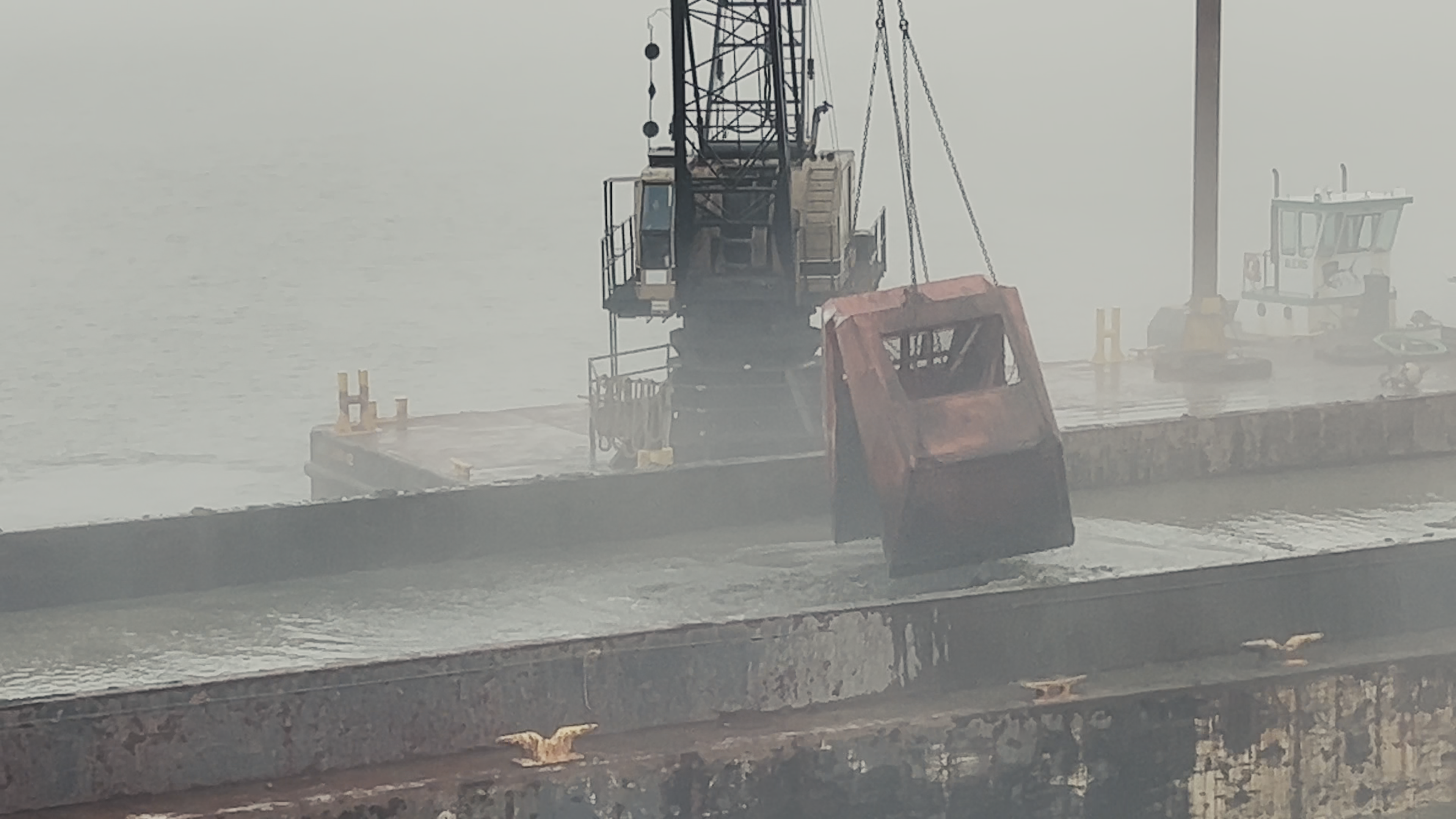
The crane has a grabbing bucket that works like those claw machines you see in arcades. It drops this “claw” to the riverbed, grabbing the mud and dumping it into the other barge. This other barge is called a hopper barge.
Eventually, the crane fills the hopper barge with mud, so it’s time to dump it. Mama tug ties up to the stern of the barge, and baby tug pushes up against the bow. In such restricted water, mama tug needs all the help she can get.
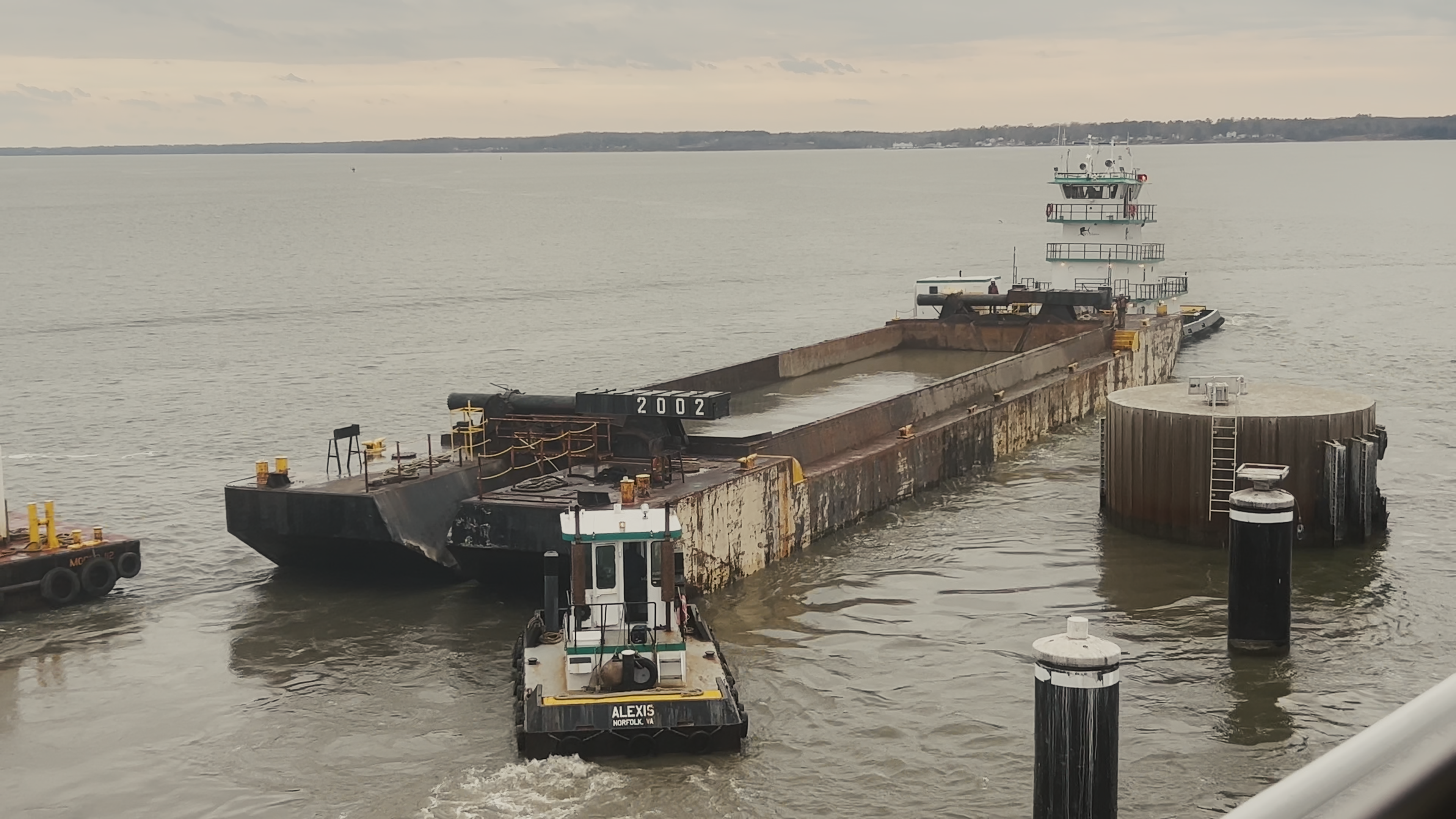
Together, the two tugs maneuver the barge out into deeper water, where mama tug takes over. She takes the barge to a deep area in the channel and dumps the mud using a pair of trapdoors on the hull.
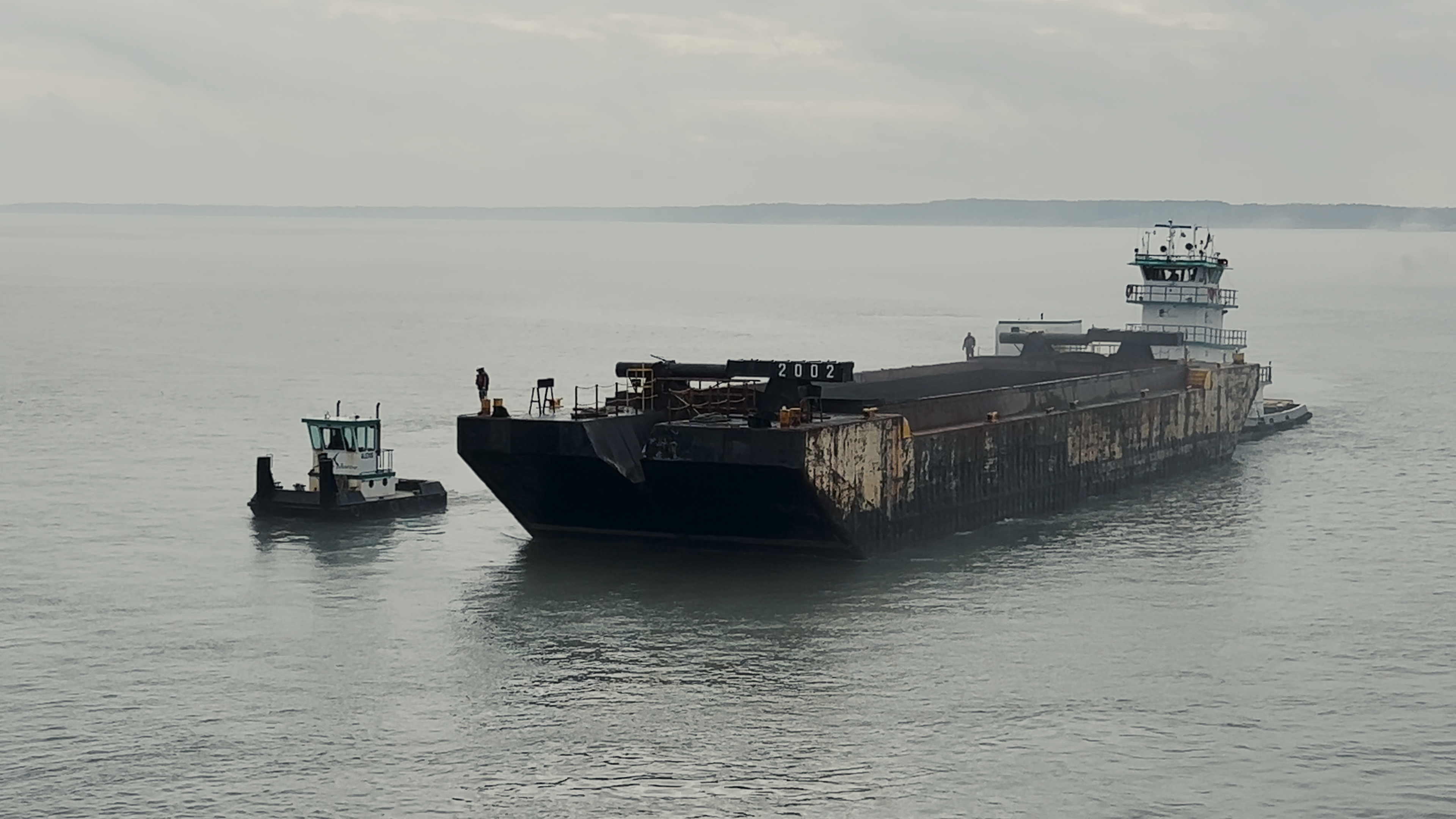
Once she’s done, she brings the empty barge back, and baby tug is ready to help again. In the wind and current, the barge can be difficult to handle, so baby tug jumps into action and pushes the hopper barge against the crane barge.
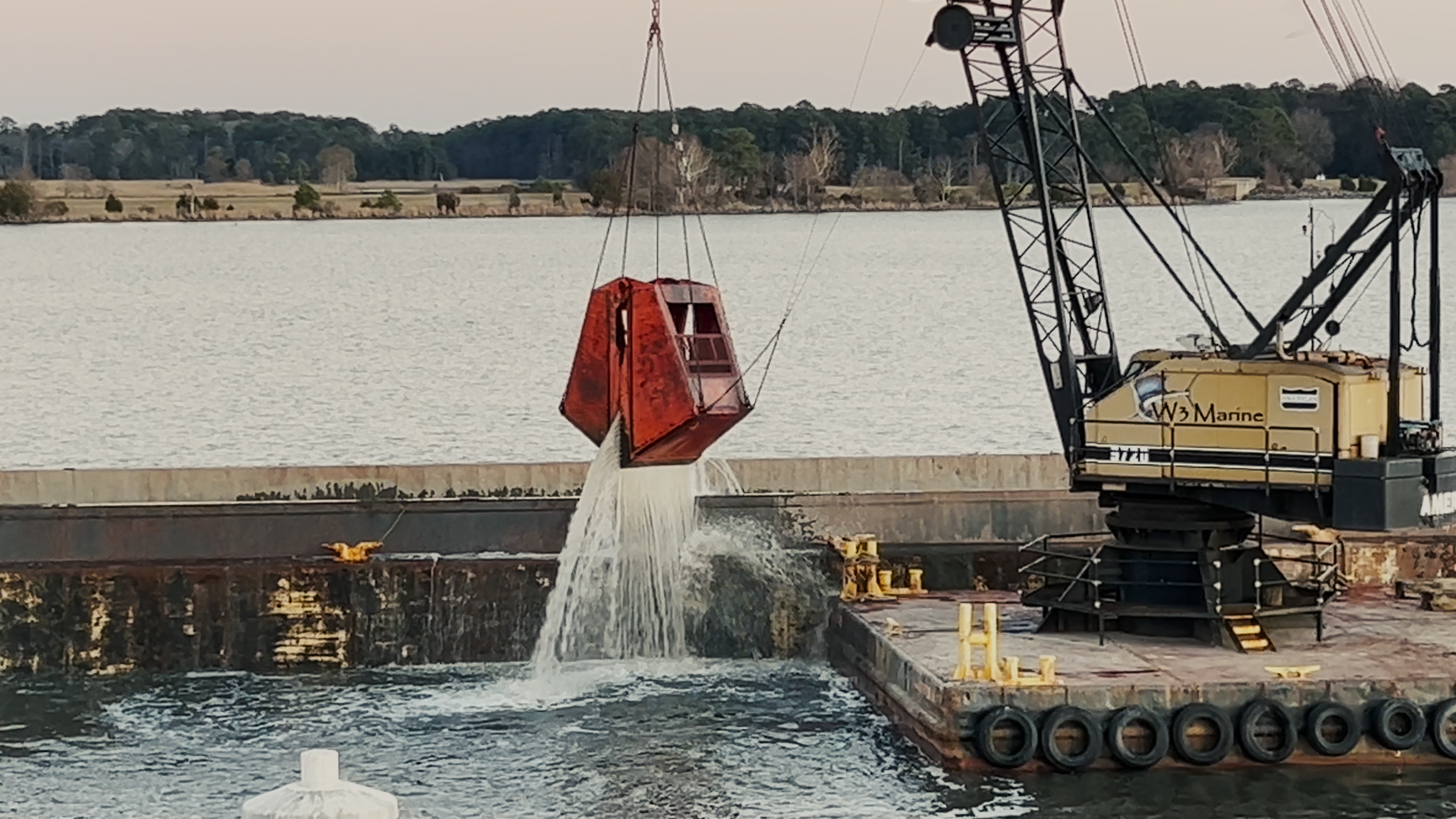
When the hopper barge is secured, mama and baby tug both return to the crane barge. They continue loading and unloading until the end of the workday. At quitting time, the crane collects water and dumps it on the hopper barge to clean off the mud. Then, baby tug takes the crane crew home.

 Tidewater Teddy