
Long ago, there was a giant supercontinent called Pangaea, where all the world’s continents lived in harmony. Over the next 200 million years, the continents experienced a massive breakup and went their separate ways. In the midst of this breakup, a small body of water formed and became what is now known as the Gulf of Mexico or Golfo de México.
In the Jurassic Period, the Gulf of Mexico dried up and turned into a thick layer of salt. This salt became buried under sediment and, then, under the Gulf itself as it refilled with water.

Today, the buried salt had been been reborn as underwater lakes called brine pools. These lakes are super salty and deadly to sea creatures; yet, they still harbor all sorts of life around their “shorelines”.

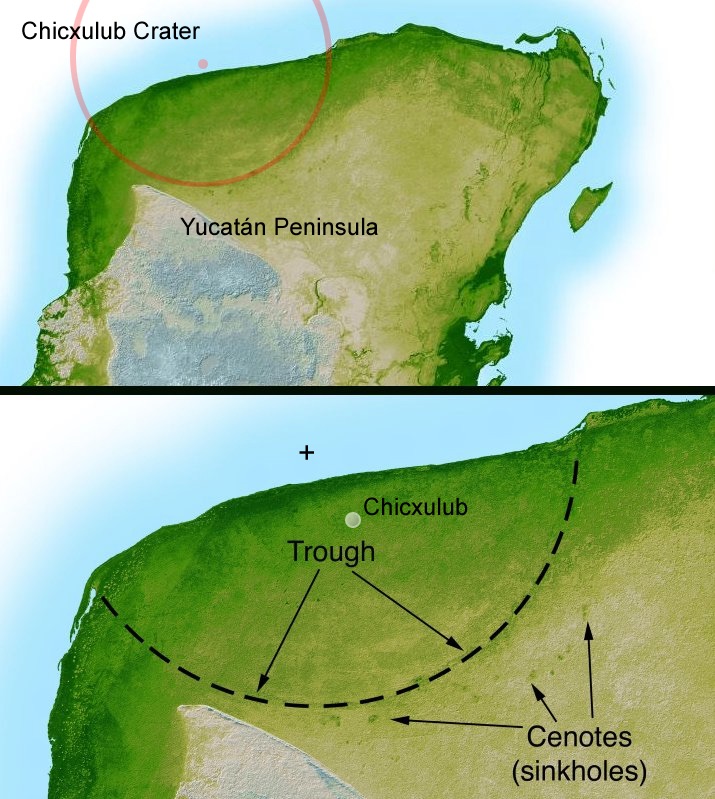
70 million years ago, the Mississippi River started flowing, filling the Gulf with freshwater, nutrients, and sediment. Then, 66 million years ago, the Gulf became ground zero for a cataclysmic asteroid attack that killed off most of the dinosaurs. The impact from this extraterrestrial invader caused megatsunamis as tall as 100 meters (330 ft) and formed a crater 200 kilometers (120 miles) wide.
Fast forward to 3 million years ago. Warm currents once flowed between the oceans through a natural “canal” in Panama. Over time, the “canal” closed and the warm Atlantic currents rerouted to the Gulf of Mexico, forming what is now the Gulf Stream current. The arrival of this current warmed the lands around the Gulf and increased the humidity, especially in southwest Florida. This eventually turned the Gulf into a lighting rod for extreme hurricanes.
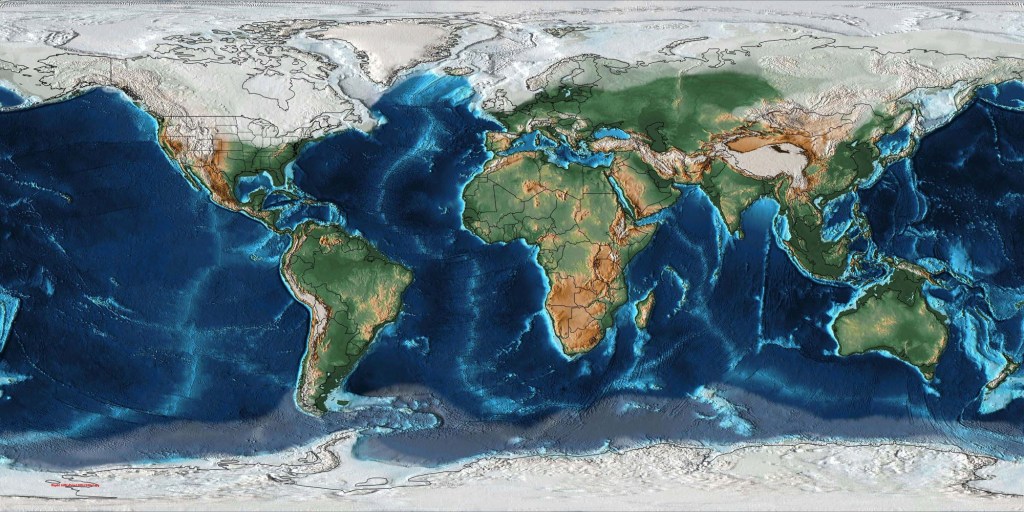
Skip to the Ice Age. In this era, the Earth was constantly cooling and warming. As Earth cooled, the world’s waters became trapped in glaciers, and sea levels dropped so low that today’s shallow coastal waters were dry land. In some parts of the Gulf, the shoreline extended over 200 kilometers (about 120 miles) further than present day beaches.
Remnants of these lower sea levels have been found in the Gulf’s waters. In western Florida, oceanographers mapped an ancient shoreline far offshore in 90 meters (295 feet) of water. In Alabama, divers found an underwater cypress forest that is over 60,000 years old. In McFadden Beach, Texas, beach combers have found fossils of mammoths, mastodons, and saber-toothed cats.
During the most recent ice age over 15,000 years ago, these high glaciers and low sea levels allowed humans to migrate across the Bering Sea and into North America. These people were the first people to arrive in America, and some of them eventually settled around the Gulf of Mexico.

Let’s fast forward to 1200 BC. In modern day Veracruz, Mexico, the Olmecs decided to make a name for themselves and became the first civilization on the Gulf. However, they’re mainly known for their giant head sculptures.
Meanwhile, the more famous Mayans explored the Gulf in dugout canoes and used it as a major trade route. They carried goods, such as cacao, seafood, and tortoise shells, from the coast to inland regions. They probably called the Gulf “nahá”, which means “great water”.

In the following centuries, several Native American tribes settled what is now the United States Gulf Coast. Like the Maya, these tribes had many important trade routes along the Gulf, and they carried goods into the interior of America using the Mississippi River.
Skip to 1492. Christopher Columbus arrived and began his conquest in the Caribbean. He never laid eyes on the Gulf, but other Spanish conquistadors were hot on his heels. The Spanish gave the Gulf several names, ranging from “Sea of the North” to “Gulf of Florida” to “the Spanish Sea”.

In 1513, Juan Ponce de Leon ventured into the Gulf while exploring Florida. Contrary to popular belief, he was looking for gold, not the Fountain of Youth. In 1518, Juan de Grijalva sailed from Cuba into Mexico’s Gulf region. Here, he encountered Mayans and Aztecs (also known as the Mexica people) and heard of vast gold within the Aztec Empire. The next year, Hernán Cortés sailed across the Gulf to Veracruz, Mexico, where he began his murderous conquest of the Aztec Empire.
While Cortés plundered the Aztecs, Alonso Álvarez de Pineda began an expedition through the Gulf to figure out if Florida was an island. He sailed from Jamaica to western Florida and followed what is now the US Gulf Coast all the way to Texas.

Then, he made a map, which became the first map accurately depicting the Gulf of Mexico as an enclosed body of water. At that time, it was still not named the Gulf of Mexico, but by the 1550s, the name started appearing on maps and historical records.
From then on, countless European colonizers explored and conquered the Gulf region, eliminating millions of indigenous people in the process. The genocide of these people increased the demand for labor, and as a result, millions of African slaves were brought to major Gulf cities, such as New Orleans and Veracruz.
For 300 years, the Spanish Empire owned the lion’s share of the Gulf’s territories, but by 1821, they lost everything except Cuba. They tried to take Mexico back for a few years, but they failed and gave up in 1829.

Then, in 1838, a French pastry chef in Mexico City accused Mexican officers of not paying for their croissants, so the French blockaded every Mexican port along the Gulf for 3 months. This conflict is known as the Pastry War.
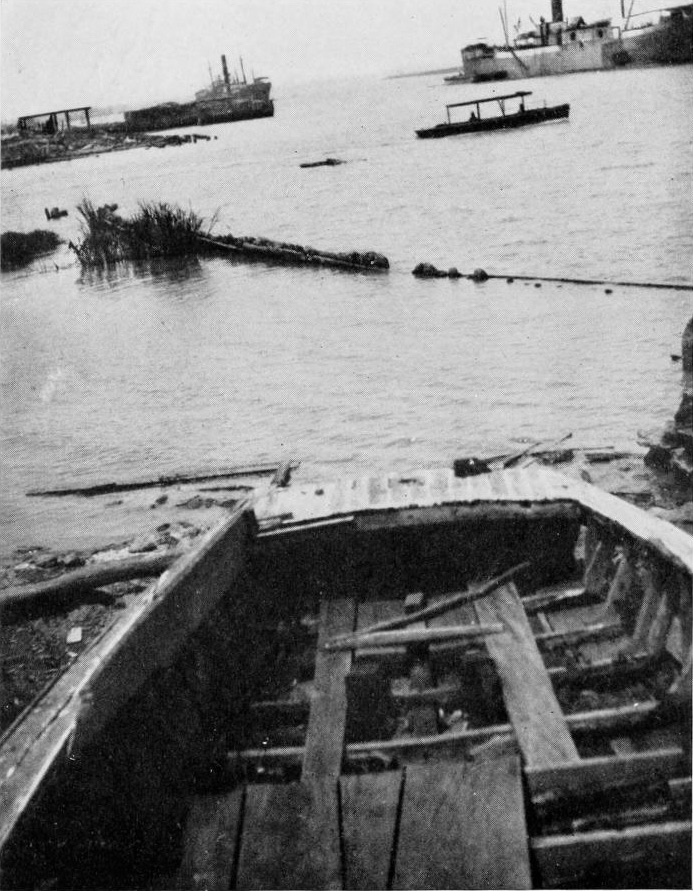
Fast forward to 1860. The schooner Clotilda, the last ship to bring African slaves to American soil, arrived in Mobile Bay, a shallow inlet in the Gulf of Mexico. 110 African men, women, and children were offloaded from the ship and sold in Alabama. Because the United States made the importation of slaves illegal in 1808, the captain burned the ship to hide the evidence. When the Civil War ended in 1865, the slaves were freed, and some of the Clotilda survivors founded a town called Africatown in modern day Mobile, Alabama.
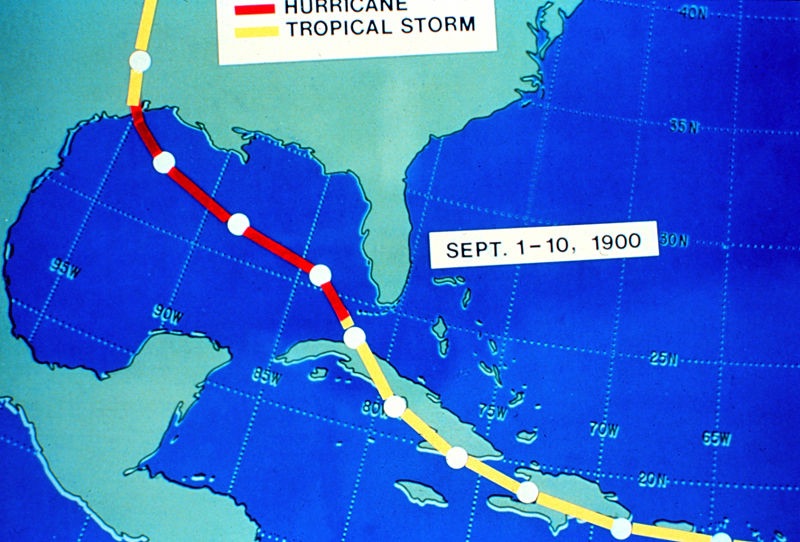
35 years later, in the year 1900, a tropical storm passed over the Caribbean and entered the Gulf of Mexico, where it strengthened into a Category 4 hurricane. On September 8, the hurricane made landfall near Galveston, Texas and became the deadliest natural disaster in US history. Known as the Great Galveston Hurricane, 6,000 to 12,000 people lost their lives, and over 7,000 buildings in Galveston were destroyed.
Skip to World War II. In July 1942, a German U-boat named U-166 entered the Gulf of Mexico. It spotted an American passenger steamship named the SS Robert E. Lee being escorted by a US Navy submarine chaser. The U-boat torpedoed and sank the steamship, but the US Navy submarine chaser quickly responded with depth charges, sinking the U-boat and rescuing the steamship survivors.
After the war, the United States and Mexico got hungry for oil and started building oil platforms further and further offshore in the Gulf of Mexico. Remember those ancient shorelines that were exposed during the Ice Age? Yeah, there was a lot of oil there.
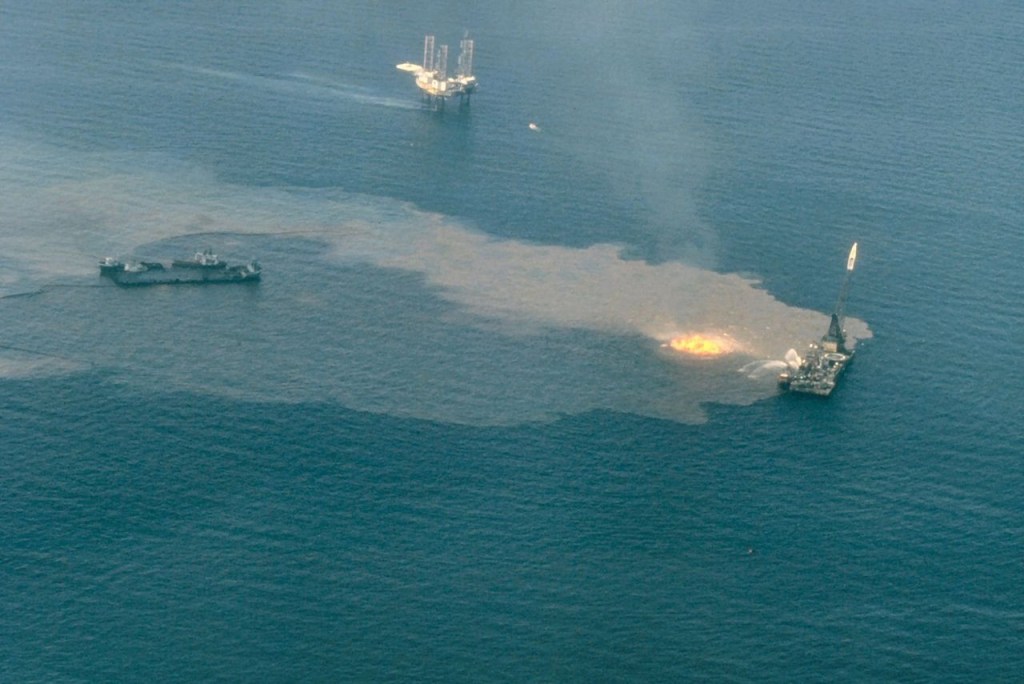
But this booming oil industry was not without consequences. In June 1979, a blowout on the Mexican oil rig Ixtoc 1 caused the second largest marine oil spill in history, discharging 3.3 million barrels of oil over the span of 10 months.

Then, in April 2010, a blowout on the American oil rig Deepwater Horizon killed 11 people and caused the largest marine oil spill in history, discharging 4.9 million barrels of oil into the Gulf over the span of 5 months.
During the Deepwater Horizon cleanup, response teams discovered an even more shocking oil spill. In 2004, Hurricane Ivan destroyed a Taylor Energy oil platform and caused a spill that was allegedly stopped.
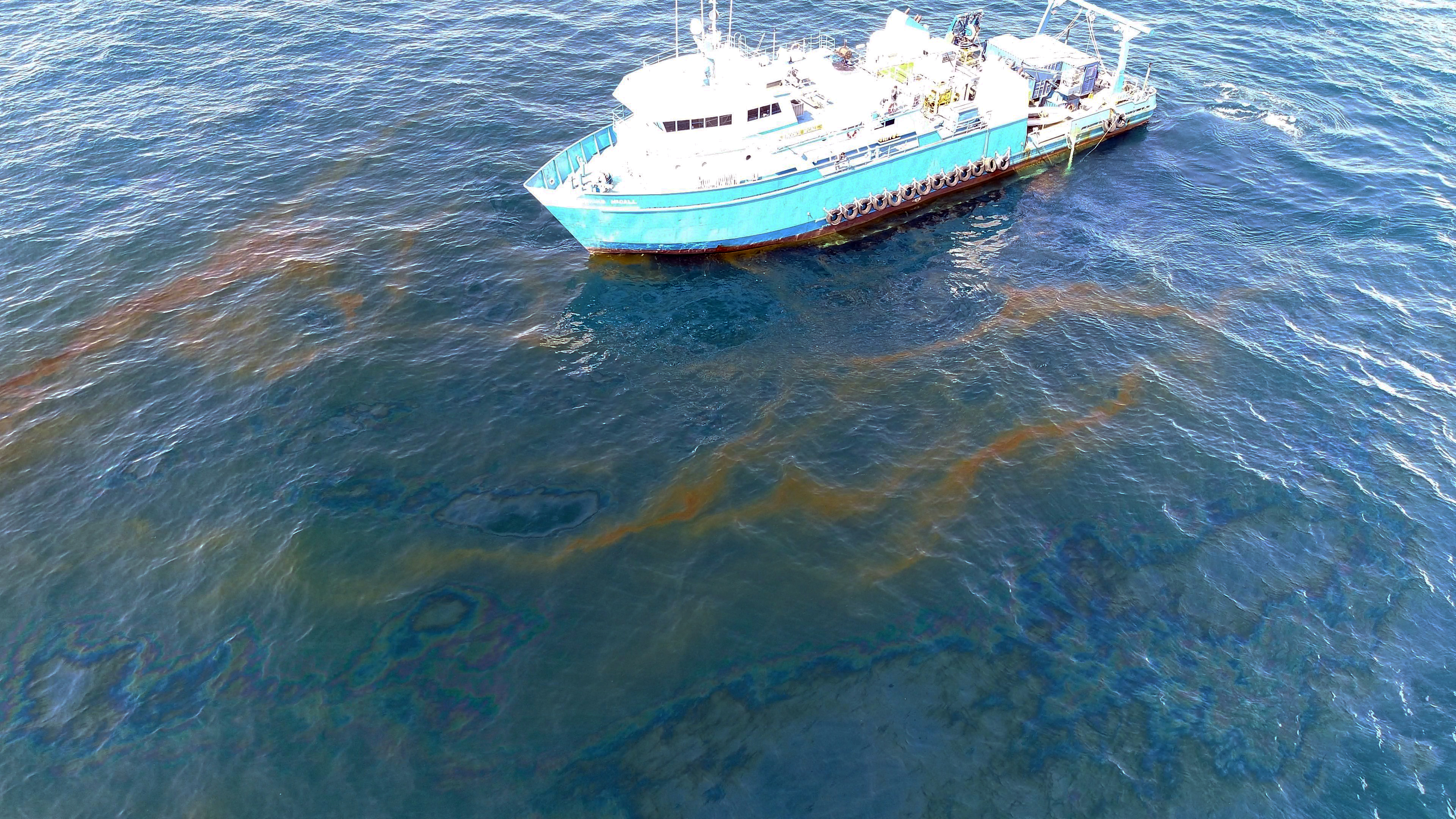
Turns out Taylor Energy and the US Coast Guard had underestimated the spill’s extent, claiming that the underwater wells were only releasing 3 gallons a day, but in reality, they had been releasing 1,000 gallons a day for over 16 years! The disaster was eventually controlled in 2019, but it is now considered the United States’ longest continuous oil spill.

In recent decades, scientists have found some bizarre creatures in the Gulf of Mexico. In 2013, a Greenland shark was caught in the Gulf, a shocking find given this shark prefers freezing Arctic waters. Then, in 2019, the first giant squid filmed in US waters was caught on camera in the Gulf. Who knows what other incredible discoveries we will make in this historic body of water?
If you liked this article, please give it a like, leave a comment down below, and follow Tidewater Teddy. Thanks, and have a great day!

 Tidewater Teddy