
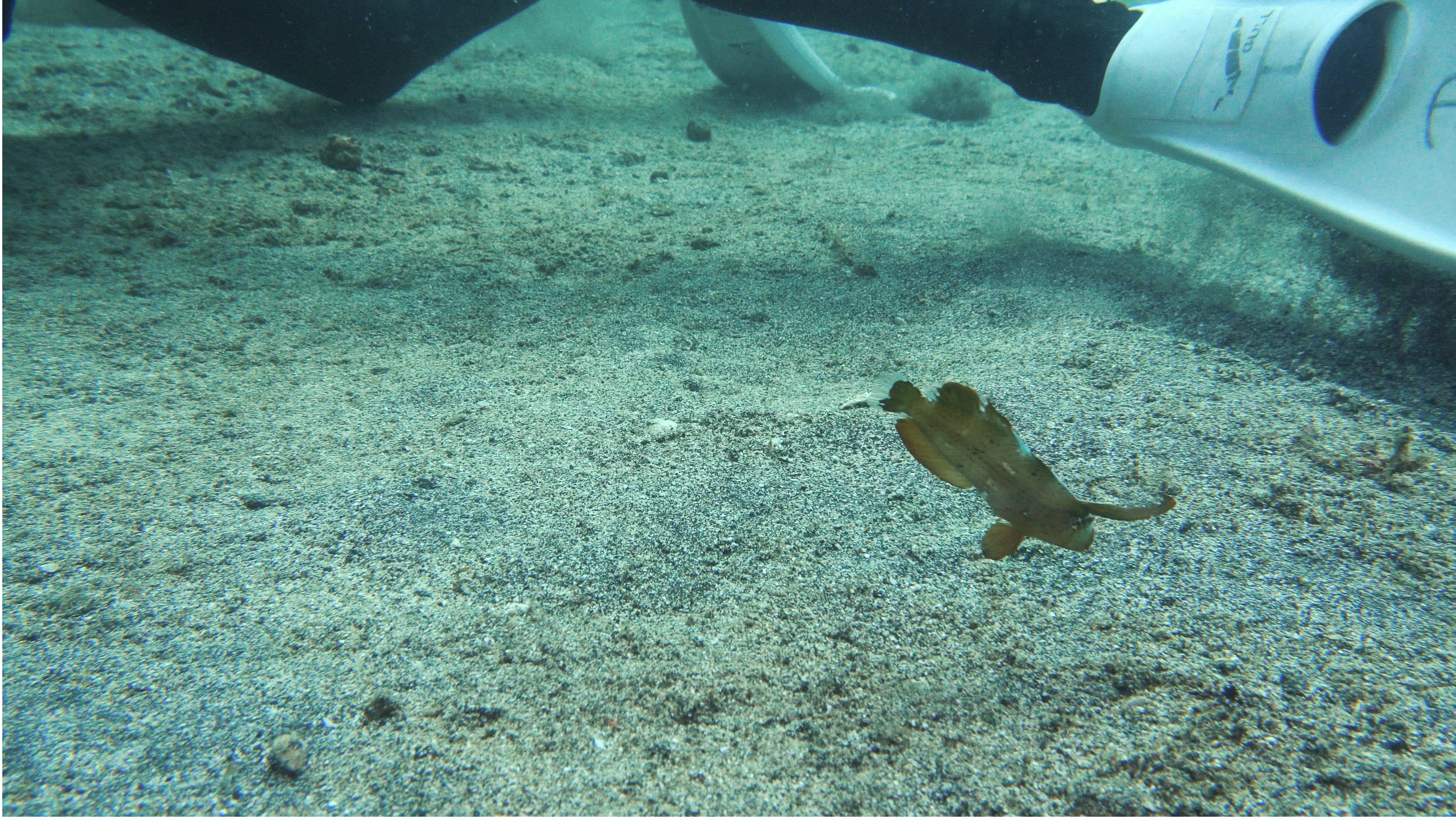
While scuba diving in Japan’s Izu Peninsula (which is right here), I encountered many bizarre sea creatures. Like this peacock wrasse. Juvenile peacock wrasse imitate leaves drifting across the sand, and it’s quite incredible. They even use their dorsal fin to mimic the leaf’s stem.
When I was in kindergarten, I acted as a tree in our school play, and I thought I did a pretty good job. But this kiddo puts my performance to shame.
Next up is an animal so well camouflaged that my dive guide had to point it out to me when it was right in front of my face. Can you see it?

It’s a harlequin ghost pipefish! This strange fish is related to seahorses and comes in all shapes and sizes. In this case, it resembles soft pink coral and has positioned itself vertically to further play the part.

Up in the water column, the ghost pipefish has some relatives, and they are equally bizarre. The bluespotted cornetfish is an active predator that can grow over 1.5 meters (5 feet) and eats small fish, crustaceans, and squid.
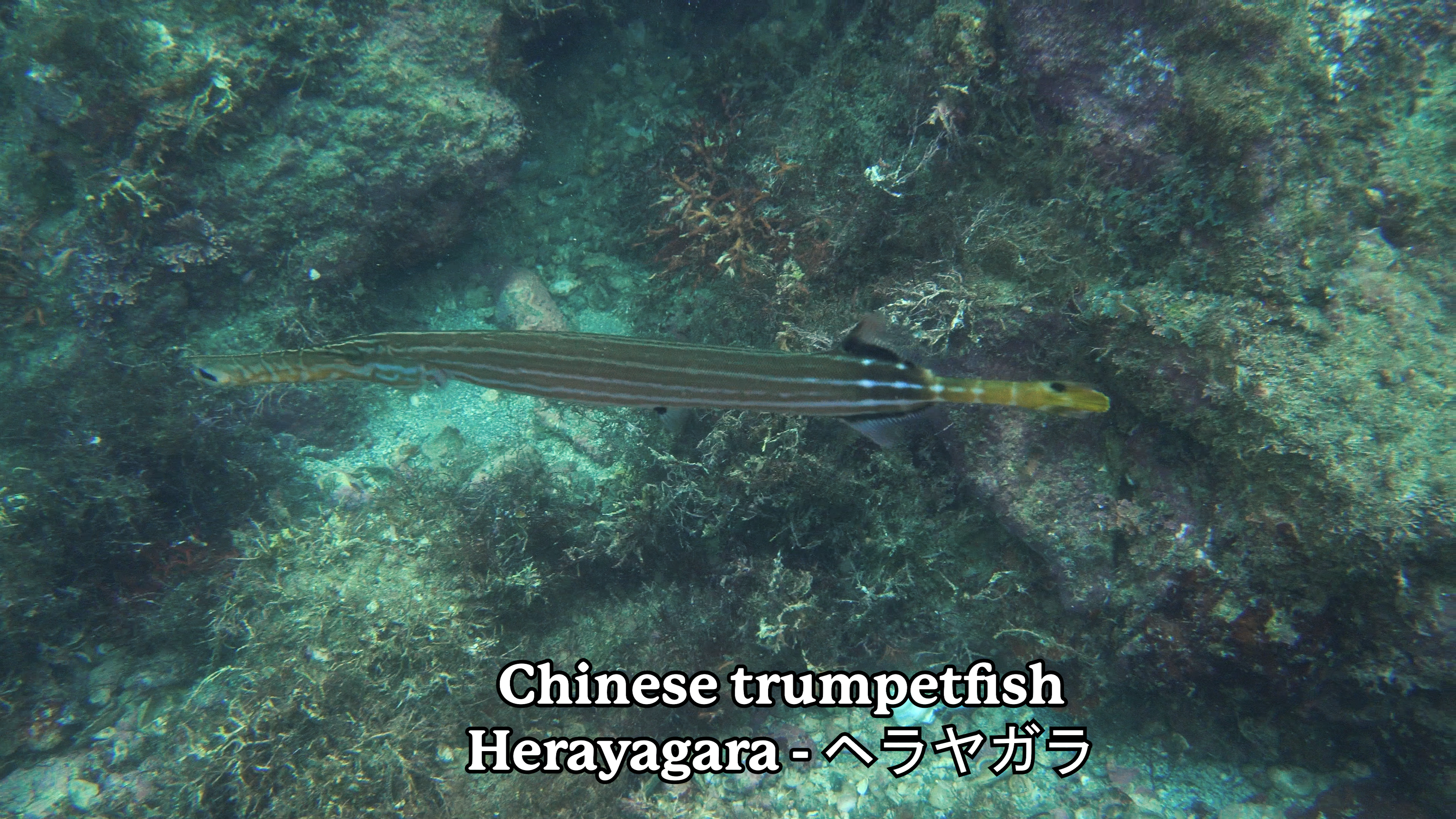
Meanwhile, the Chinese trumpetfish is an ambush predator that hides in coral or, even, behind other sea creatures to devour unsuspecting prey.

On the opposite end of the fish shape spectrum is this little ball of sunshine. A juvenile yellow boxfish. It may look cute, but it has a deadly secret! The bright yellow colors are a warning to predators because it is very poisonous! When stressed, it secretes a special neurotoxin from its skin that can break down the red blood cells of nearby fish and kill them! Scary! (But still adorable!)

The yellow boxfish isn’t the only boxfish in town, though. This is the bluespotted boxfish, another peculiar Japanese fish that is found from Hokkaido to Hong Kong. Like the yellow boxfish, it is brightly colored and poisonous, and it has a thick, armored carapace that gives its body a boxlike shape.
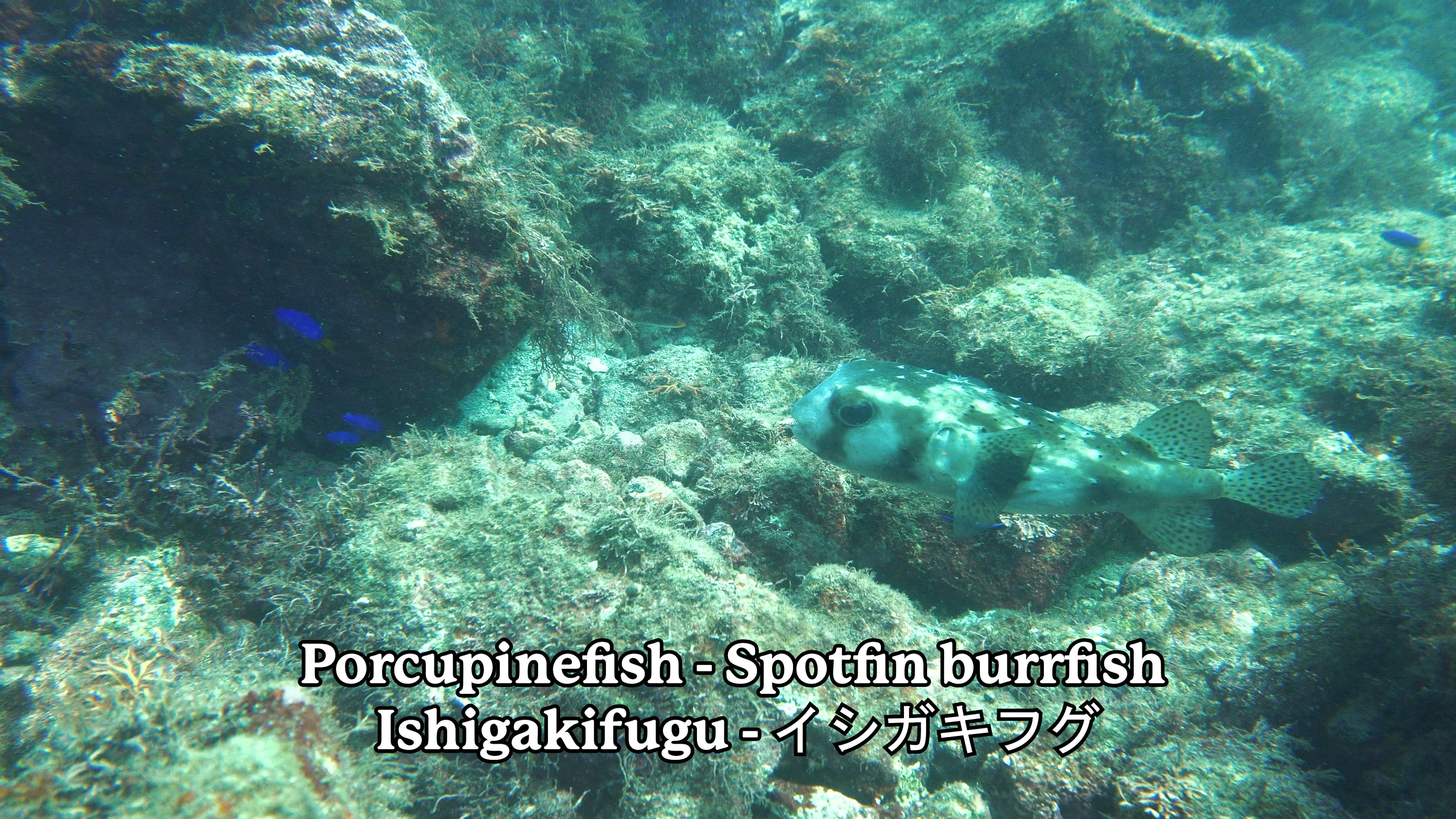
Another oddly shaped fish is the porcupinefish. Distantly related to the boxfish, this one is getting a well-deserved spa day courtesy of a cleaner wrasse. (Even in the ocean, where water is everywhere, hygiene is important.)
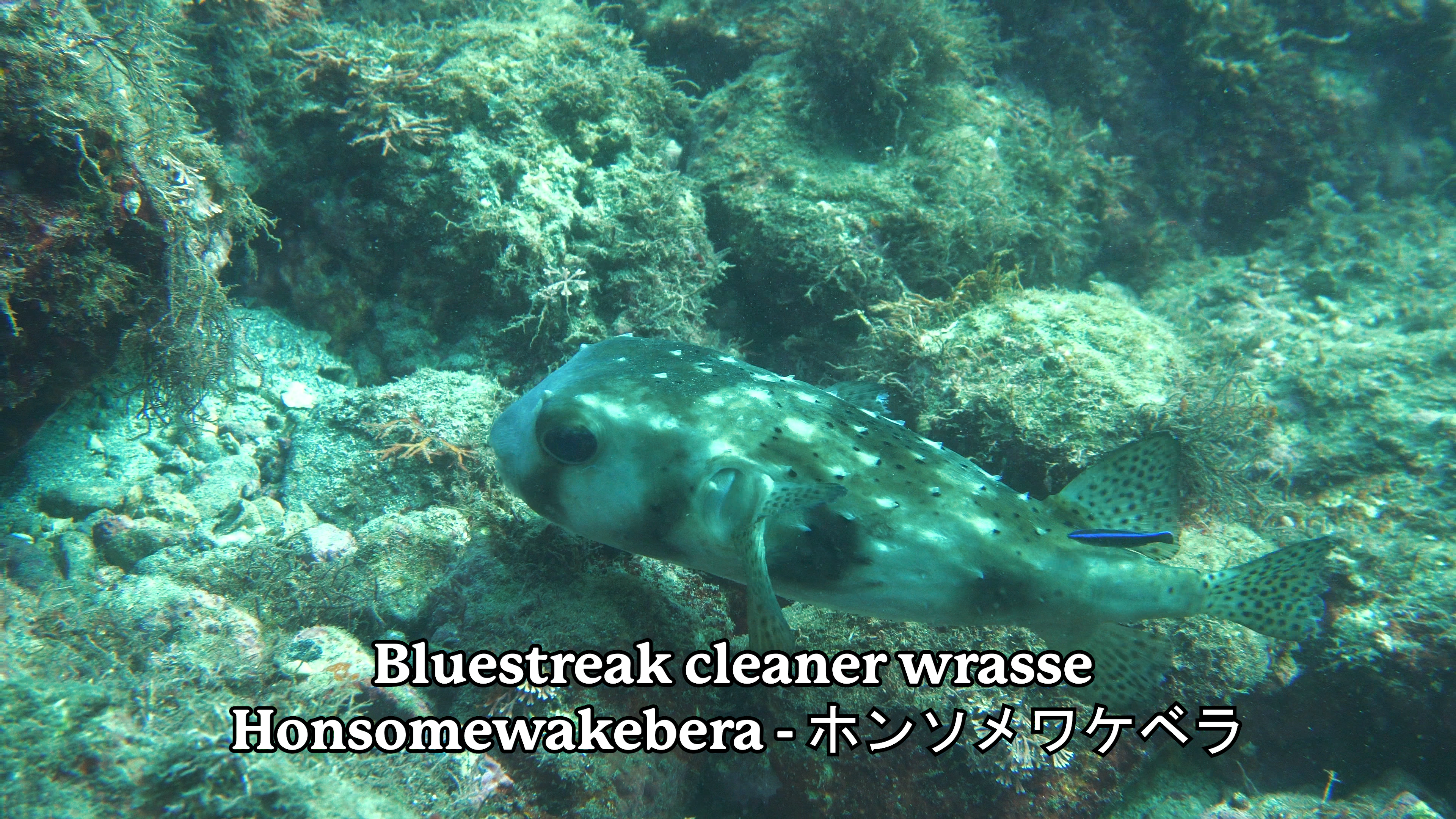
When threatened, the porcupinefish can swallow water or air to inflate itself and spread out its spines, just like a porcupine.

But fish aren’t the only strange creatures here. There are plenty of interesting invertebrates as well. Like the bigfin reef squid. These squid hang out in schools and have complex social interactions, especially when it comes to mating. Unlike deep sea squid, they prefer shallow water near the shoreline.
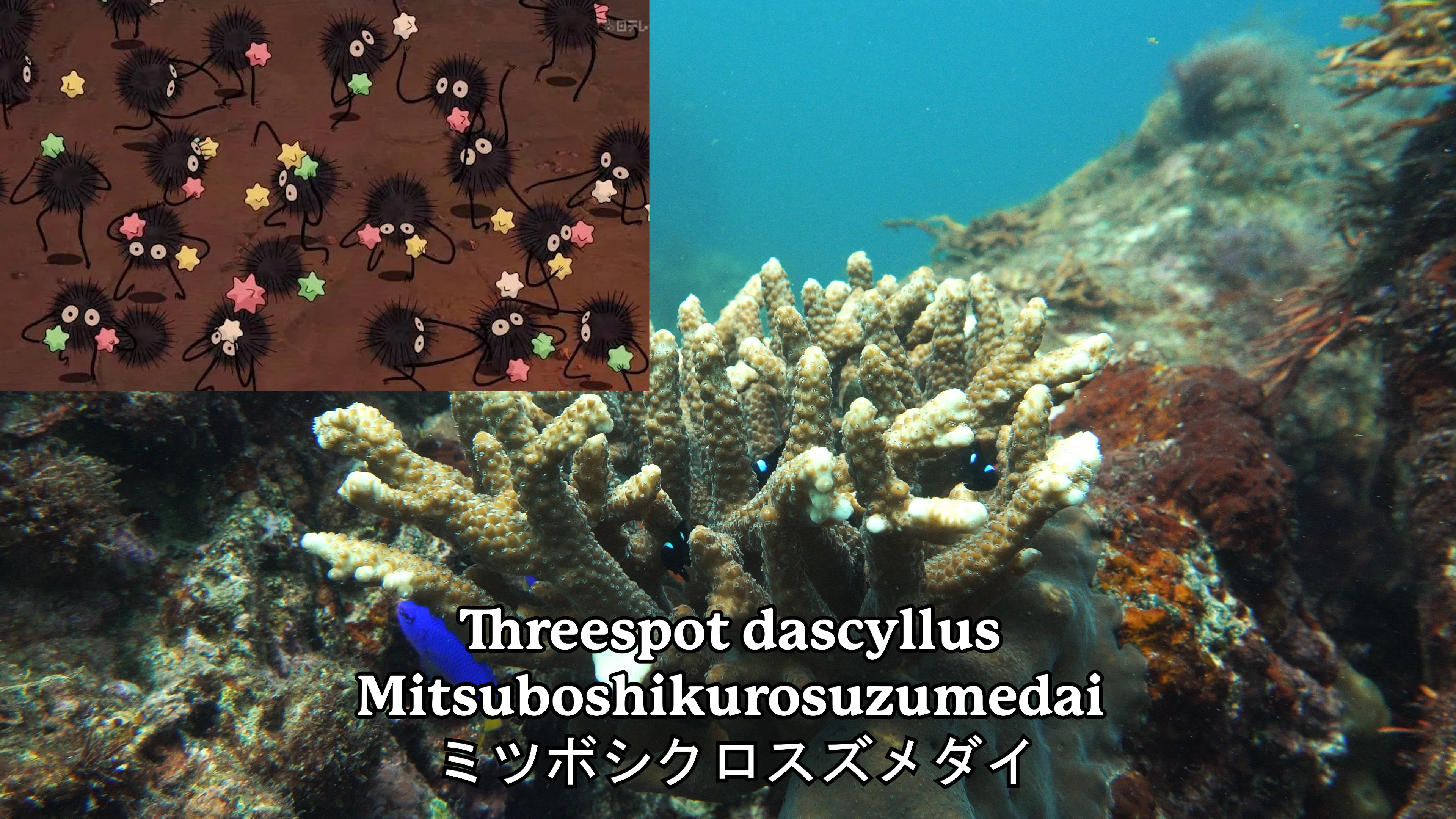
Down on the reef, we found these little guys. Known as the threespot dascyllus, they look like the soot creatures from Spirited Away. These ones are practically babies, so they’re still quite small and take refuge within coral and sea anemones.
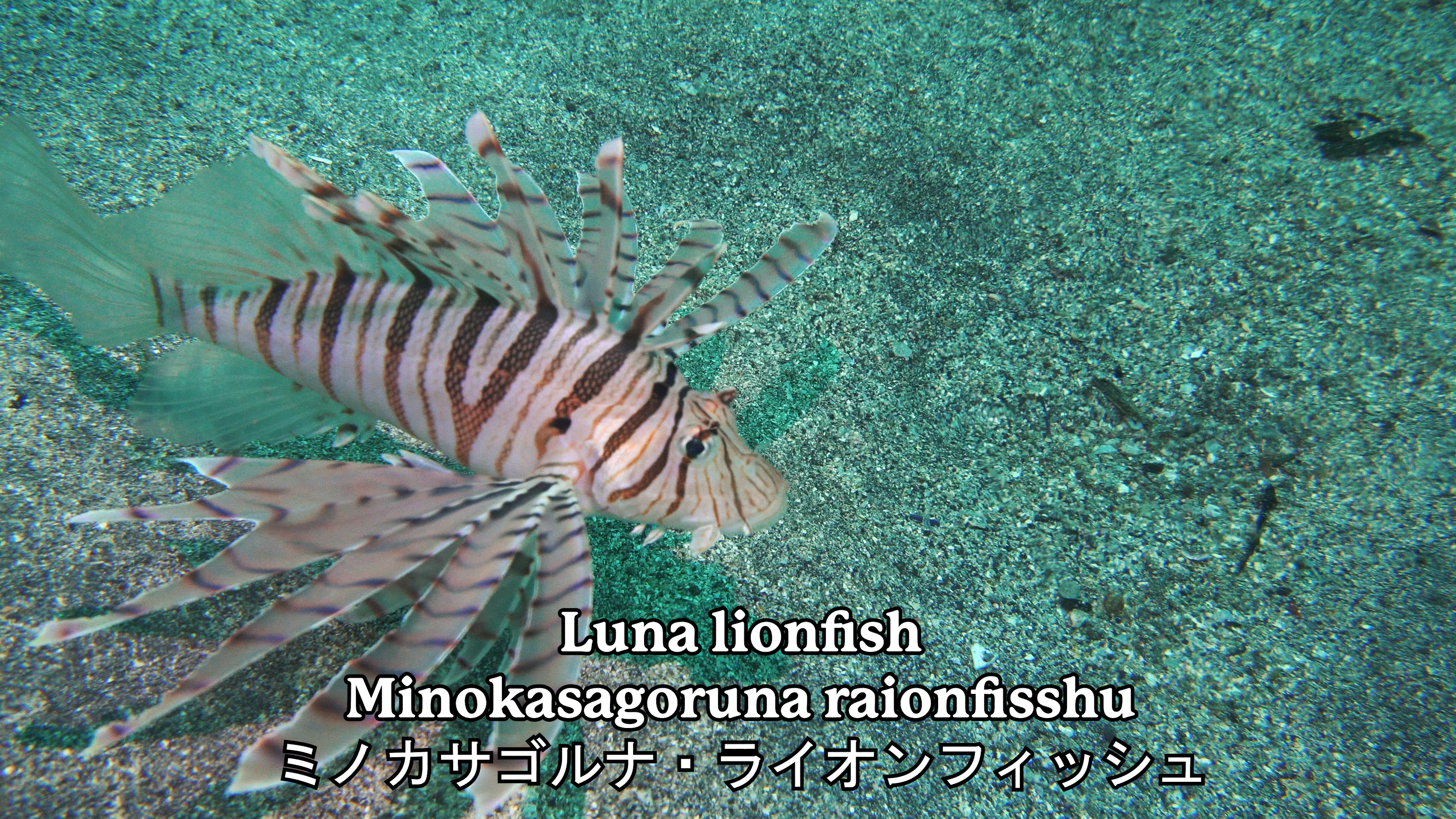

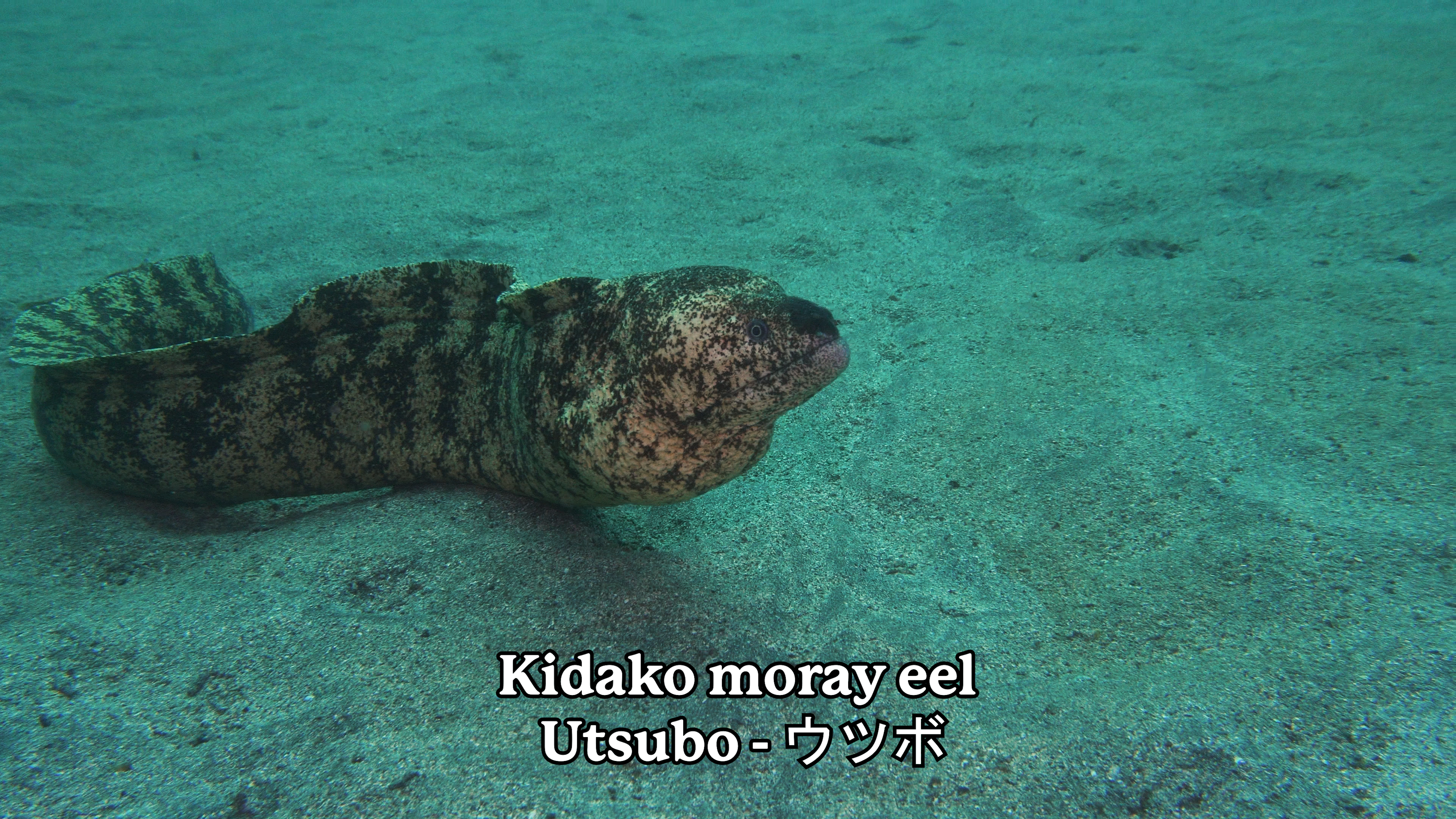
This loner has somehow managed to find an anemone in the middle of nowhere. Outside the tiny fish’s encampment, two hungry predators are hoping to catch an easy snack. On one side is a luna lionfish and, on the other, a kidako moray. Both the lionfish and the moray are a common sight in the Izu Peninsula, but compared to the other creatures that live here, they’re pretty regular.
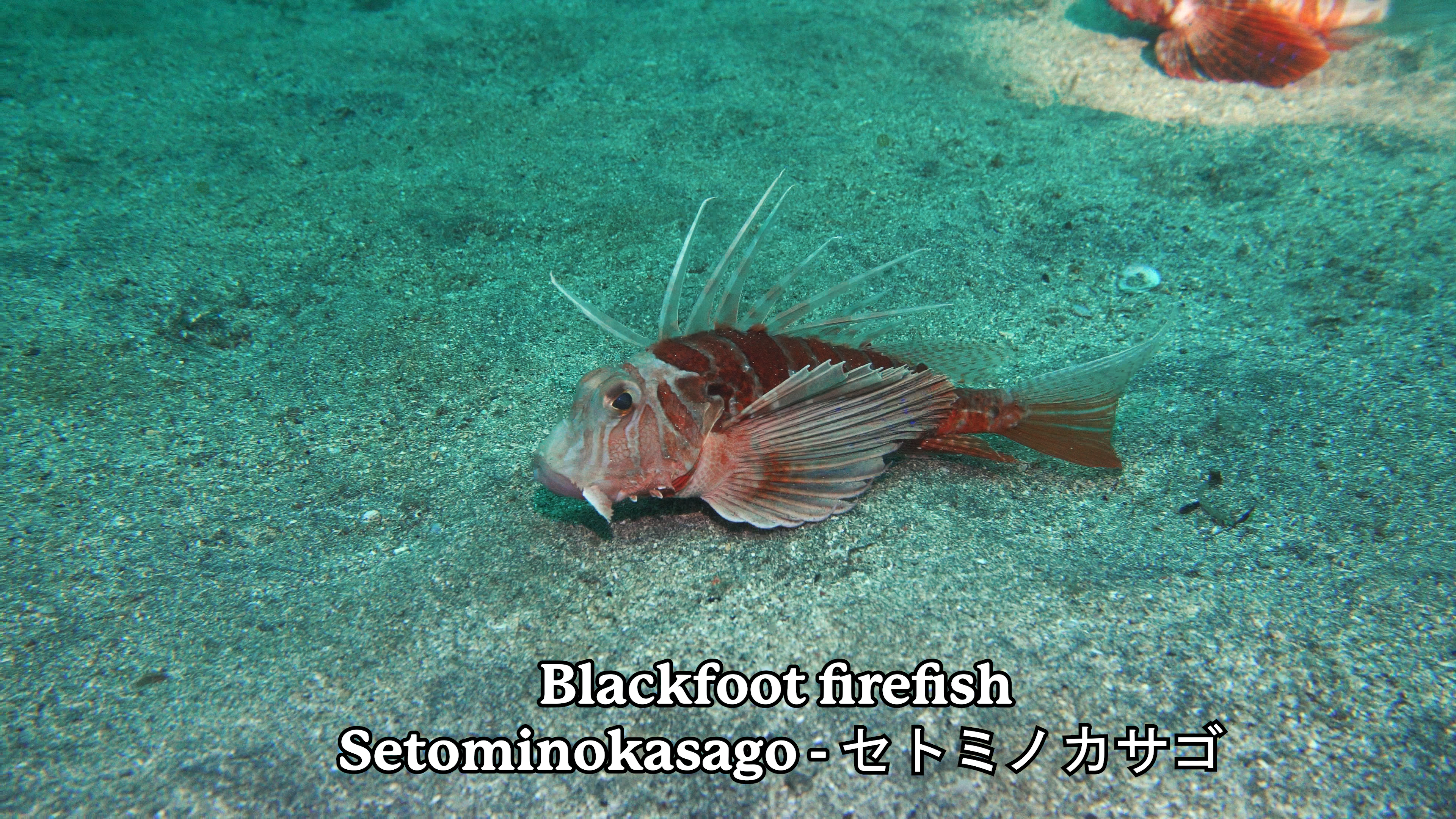
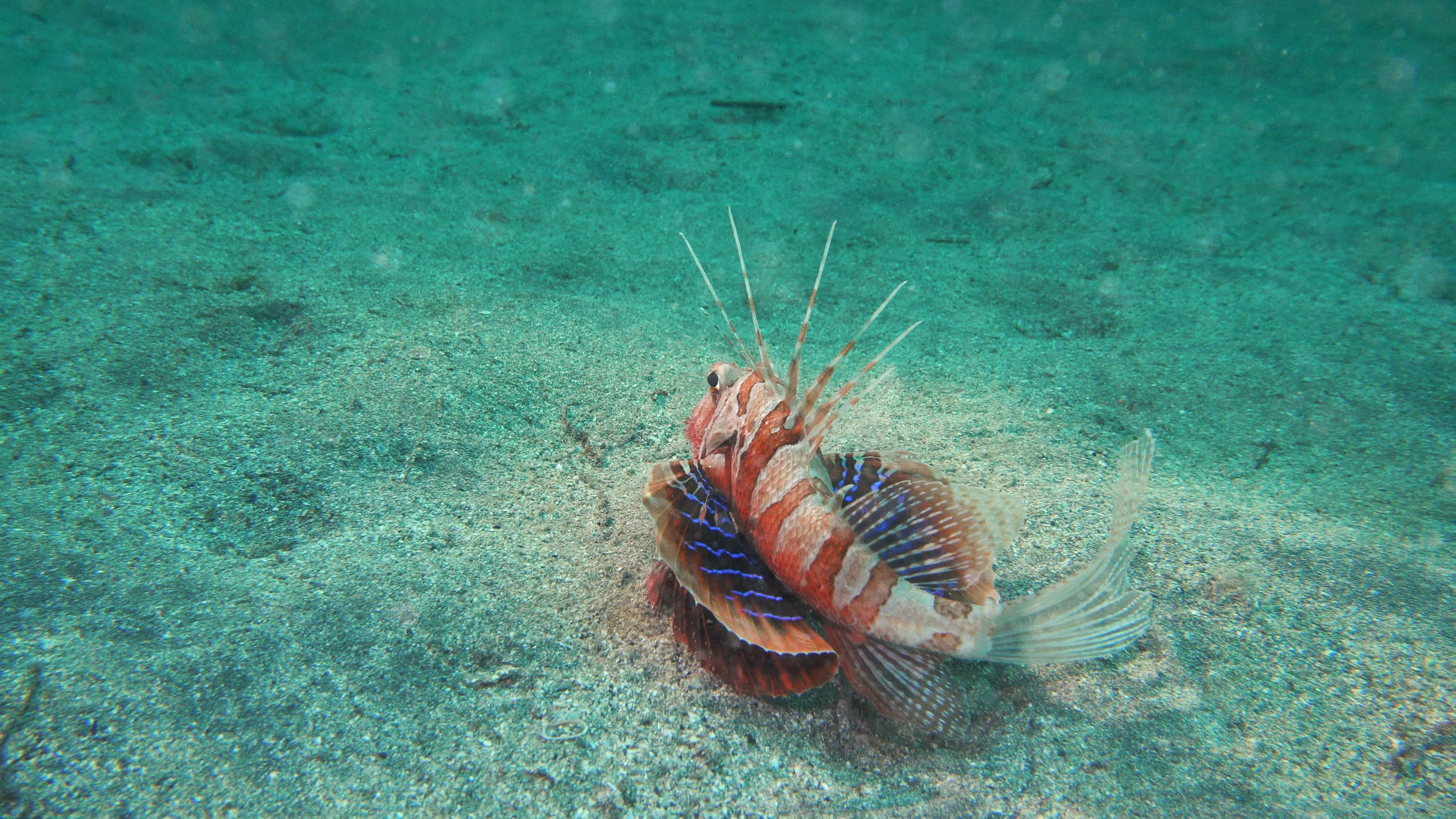
Further along the seabed, we found these weirdos. They are called blackfoot firefish. These creatures are lionfish relatives, but unlike other lionfish, they remain on the bottom and often bury themselves in the sand. The long spines on their back are venomous, so you definitely don’t want to touch them! But they do have these beautiful blue pectoral fins that fan out like peacock feathers.
Meanwhile, this freckled goatfish sifts through the sand with its goat-like “whiskers”. These whiskers are covered in taste buds that allow it to “taste” the sand and find small invertebrates to eat for lunch. I guess, they dig around until something tastes good, but that’s just my unscientific opinion.
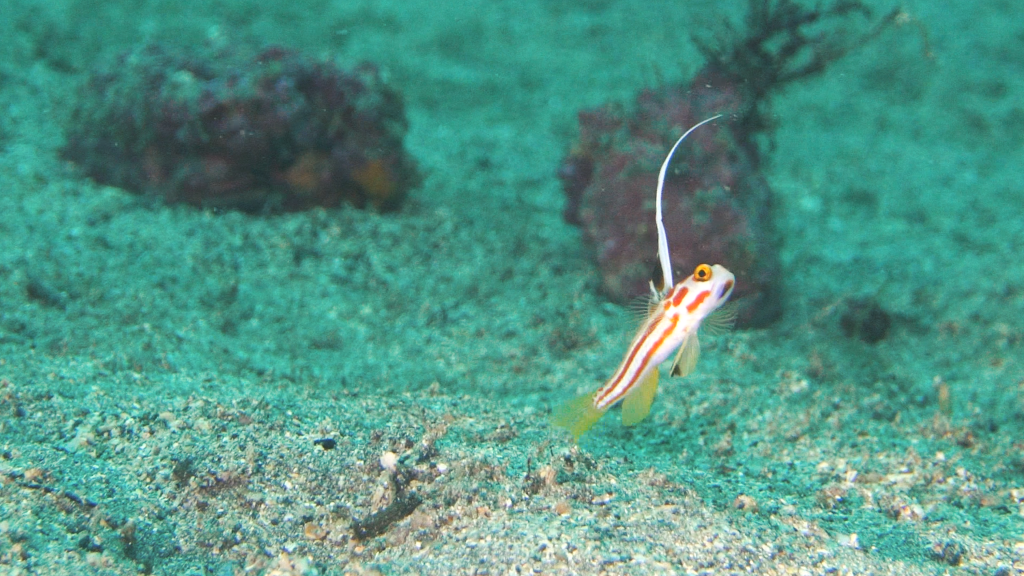
Then, there’s this dynamic duo. A yasha goby and a pistol shrimp. Many gobies and pistol shrimp have a mutually beneficial relationship where the shrimp digs and maintains the burrow, and the goby watches out for danger.
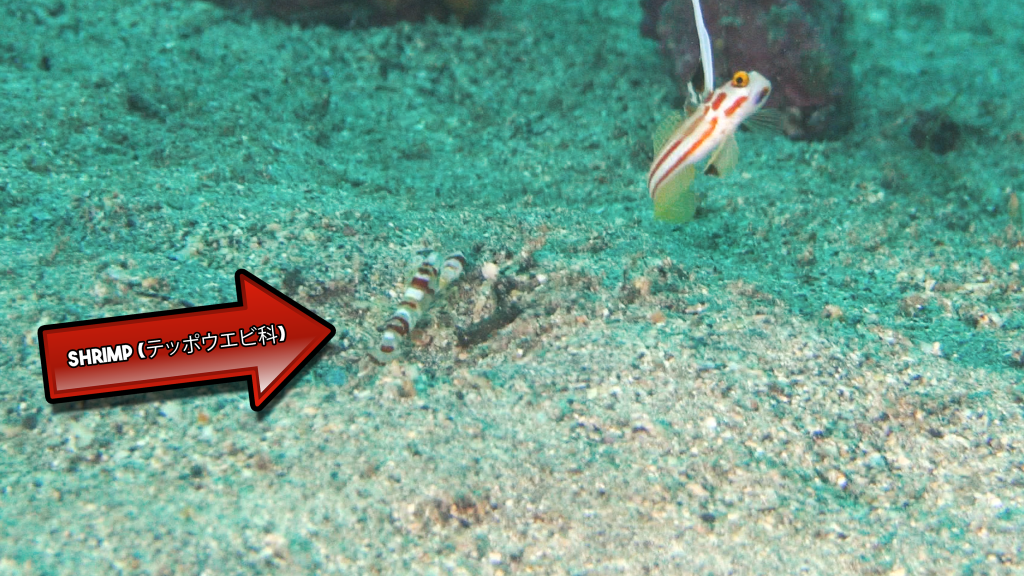
You can see that quite clearly here. The shrimp has poor eyesight, so the goby uses a special tail movement to alert it to danger. Then, seeing that the predator (me) has not left, it dives headfirst into the burrow.
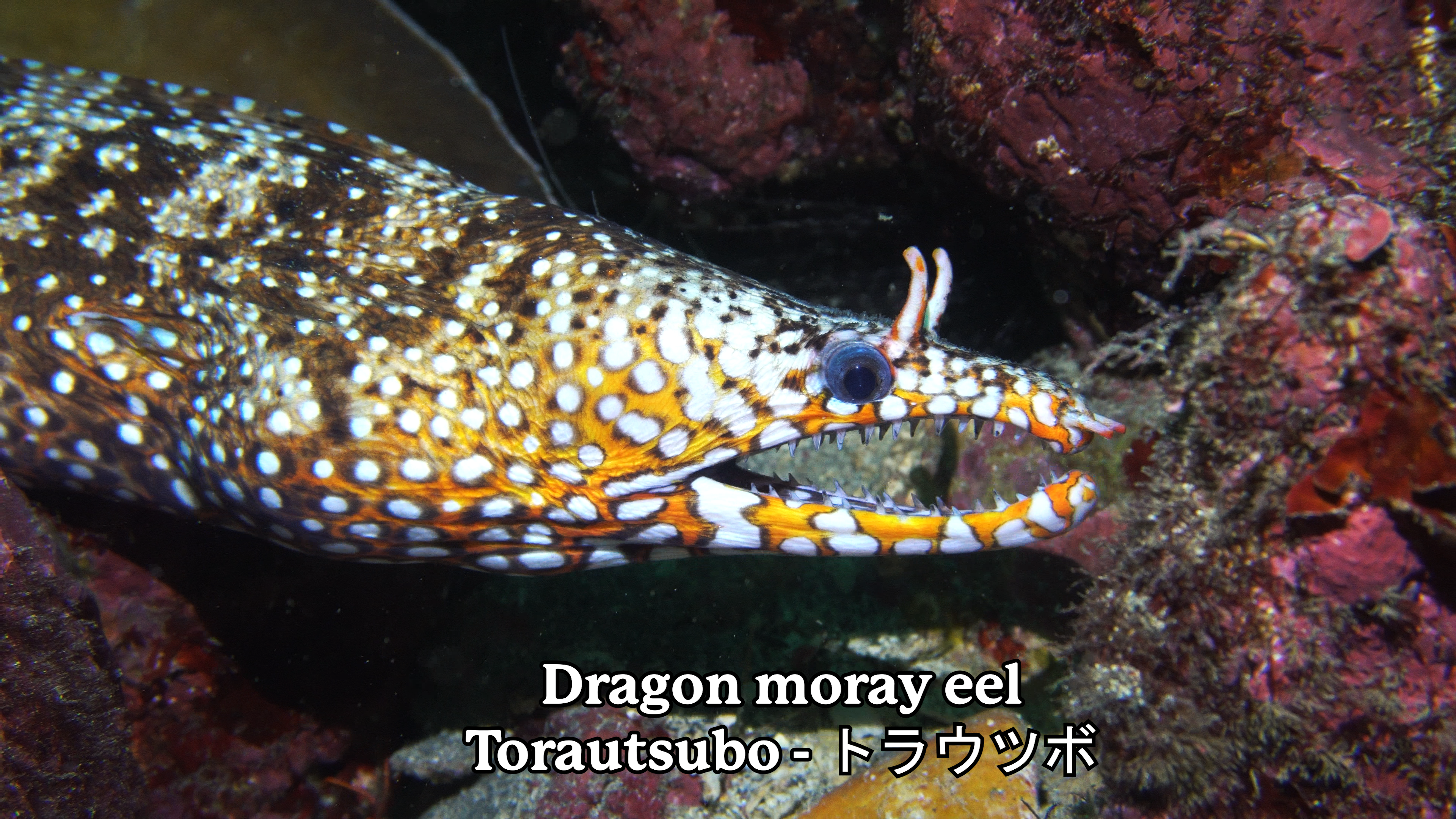
Last, but certainly not least, is another unlikely pair. A dragon moray eel and a goatsbeard brotula. The brotula is a type of fish called a cusk-eel. It is eel-like but not an actual eel.
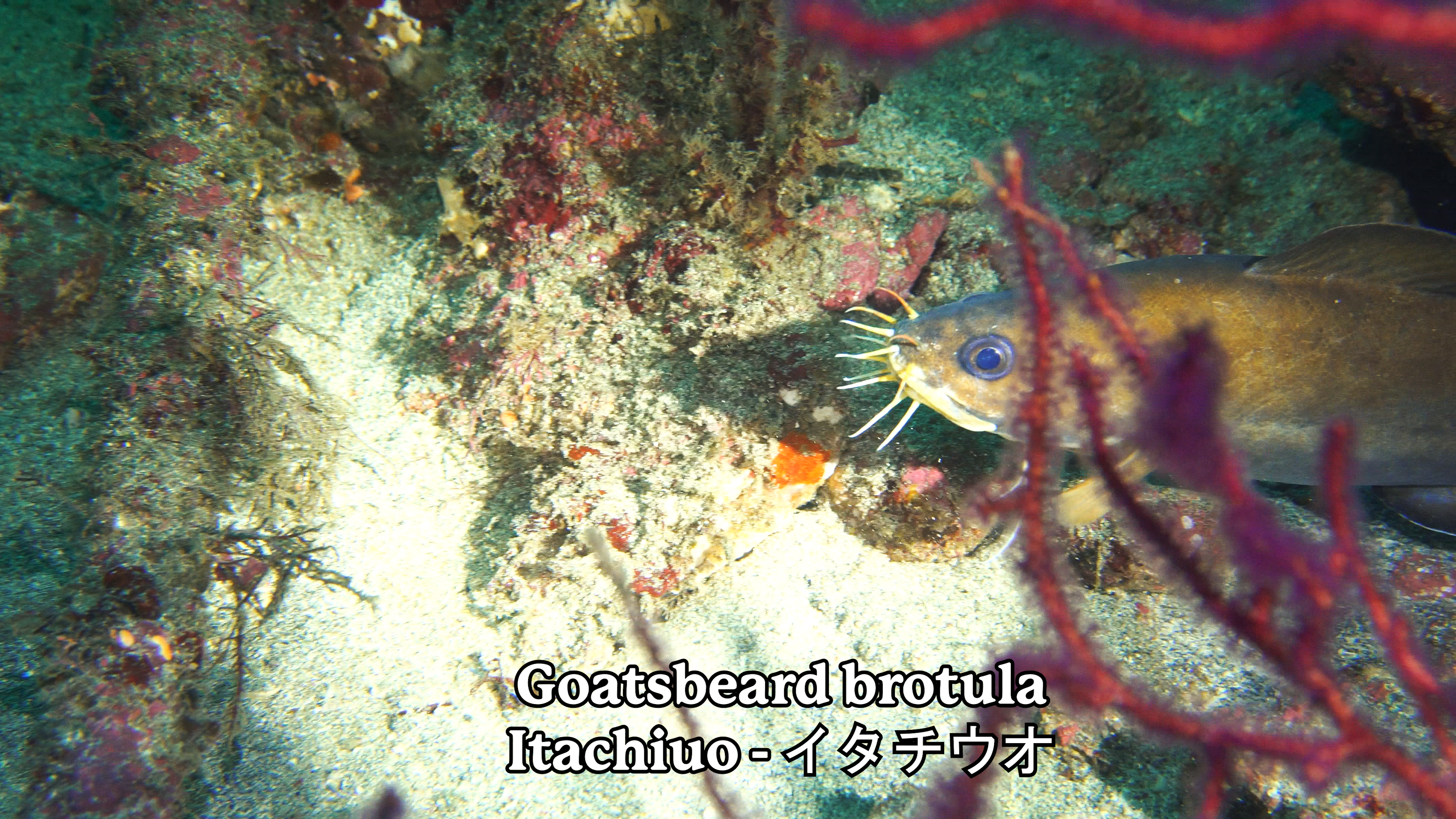
The dragon moray, on the other hand, is a true eel. Unlike typical morays, the dragon moray has curved jaws that prevent it from closing its mouth but allow it to grip and hold prey. It’s quite a magnificent animal, and I’d say it’s my favorite Japanese sea creature.
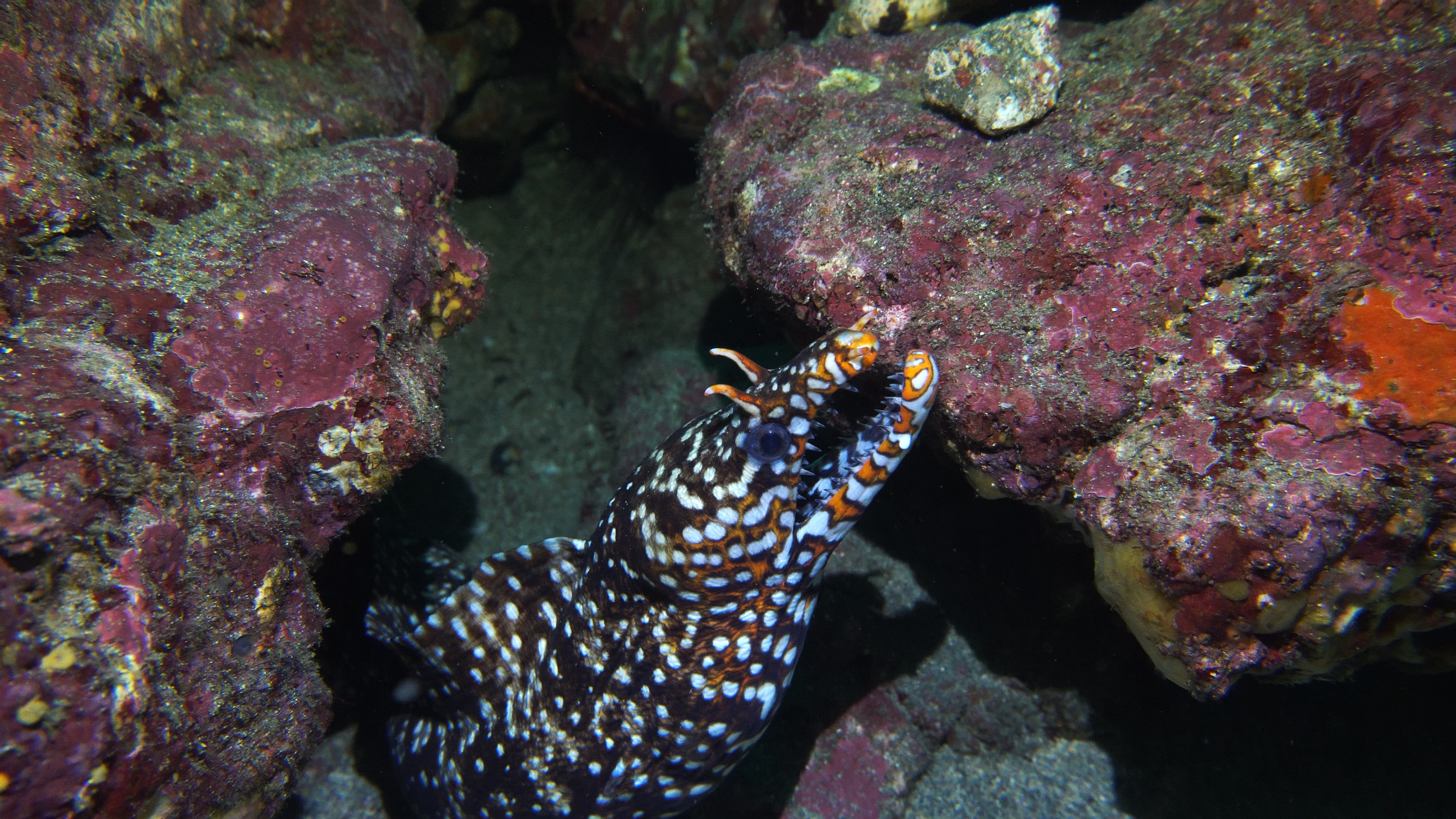
If you’d like to see more dragon morays, check out my short video about them, featuring more footage from my trip to Japan! (Or you can read the article I wrote about them.) And, if you liked this article, please give it a like, leave a comment down below, and follow Tidewater Teddy! Thanks, and have a great day!

 Tidewater Teddy
One Comment Add yours