
200 kilometers (120 miles) south of Tokyo lies an island that’s home to over 100 dolphins. Known as Mikura-jima, this place is nothing short of paradise. Every year between March and October, Indo-Pacific bottlenose dolphins make their home here, and you can swim with them in the clear, blue waters of the Pacific. But the dolphins aren’t the only draw. Mikura-jima is just one of over a dozen volcanic islands called the Izu Islands. These lush, green mountains are oases in the open sea, and they harbor all manner of life.
If you’re a tourist in Japan, you may not have heard of the Izu Islands, and I wouldn’t blame you because they’re not on the main tourist routes. To get to them, you either take a ferry or you take a plane. Being boat lovers, my wife and I chose the ferry route. Besides, the journey is always a big part of the adventure. So, after a couple days in Tokyo, we went to Takeshiba Pier to board our ship, the Tachibana Maru, and got underway at 10:30pm. When we left, we had some fantastic views of the Tokyo skyline and Rainbow Bridge.

Down below, the ship was very clean and peaceful. They had a galley and vending machines with food and drinks available, and they had bathrooms and showers, so you could freshen up. They even had their own little ferry mascots. Because this trip was going to take about 7 hours overnight, everyone had a place to sleep. With our 2nd class special tickets, we got our own bunks with privacy curtains. As a ferry captain myself, I loved it, and I slept like a baby on the calm seas.
At 5:00 am, we arrived at Miyake-jima, another volcanic island 19 kilometers (12 miles) north of Mikura-jima. Miyake-jima is more than twice the size of Mikura-jima and has a population of over 2400 people, compared the Mikura’s population of about 350. Because of this, there are more hotels and other businesses available on this island, which is why we decided to stay here.
Our dolphin swim was scheduled for 7:00 that morning, so we had a couple hours to kill. We dropped our things off at the hotel and had a delicious Japanese style breakfast in the food hall. While we ate, we relaxed and took in the beautiful seaside views. Unlike Tokyo, Miyake-jima is quiet and slow-paced. For us, it was a nice change from the hustle and bustle of Tokyo.
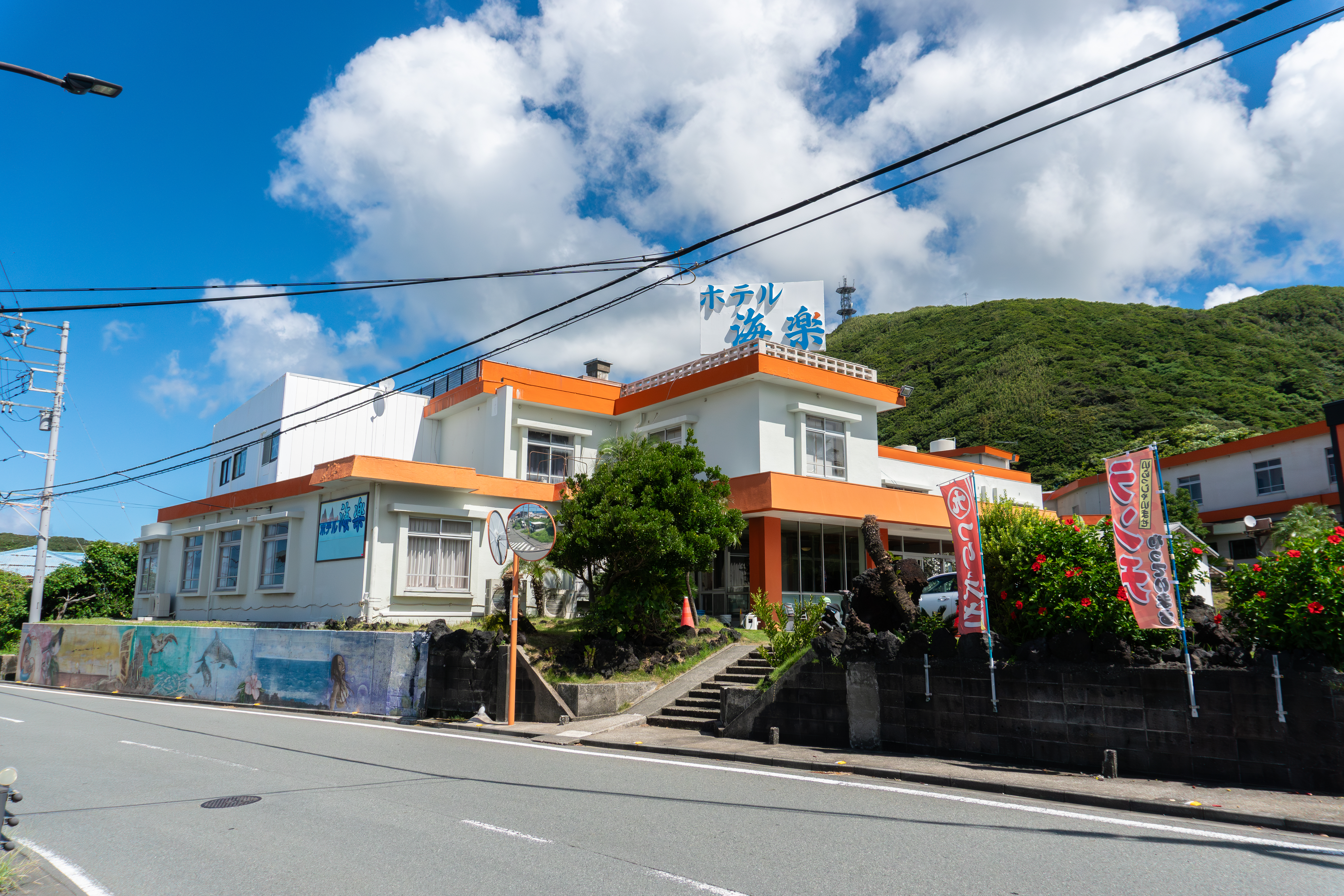
As in many small towns, the hotel was a bit older than ones you’d typically find in major tourist areas on the mainland. When you walk in, you’re greeted with many pictures of incredible catches from fishing trips and a little store selling fishing gear. To the left, you can see a large saltwater aquarium filled with reef fish behind a table selling “I Heart Miyake” T-shirts.
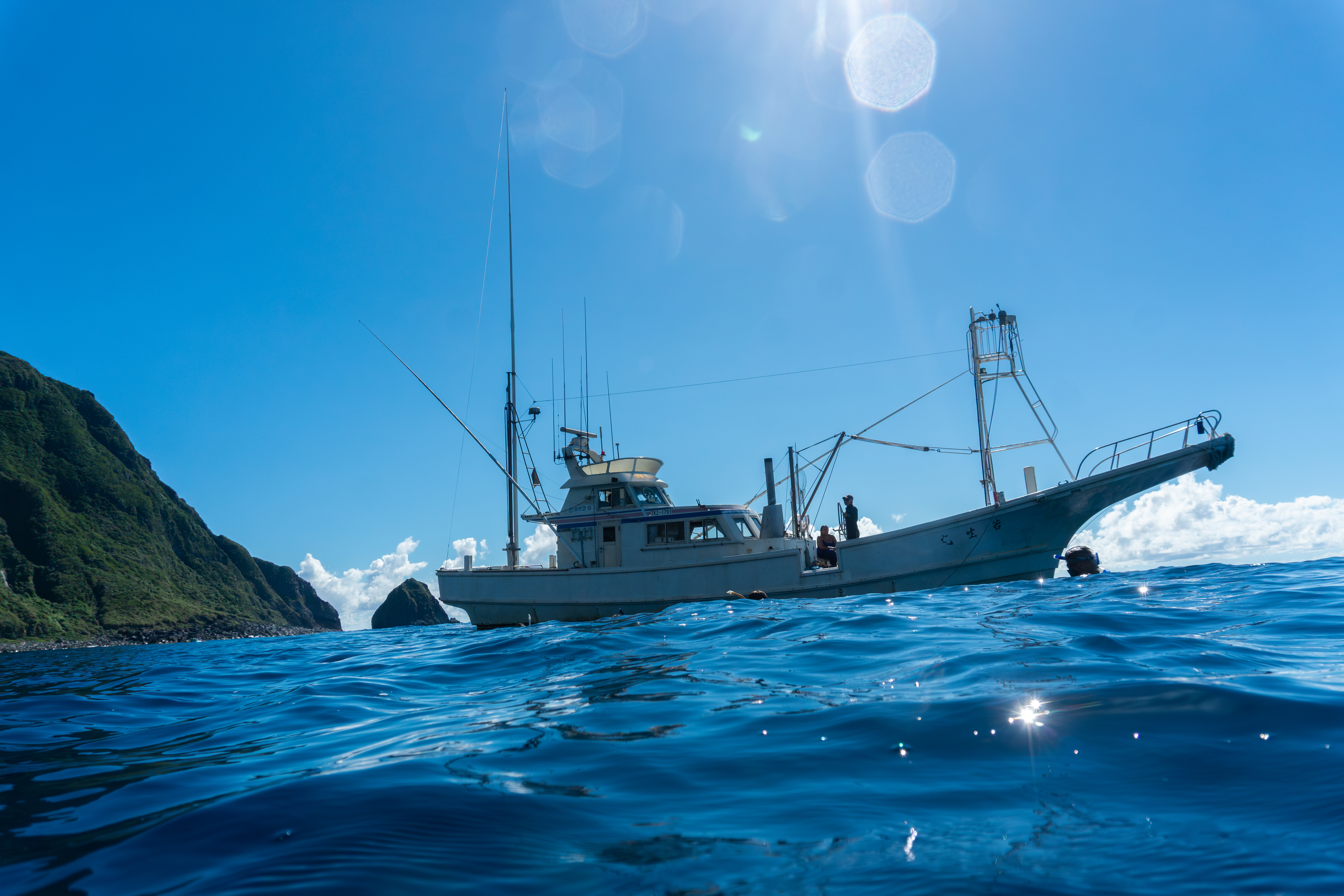
At 7:00, a van arrived at the hotel and our guide, Ueda-san, stepped out to greet us. Owner of Dolphin Club Miyakejima, he was very friendly and had a clear passion for the sea. He brought us to his office and fitted each of us with gear that was pre-selected based on his e-mails. After donning our wetsuits, we picked up one more passenger before driving through the beautiful countryside. We soon reached a fishing port on the southern part of the island and boarded a boat that took us on a 50 minute ride across the sea to Mikura-jima.
Upon arrival, we donned our gear and straddled the gunwales of the boat as we circled the island, looking for dolphins. It wasn’t long before we spotted them and splashed into the sea to greet them. The Japanese word for dolphin is “iruka” (イルカ), and today, these iruka were curious and playful. They investigated us in the water and got really close. Some people swam after them, but I just floated at the surface and waited for them to come to me. And, sure enough, they came. Some brought their babies (which are called calves) to get a better look at me while others snuck up on me from behind.

In popular culture, dolphins are often deified or demonized. There are numerous cases of dolphins saving humans, and there are also some cases of dolphins attacking them. While it’s true that dolphins can be compassionate or aggressive, they cannot be painted with a single brush. These mammals are highly intelligent, and just like humans, they have their own personalities. However, they are still wild animals, so it’s important to respect their space for your safety and theirs.
Although this wasn’t my first experience with wild dolphins, it was definitely my best one. In the past, I fed wild dolphins in Tin Can Bay, Queensland and swam with wild dolphins in Rockingham, Western Australia. Both of these paled in comparison to freely swimming in clear blue waters with dozens of wild dolphins all around me. On top of that, the dive team at Dolphin Club Miyakejima was extremely professional and knowledgeable, and they were very careful to protect both humans and dolphins. One instructor stayed in the water and another stayed onboard the boat at all times, giving directions so we knew when to approach and when to back off.
But dolphins weren’t the only sea creatures around. Hidden in plain sight, there was a shark lurking in the depths below. The Japanese word for shark is “same” (サメ), and this same is known as the spinner shark in English. Luckily, spinner sharks are not a dangerous species. However, it certainly disproves the myth that sharks aren’t around when dolphins are. After all, they both tend to eat the same food.
After a few hours playing with the dolphins, we returned to Miyake-jima for a much needed break. It may have been the end of our dolphin experience, but it was not the end of my underwater adventures for the day. We had lunch back at the hotel with fresh sashimi with tamago and rice and miso soup. The food was so good; I could not get enough of it. Except the natto. I’m okay without natto.
After eating, we checked into our room. It was a traditional Japanese style room with tatami mats and futon, and featured absolutely gorgeous views of Miyake-jima. That afternoon, I was going back out with Dolphin Club Miyakejima to scuba dive from the beach. My wife is not certified diver yet, so she chose to stay behind and relax as I headed back out into the unknown.
In case I forgot to mention this little detail, Miyake-jima is an active volcano that has erupted several times throughout history. Since 1940, it has erupted four times with eruptions averaging roughly every 20 years. The last eruption was in 2000, and it caused the entire island to be evacuated for 5 years. Traces of these eruptions can be seen throughout the island, such as the lava fields that have scarred the landscape and shaped the coastline.
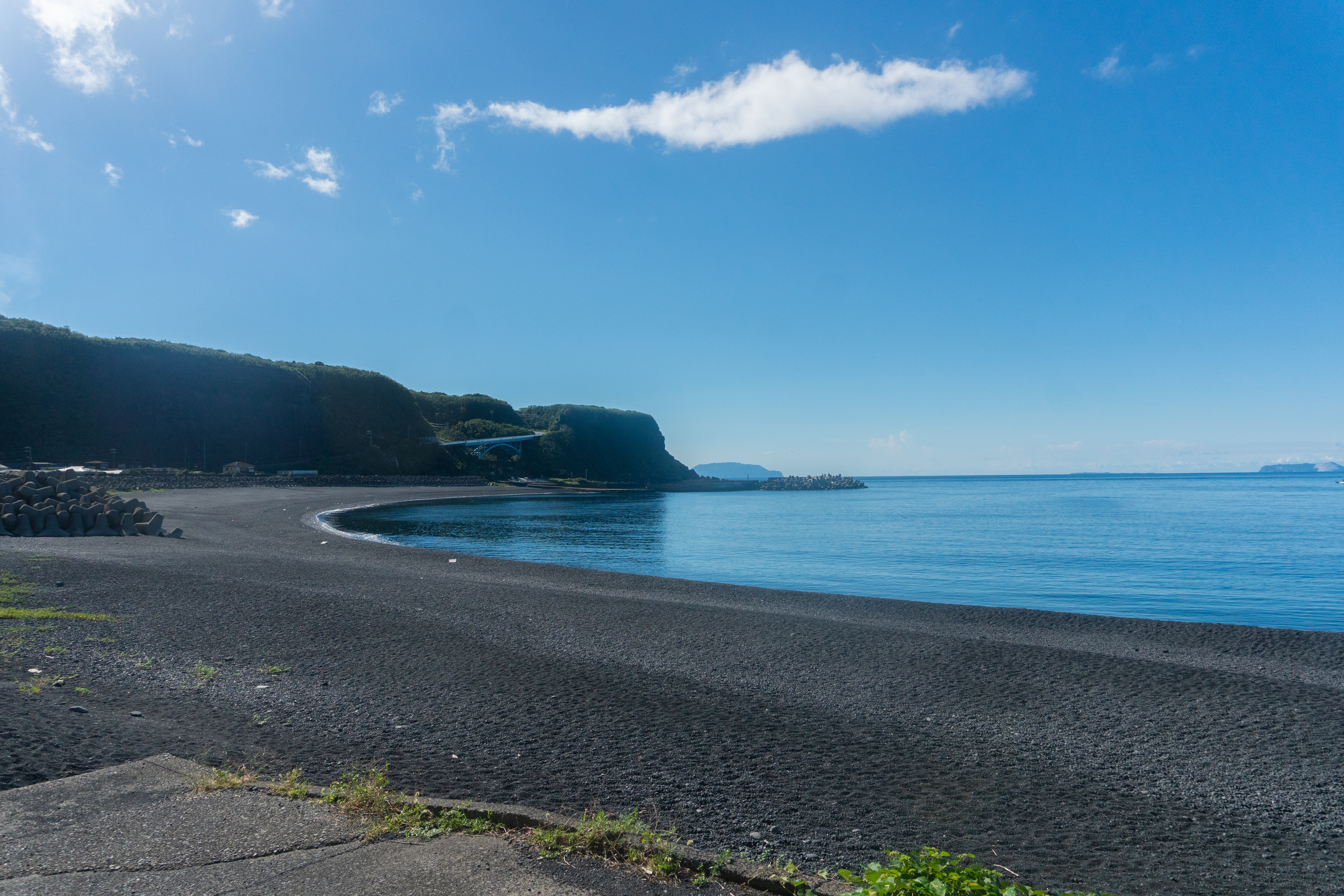
Like many volcanic islands, Miyake-jima’s beaches have black sand. This one, known as Okubohama (大久保浜), would be our dive site. Many black, smooth stones covered the beach and littered the seabed. Evidence of previous eruptions and lava flows. Even under the sea, I could see lava rock formations now covered by coral (Sango – サンゴ) and other marine life.
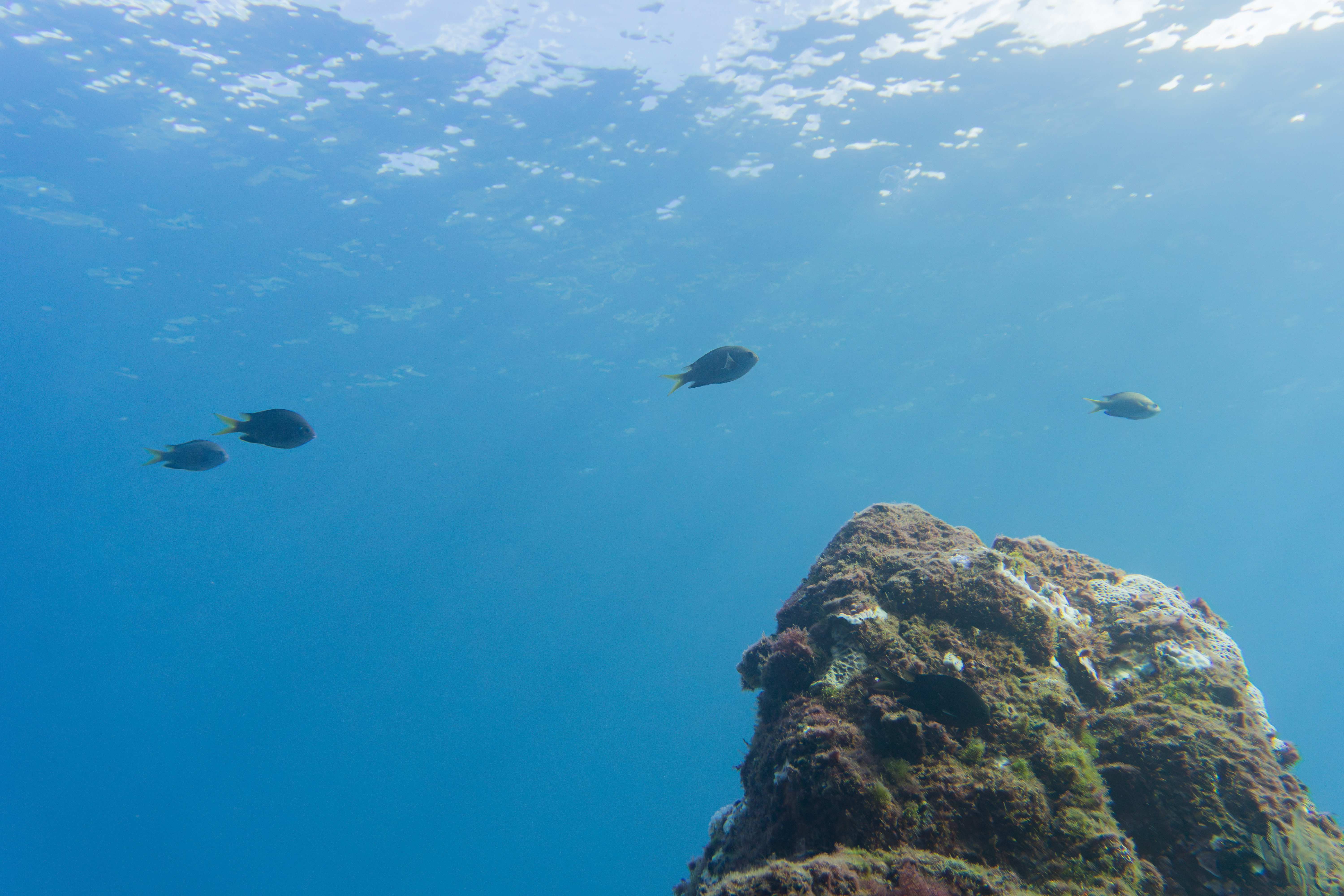
Speaking of marine life, this island has incredibly bountiful seas. I’ve dived in Hawaii and on the Great Barrier Reef, and these waters rivaled both places! Here are some of the species we encountered with their English and Japanese names. Red lionfish (Hanaminokasago – ハナミノカサゴ). Red-lipped morwong (Migimaki – ミギマキ). Blue-spotted cornetfish (Aoyagara – アオヤガラ). Thornback cowfish (Shimaumisuzume – シマウミスズメ). Variegated lizardfish (Eso -エソ). Moorish idols (Tsunodashi – ツノダシ).
We also saw a couple green sea turtles, which are known as Aōmigame – アオウミガメ but are often called “kame” (カメ) or just “turtle”. One of the turtles was regular sized, but the other was quite small. I’ve seen many sea turtles, and it was definitely the smallest one I’ve ever seen.
Another highlight of the dive was this fish. Known as the wrought-iron butterflyfish (Yūzen – ユウゼン), this species can only be found in southern Japan. Many divers come to the Izu Islands just to see it!
We spent a bit more time exploring the lava formations, where the reef creatures were thriving. Damselfish and moorish idols were plentiful up here, and we even saw a longfin batfish (Tsubameuo – ツバメウオ).

When I got back to the hotel, I was exhausted. This had been my first dive in three years, and beach dives can be pretty taxing on the body. The kind hotel staff tried to wake us for dinner, but we were so tired that we went back to bed. I think we were also still pretty jetlagged because this was only our third full day in Japan.
The next morning, my wife and I got breakfast again, and then, I went off on my second and final dive at Miyake-jima. This time, we went off the beaten path. Literally. We took a turn through the jungle and drove across a lava field in an area called Abeshita (粟辺下). Then, we put on our gear and climbed down some slippery rocks and swam out to sea. My kind of dive!

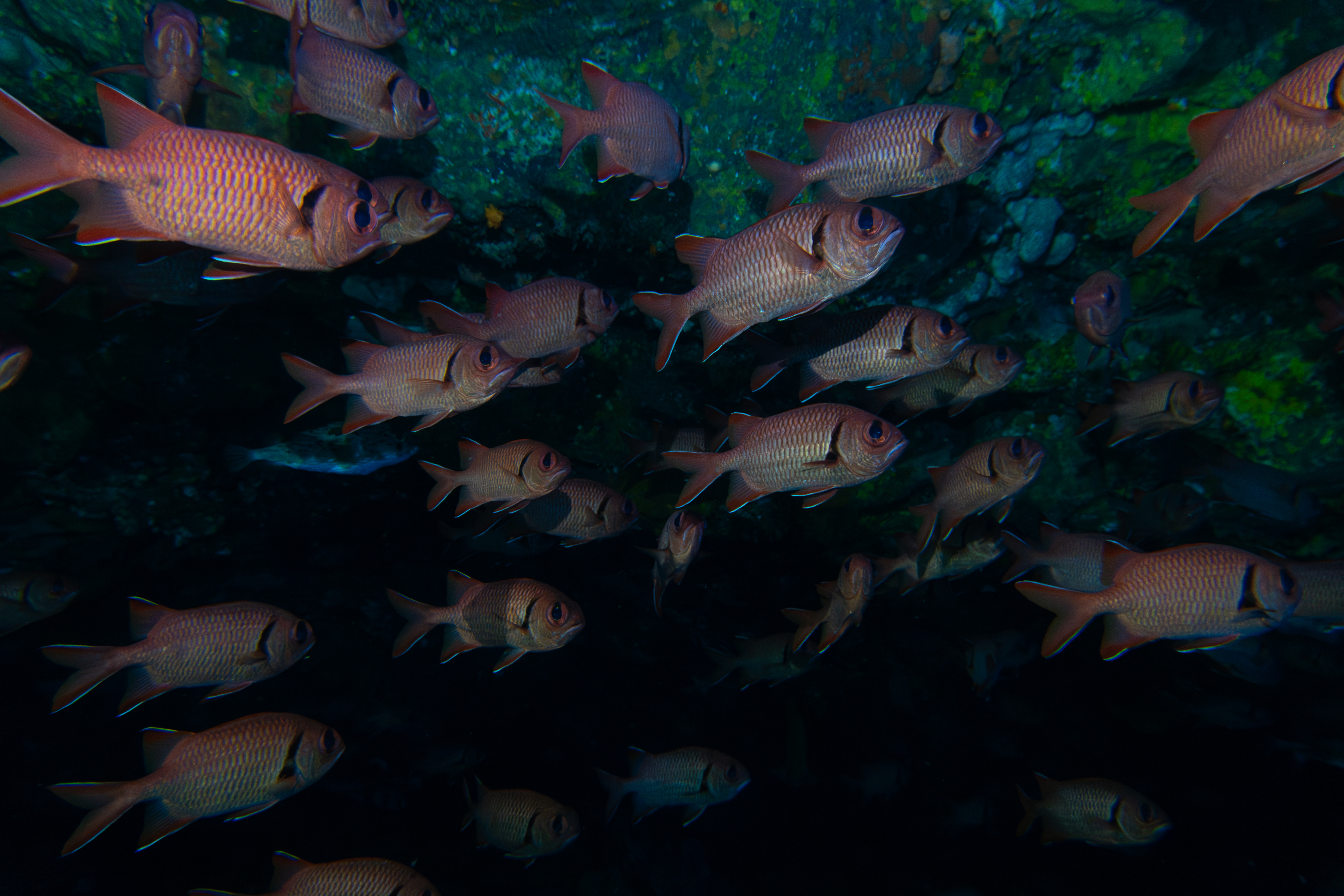
Here, there was a huge sea cave filled with fish of all kinds!!! The most impressive of these was a school of bright red blotcheye soldierfish (Akamatsukasa – アカマツカサ). These fish are primarily nocturnal, so during the day, they are often found hiding in caves like this one. There were also a lot of morwongs like the spottedtail morwong (Takanohadai – タカノハダイ). There were also many spotfin burrfish (Ishigakifugu – イシガキフグ). I’ve always loved pufferfish because they’re basically spiky puppies.
On the lava rocks outside the cave, we spotted some clownfish (Kumanomi – クマノミ) in some bright, white anemones. I’m fairly certain they were a melanistic morph of Clark’s anemonefish (Amphiprion clarkii). Joining them in the anemone was a small school of juvenile three spot dascyllus (Mitsuboshikurosuzumedai – ミツボシクロスズメダイ). We also saw a nudibranch (umiushi – ウミウシ), which I believe was the species Halgerda willeyi.
We were getting low on air, so we started heading back to shore. We swam back through the cave and saw a whole lot more fish and corals among the rocks. Then, we went back ashore, and I returned to the hotel.
This was our last day on the island, so that afternoon, we had to catch the ferry back to the mainland. Before heading out, we made sure to grab a couple of those “I Heart Miyake” shirts, which ended up being a big hit everywhere we wore them. We gathered our luggage and walked about 5 minutes to the ferry terminal. There, they had a model of Miyake-jima island on display, where we could see the massive volcanic crater in the center of the island. There was also a dinosaur sculpture there for some reason, but I certainly approved of it!
When the ship finally arrived, I was impressed with the captain’s shiphandling abilities, and I thought it looked like a lot of fun to drive! The crew and dockhands secured the vessel very quickly and smoothly. But, as I admired their work, the friendly staff at Dolphin Club Miyakejima arrived to see us off! Ueda-san gave us dolphin keychains as a special memento. We were so surprised and thankful that they had come. They told us to go to the outer deck when we depart, so they can wave goodbye to us.
We boarded the ferry and got ourselves situated. As you may know there are many vending machines in Japan, and we discovered a cake vending machine that we’d overlooked. They had an excellent assortment of desserts that were around 600 to 800 yen, which is about 4 to 6 US dollars. My wife got a chocolate cake, and I got a strawberry shortcake. Then, we headed up topside to the outer deck.
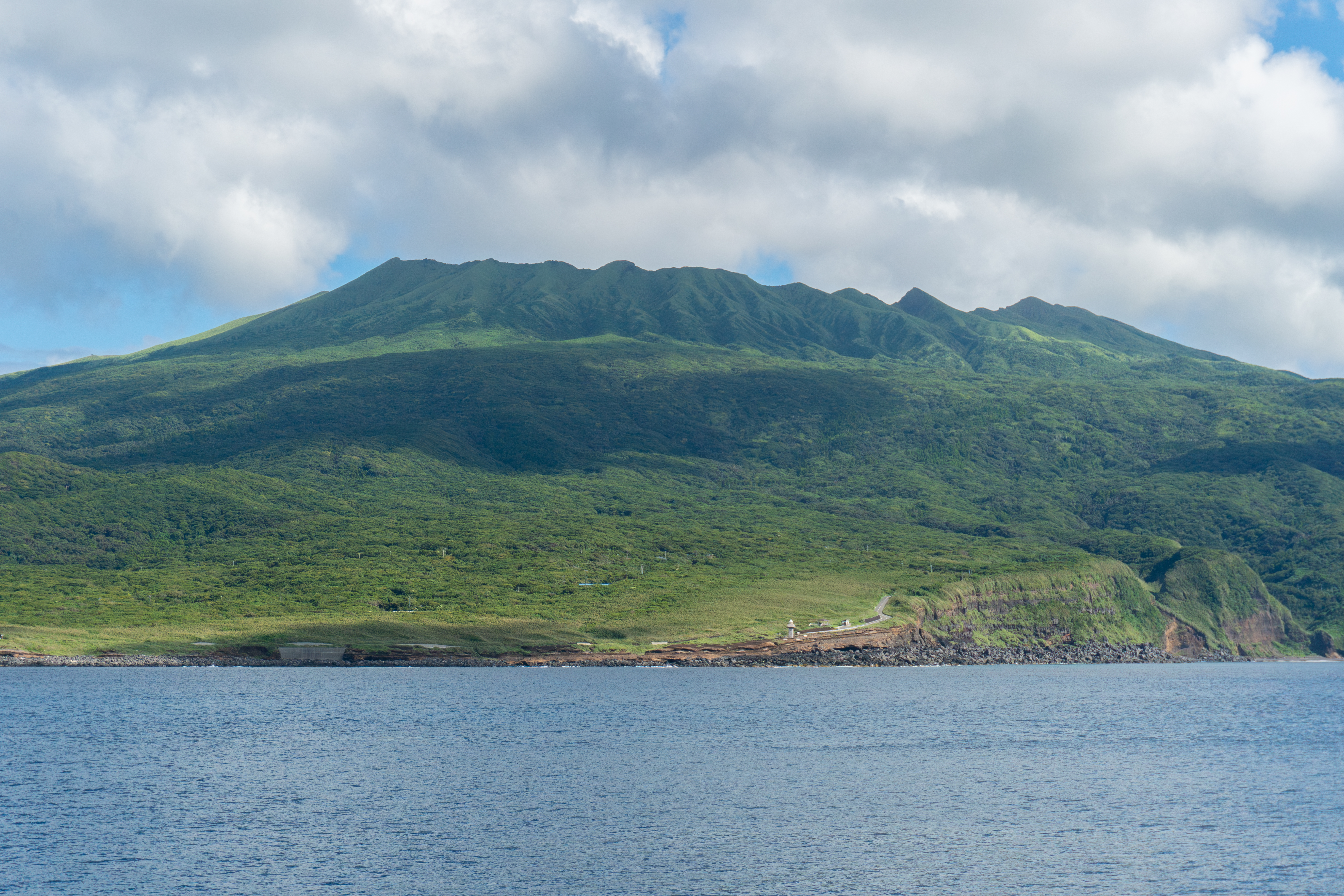
As the ferry pulled away, we waved goodbye to the staff at Dolphin Club Miyakejima while other passengers held streamers that would break as we headed out to sea. Once we were a good distance from the island, we sat down with our cakes and got a better look at Miyake-jima’s beauty. Just like the model on display, we could see the massive volcano’s cone looming over the island. We could also see the blackened lava flows leading down from the volcano’s crater into the sea.
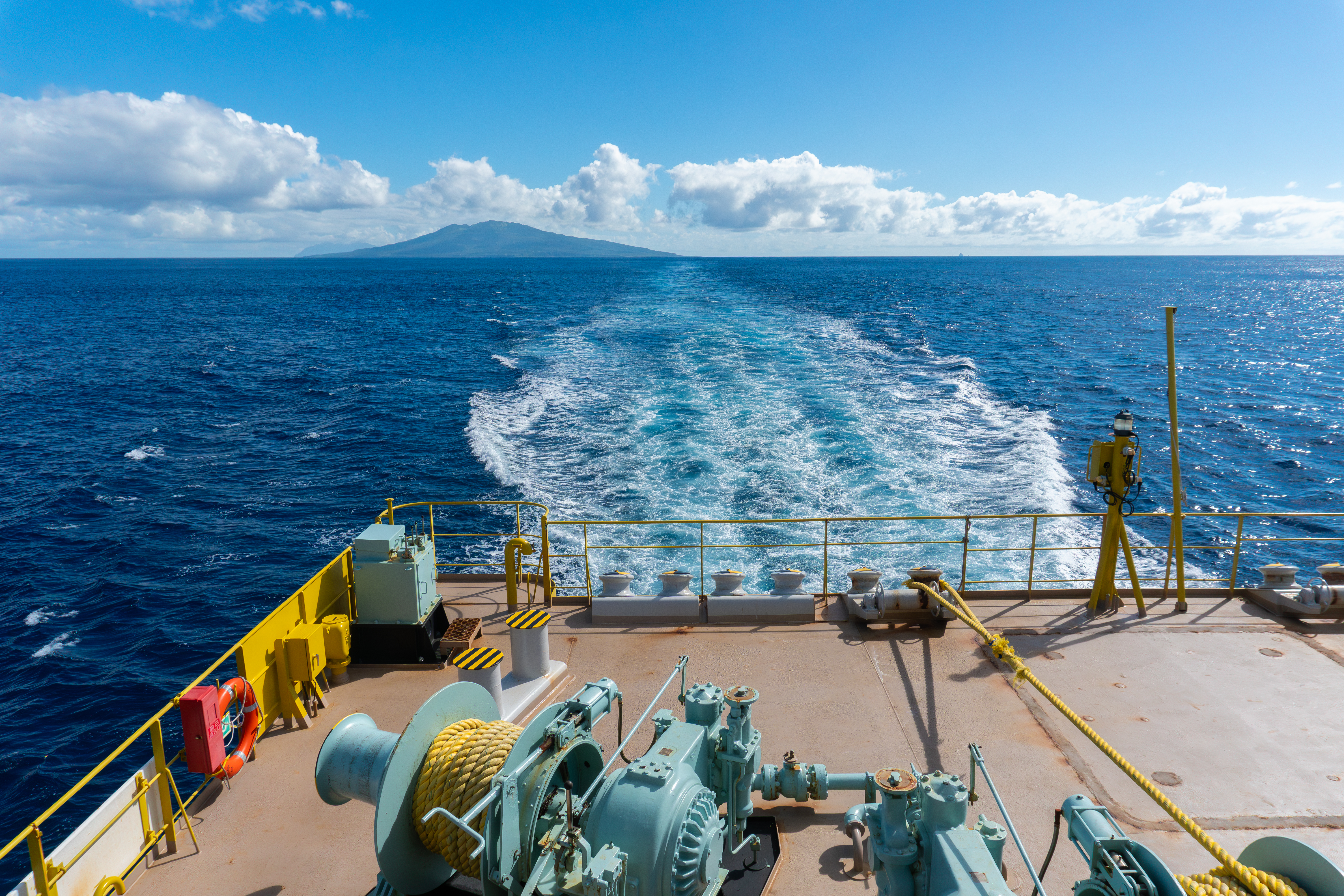
During the long trip back to Tokyo we spent time resting in our bunks and exploring the ship. Along the way, there were many beautiful sights that were much easier to see in the daytime hours. We saw some of the other Izu Islands, such as Oshima and Ni-jima. And, far away in the distance, we saw Mount Fuji, barely visible in the haze.
The familiar Tokyo skyline came back into view again as we returned to our life as city-slickers. Although this was the end of our trip to the Izu Islands, it was not the end of our trip in Japan. We were just getting started! If you liked this article, please give it a like, leave a comment down below, and follow Tidewater Teddy. Thanks, and have a great day!

 Tidewater Teddy
One Comment Add yours