
Have you ever wondered why turtles have shells? How they survive cold winters? Or how old they can actually get? Since the dawn of humanity, turtles have captured a special place in our hearts. From folklore to video games, we have a genuine fascination with these unusual reptiles. Yet, even though they are not rare or reclusive, they have their own share of mysteries. Let’s discover the truth behind these shelled slowpokes.
Why Do Turtles Have Shells?
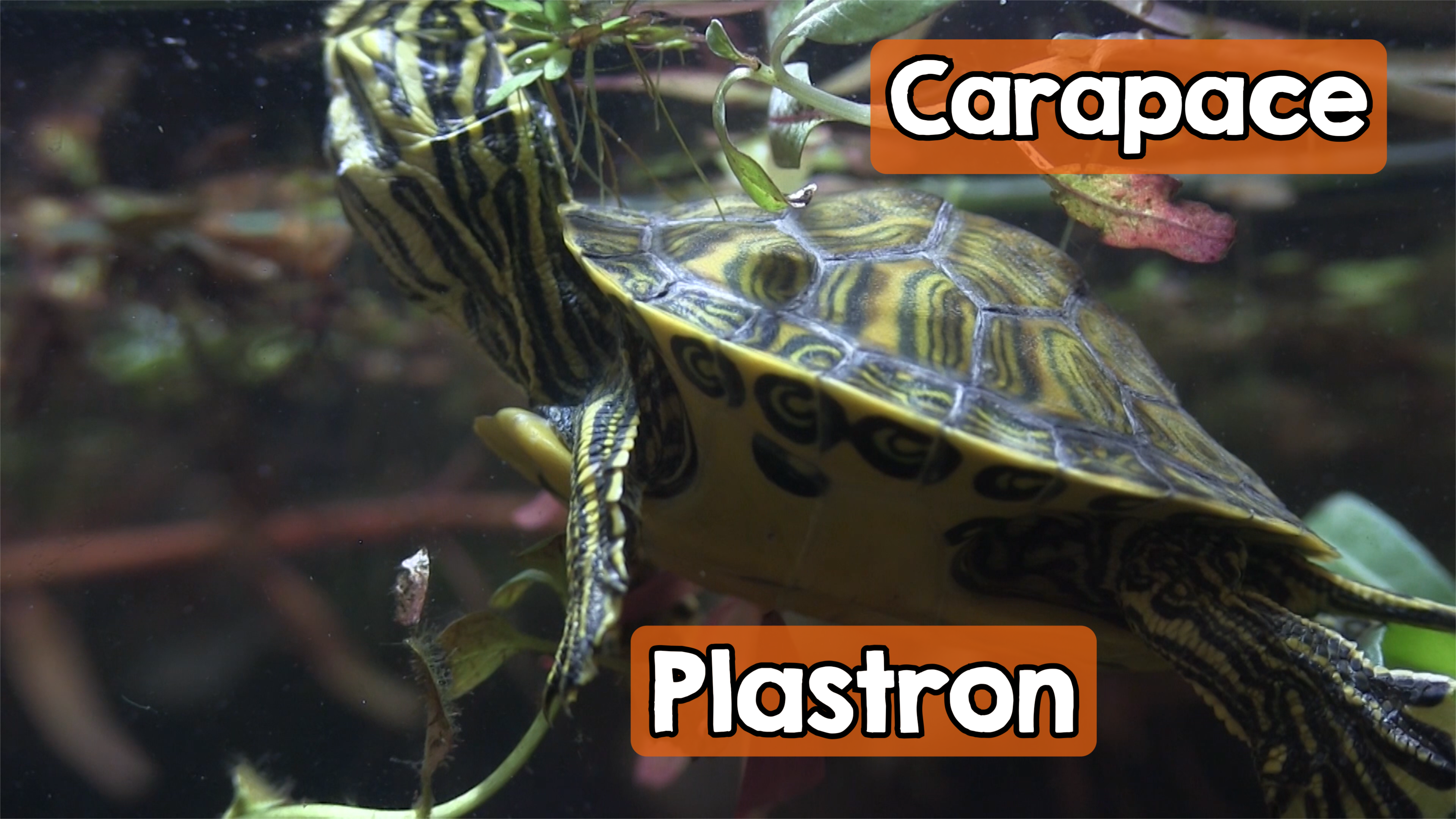
First off, what is the shell all about? Sure, it’s good for defense, but can turtles just take it off like clothes? Definitely not! Their shells are a part of their bodies, and their vertebrae and other bones are fused to them. The top part of the shell is called the carapace, and the bottom part of the shell is called the plastron. The scales covering the shell are called scutes, and they are made of keratin. Keratin is the same substance that makes up your hair and fingernails.
But, believe it or not, turtles didn’t always have shells. In the middle Triassic Period, 240 million years ago, turtles evolved alongside the first dinosaurs. Their ancestors were basically naked, and they looked more like lizards than turtles. But, over time, their ribs developed into bony plates, and by the end of the Triassic, they took on the forms we know today.
In the Jurassic Period, turtles split into two groups, Cryptodira (the hidden neck turtles) and Pleurodira (the side-necked turtles). Hidden neck turtles retract their necks backward into their shells while side-necked turtles retract their necks sideways. Most living turtles, including giant tortoises and sea turtles, are hidden neck turtles while side-necked turtles are restricted to freshwater habitats in the Southern Hemisphere.
The Biggest Turtles That Ever Lived

Between the Jurassic and now, two truly titanic turtles have come and gone. Two of the most noteworthy were Archelon and Stupendemys. Archelon was a giant sea turtle that lived during the age of the dinosaurs and shared seas with other massive marine reptiles. It was 4.6 meters (15 feet) from head to tail, making it the largest known turtle. Stupendemys, on the other hand, was a giant freshwater turtle that lived in South America 5 million years ago and had a carapace that was over 2.8 meters (9 feet) long. This means that it was the largest known freshwater turtle and possibly the largest turtle that ever lived.
Today, the leatherback sea turtle is the largest of all living turtles and can grow up to 1.8 meters (nearly 6 feet) and weigh over 500 kilograms (1,100 lbs). It’s front flippers alone can be up to 2.7 meters (8.9 feet). Yet, unlike other sea turtles, it does not have a hard, bony shell. Instead, it has a carapace covered in oily, leatherlike skin. Hence, the name.
How Old Do Turtles Get?
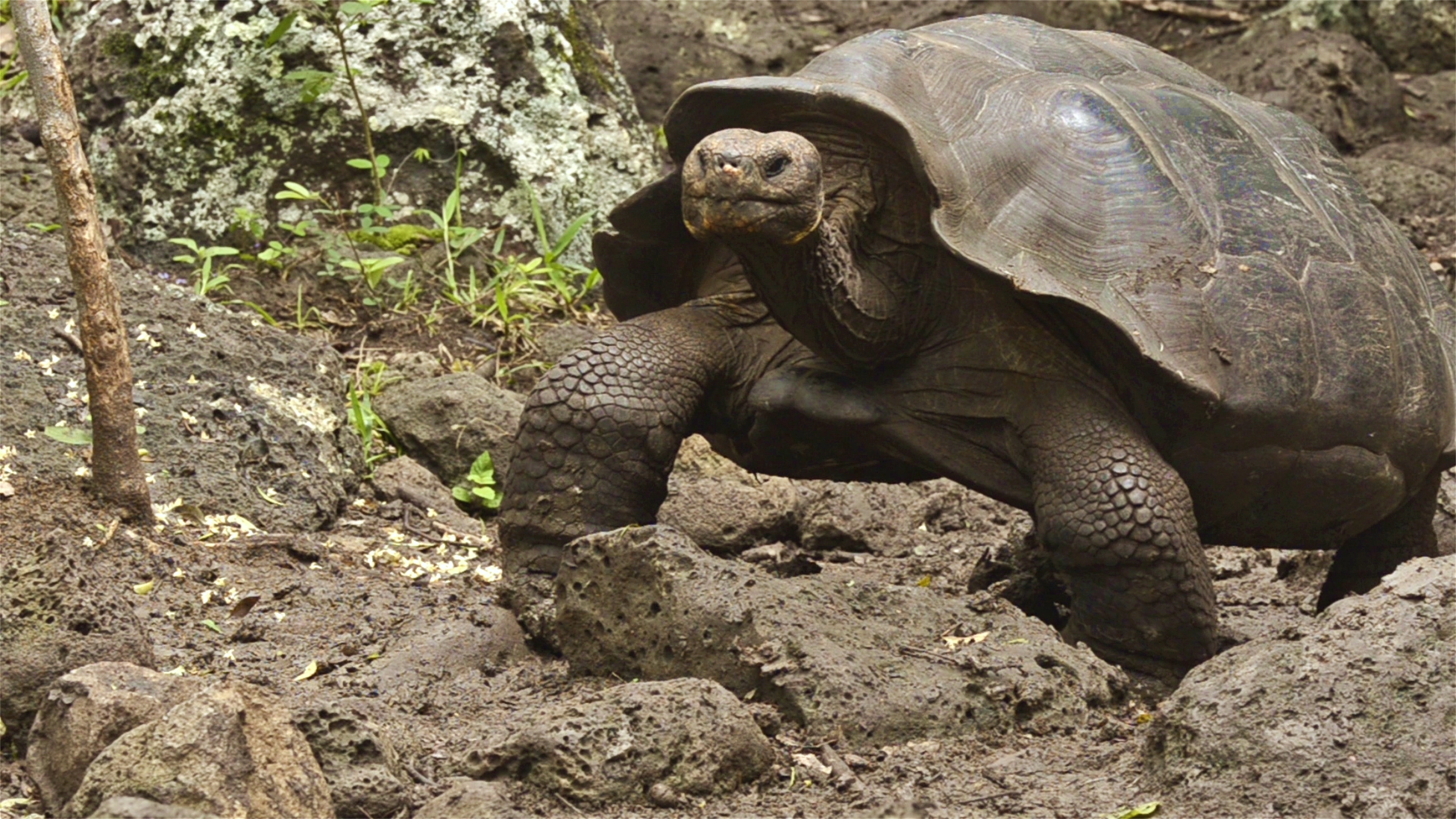
Meanwhile, the Galapagos giant tortoise is the largest of all tortoises and can weigh up to 417 kg (919 lbs). But that’s not the only record they hold. Giant tortoises are the oldest of all terrestrial vertebrates. They can easily reach 100, but some captive specimens may exceed 200 years in age. Johnathan, a Seychelles giant tortoise, hatched from an egg in 1832 and is currently over 190 years old and still going. Another giant tortoise named Adwaita was reportedly 255 years old when he died! In fact, we have a hard time keeping track of their actual ages because they outlive their human caretakers!
Yet, even smaller turtles can live for a long time. Tiny turtles that are kept as pets can easily live 30 years or more. Unfortunately, because pet turtles are such a long-term commitment, careless owners have been know to release them into the wild, and this has had some severe impacts on native species.
Invasive Red-Eared Sliders

The red-eared slider is THE most popular turtle in the pet trade around the world, but as a result, it is also THE most invasive species of turtle around the world. Native to the Midwestern United States, it is now found on every continent except Antarctica and has been displacing native species. If you go to your local park and see some turtles in the pond, there’s a very good chance red-eared sliders are there.
That said, red-eared sliders and other pond turtles are fascinating creatures. Male pond turtles have a unique way of attracting females. In the water, they perform a mating dance, where they flutter their claws in front of the female turtle’s head. If she’s impressed, she’ll allow the male to mate with her, and they’ll both sink to the bottom. If she’s not impressed, she may respond with aggression or indifference.
How Do Turtles Survive Winter?
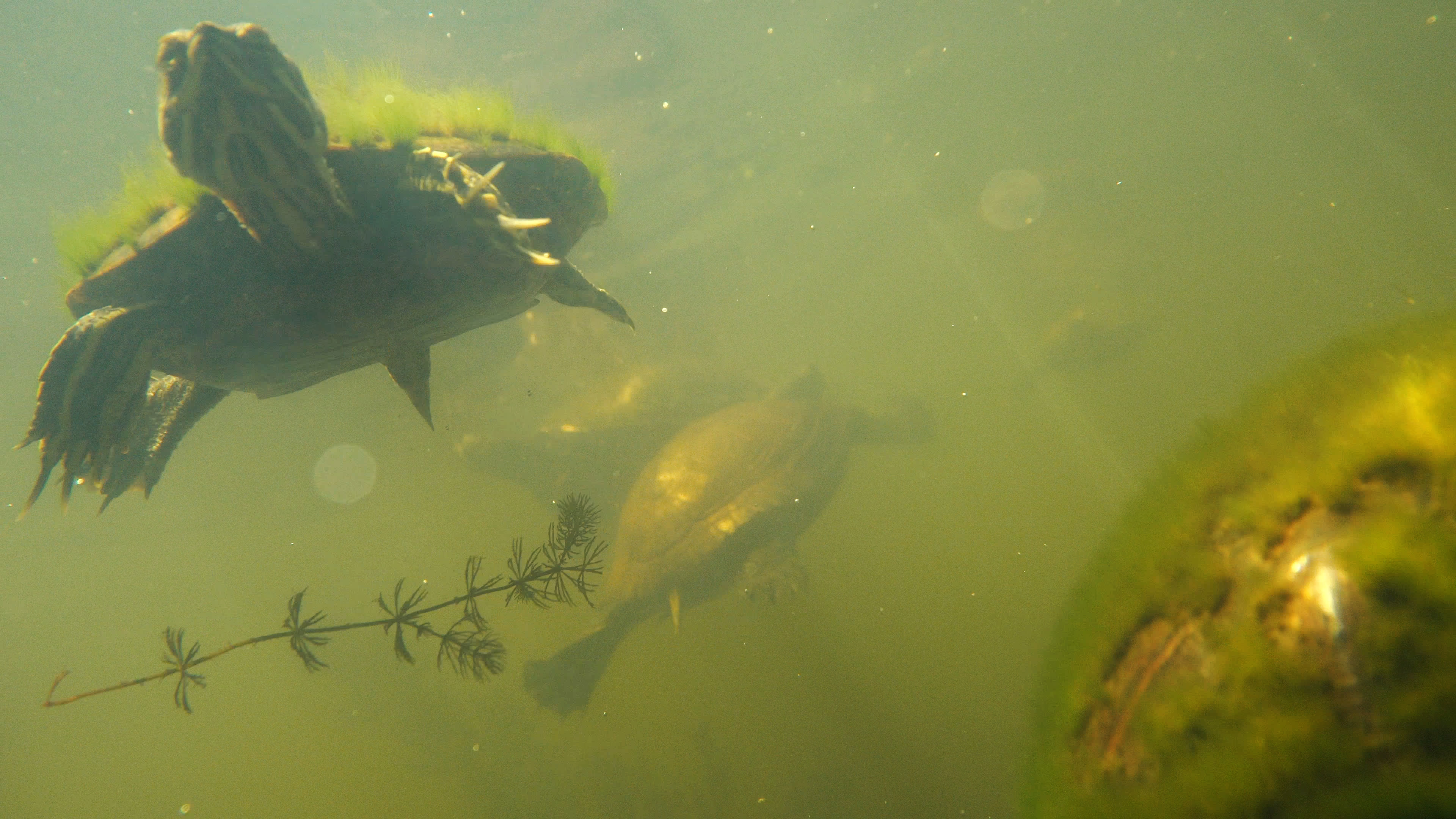
By the end of summer, breeding slows, and so do the turtles. For many species of turtles that have to endure winter, they become inactive once temperatures drop low enough and will brumate. Brumation is a process similar to hibernation, but there are a couple notable differences. One difference is that, if temperatures briefly rise, turtles “wake up” and become active until temperatures fall again. They won’t stay asleep all winter like hibernating mammals.
The other difference is downright miraculous. When turtles brumate, they don’t need nearly as much oxygen as hibernating mammals. In fact, painted turtles can survive up to 170 days underwater without oxygen due to three things: 1.) a lowered metabolic rate, 2.) large glycogen stores in the liver, and 3.) lactic acid created in their shells and carbonate used to buffer it. Other turtles simply breathe through their butts. No, seriously, they have air bladders back there that allow them to absorb oxygen from the water. It sounds fictional, but it’s 100% true. If you don’t believe me, look it up.
How Long Can Sea Turtles Stay Underwater?

Speaking of breathing underwater, sea turtles lack this ability. They have to actually go to the surface and breathe. (Crazy, I know.) They can hold their breath for a while, but it depends on their activity levels. If they’re swimming and foraging for food, they generally stay down anywhere from 5 to 40 minutes. But, if they’re sleeping or conserving energy, they can stay underwater for 4 to 7 hours. Loggerhead sea turtles in the Mediterranean Sea have been recording diving for more than 10 hours! Meanwhile, leatherback sea turtles (which, if you remember, are the largest of all turtles) can dive to over 1,250 meters (4100 feet)! That’s the deepest dive of any reptile, and it rivals deep diving mammals, such as the sperm whale!
How Do Tortoises Survive in the Desert?

Out of the water, land lubbering turtles have a different problem. In the deserts of North America, tortoises face extreme conditions day and night. Some species, such as the desert tortoise, spend most of their time in burrows and attain water from eating grasses, wildflowers, and cacti. Remarkably, they have large urinary bladders and can store 40% of their body weight in water, urea, uric acid, and nitrogenous wastes. This allows them to survive a year or more without access to water.
A World Without Turtles?

Unfortunately, despite being tougher than their shells, turtles cannot compete with human development. Among vertebrates, they are second only to primates in percentage of threatened species. Of the 360 species of turtles, 60% of them are threatened or extinct. As of 2021, turtle extinction is progressing faster than the Cretaceous-Tertiary event 66 million years ago. It’s quite telling that turtles survived the extinction of the dinosaurs, but may not survive humanity. If we don’t get it together soon, turtles will only exist in zoos and aquariums.
If you liked this article, please give it a like, leave comment down below, and follow Tidewater Teddy. Thanks, and have a great day!

 Tidewater Teddy