
For many seafarers, the ocean has been a source of inspiration and bliss, but for others, it has been a source of terror and destruction. Since humanity first set out to sea, the volatile waters have claimed countless lives. Yet, not every maritime disaster ends in despair. Against all odds, there are people who have been delivered from a watery grave. Here are six incredible stories of survival at sea.
The Tongan Castaways

In June 1965, six teenage boys from Tonga were sick and tired of their Catholic boarding school, so they stole a 24 foot boat and set out for sea. Everything was going smoothly, so they anchored for the night 10 kilometers north of their island. Then, the storm came. The angry seas snapped their anchor chain, and the furious winds destroyed their rudder and mast.
When the storm passed, they were miraculously all still alive, but they were hopelessly lost at sea. Over the course of 8 days, they drifted 320 kilometers until they sighted an island known as ‘Ata. Their boat was falling apart, so they abandoned it and swam 36 hours to the island’s shore. Once there, the dug a cave and hunted seabirds for meat, blood, and eggs.
For three months, they were desperate for food and water, but everything changed when they embarked on a two day climb to the island’s volcanic crater. Here, they discovered the ruins of a village from the 1800s and harnessed its resources. They found feral chickens, wild taro, and bananas, and they captured rainwater in hollowed-out tree trunks.
Soon, they began creating their own thriving community. The two eldest boys became their leaders, one as a spiritual leader and the other as a practical leader. From there, they divided up into pairs and worked garden, kitchen, and guard duty. Other than a failed attempt to leave on a makeshift raft, this was their life on the island.
Then, on 11 September 1966, an Australian fisherman, who was passing by ‘Ata Island, noticed patches of burned grass on the cliffs. Peering through his binoculars, he saw the naked and disheveled boys running around. He’d heard that serious criminals were often marooned on remote islands, so he cautiously motored his fishing vessel closer to the island. That’s when one of the boys swam to him and explained the situation in English.
After verifying their stories, he ended up rescuing the boys, who had been marooned for over a year and were presumed dead. When they made it back to Tonga, the boys were all deemed healthy, and many huge feasts were held in celebration of their miraculous survival. This incident proved that, even in the worst circumstances, we can work together in harmony without giving in to our corrupt desires.
José Salvador Alvarenga
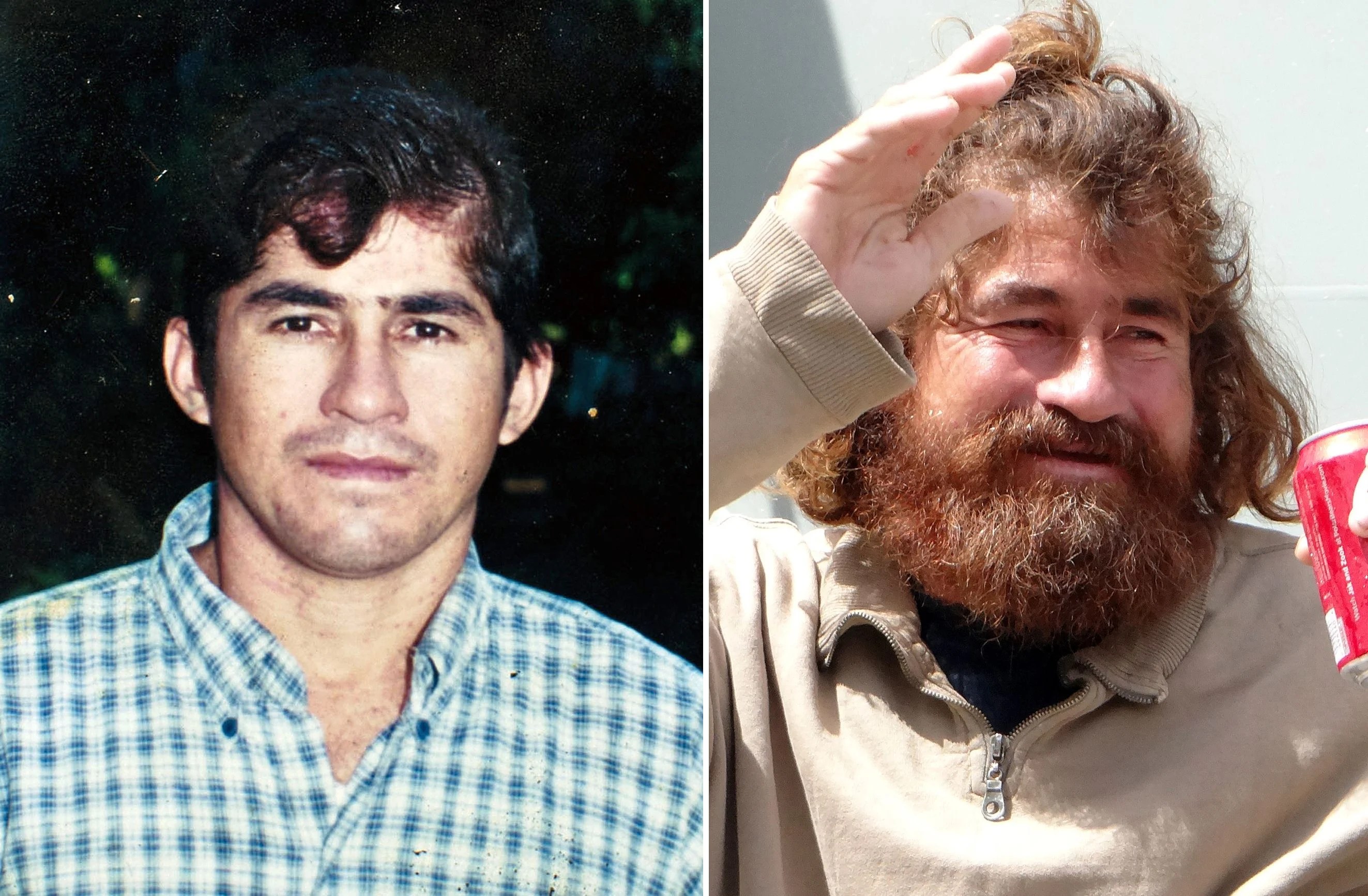
On 17 November 2012, two fishermen motored out of the village of Costa Azul in Mexico on what was supposed to be a 30 hour deep sea fishing trip. The fishermen, José Salvador Alvarenga and Ezequiel Córdoba, shared a topless 23 foot fiberglass skiff with a single outboard motor and a refrigerator sized icebox for storing fish. Not long after they left, they had incredible success fishing and caught nearly 500 kilograms of fish. But that success was short-lived.
Dark clouds rolled in, and a storm bore down upon them. In the raging waters, they were forced to dump all of their catch to make their boat more maneuverable. José managed to call his boss on their two-way radio before the battery died, but the storm had blown them so far off course that the search party couldn’t find them.
After five days, the storm finally passed, but it had damaged their motor, their fishing gear, and most of their portable electronics. To make matters worse, they didn’t have any oars, sails, or running lights. They didn’t even have an anchor. They only had a handful of basic supplies and food. They were at the mercy of the sea.
José was a seasoned sailor and, as a result, was very resourceful. Using his bare hands, he caught fish, turtles, jellyfish, and seabirds for them to eat, although they had no means of cooking, so they had to eat everything raw. He salvaged plastic from the water and collected rainwater to drink. Unfortunately, more often than not, they had to drink turtle blood or their own urine to stay hydrated.
All of this was understandably difficult for Ezequiel, a 23 year old who had little experience at sea. After four months, he became sick of eating raw food and refused to eat anymore. He eventually died of starvation, but before he did, he made José promise not to eat his corpse. José honored his promise and did not touch Ezequiel’s body.
For nearly a week, he contemplated ending his life, but due to his Christian faith, he decided against it. However, he did start speaking to Ezequiel’s corpse and became worried he was going insane. So, after six days, he threw it overboard.
Months passed. José had no way of telling the date or time, so instead, he counted the phases of the moon to keep track of time. By the 15th lunar cycle, he spotted land. This was Ebon Atoll in the Marshall Islands. Eventually, he made it to the shore, where he was discovered by two locals. It was 30 January 2014, 438 days after he and Ezequiel were lost at sea. He is the first person in recorded history to survive for over a year in a small boat at sea. His journey from Mexico to the Marshall Islands was over 9,000 kilometers!
Harrison Okene
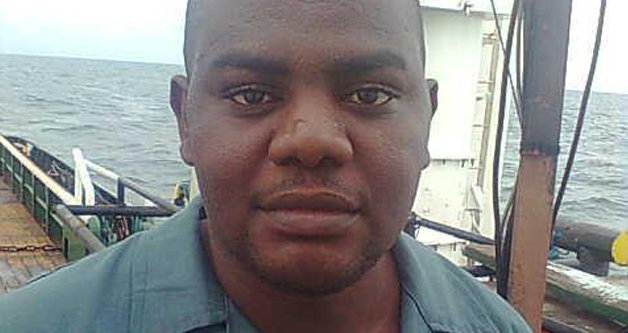
Early in the morning on 26 May 2013, the Jascon-4, a tugboat operated by West African Ventures, was stabilizing an oil tanker 30 kilometers off the coast of Nigeria. In the heavy seas, the tugboat’s cook, Harrison Okene, woke up and shuffled out of bed to go to the bathroom. Suddenly, he was thrust off the toilet when a huge wave struck the vessel and capsized it. As the boat filled water, he had little time to react, but miraculously, an air pocket formed nearby, so he took refuge in it.
When boat finally settled on the seafloor, Harrison was basically in a horror movie. Inside the sunken ship, he was alone and freezing in the cold, dark water. He attempted to leave his air pocket to escape, but there was nowhere else for him to go. Worse yet, all eleven of his crew mates had drowned, and he heard fish (possibly sharks) eating their bodies. In this hopeless hellscape, he could only pray to God for deliverance.
Three days later, lights appeared in the darkness. Three South African divers had come to investigate the wreck and recover bodies. They were shocked when they discovered Harrison alive and immediately arranged for his rescue. They fitted him with a diving helmet and transferred him to a closed diving bell that took him to the surface.
Because he’d been underwater for days, he was at risk of decompression sickness, so he needed to be slowly readjusted to the surface. To do this, he had to stay inside the diving bell for another three days while a life support technician watched over him, but after that, he was able to return to life as normal. Despite his traumatic experience, he did not let fear overtake him. Today, he has returned to the sea as a commercial diver, just like the divers who rescued him in 2013.
The Apostle Paul

Let’s wind back the clock a couple thousand years and hear the story of a man named Paul. Yeah, that one. The apostle Paul from the Bible. Paul was aboard an Alexandrian ship en route to Rome to face charges for his alleged crimes. Winter was nearing, and the seas were becoming hazardous, so Paul warned the crew, “Men, I can see that our voyage is going to be disastrous and bring great loss to ship and cargo, and to our own lives also.” Acts 27:10. But no one listened to him, and when the weather improved, they sailed along the shores of Crete.
Soon after, they were caught in a terrible storm with hurricane force winds and violent seas. They were battered for days , and the crew gave up all hope, but Paul encouraged them. He said, “Men, you should have taken my advice not to sail from Crete; then you would have spared yourselves this damage and loss. But now I urge you to keep up your courage, because not one of you will be lost; only the ship will be destroyed. Last night an angel of the God to whom I belong and whom I serve stood beside me and said, ‘Do not be afraid, Paul. You must stand trial before Caesar; and God has graciously given you the lives of all who sail with you.’ So keep up your courage, men, for I have faith in God that it will happen just as he told me. Nevertheless, we must run aground on some island.” An ran aground they did.
On the fourteenth night of their ordeal, the crew took soundings and realized the water was getting progressively shallower. Fearing they’d crash onto the rocks, they dropped four anchors at the stern. Then, they pretended to lower anchors at the bow while they lowered their lifeboat into the sea, so they could escape. But Paul noticed them and said, “Unless these men stay with the ship, you cannot be saved.” So the crew cut the ropes and let the lifeboat drift away.
Then, Paul encouraged everyone to eat because they had not eaten in fourteen days. He took some bread, gave thanks to God, and ate in front of everyone. So all 276 men aboard ate their fill and threw the remaining grain into the sea, lightening the ship. Then, at dawn, they saw an unknown land, which was modern day Malta. They attempted to reach the beach but ended up running aground on a sandbar, so they had to swim to shore.
“The soldiers planned to kill the prisoners to prevent any of them from swimming away and escaping. But the centurion wanted to spare Paul’s life and kept them from carrying out their plan. He ordered those who could swim to jump overboard first and get to land. The rest were to get there on planks or on other pieces of the ship. In this way everyone reached land safely.” This was just as Paul had said.
Violet Jessop

Violet Jessop was a typical 20 something working as a stewardess aboard luxury ships in the early 1900s. One day, while working aboard the RMS Olympic, her ship collided with a British warship named the HMS Hawke. There were no casualties, but it was not a good start to her career. It only got worse from there.
Her next next ship was the Olympic’s sister ship, the Titanic. You already know what happened there. But did you know that, not only did Violet survive the infamous sinking of the Titanic, but she also rescued a baby? She was ordered into Lifeboat 16, and a ship’s officer then handed her a baby. When the Carpathia rescued the Titanic survivors, a woman onboard grabbed the baby (probably the baby’s mother) and ran off crying.
After her workplace sank to the bottom of the Atlantic, she got a job as a stewardess for the British Red Cross on the HMHS Britannic, a floating hospital and the sister ship to both the Olympic and the Titanic. Surely, after surviving the sinking of the Titanic, nothing could be worse, right? Wrong.
While cruising through the Aegean Sea off Greece on 21 November 1916, the Britannic struck a naval mine and sank in 55 minutes. Violet managed to make it into a lifeboat but quickly had to abandon it when the lifeboat collided with the ship’s spinning propellers and was shredded to pieces. Remarkably, two other Titanic survivors, Arthur John Priest and Archie Jewell, were also aboard the Britannic and managed to survive the sinking as well.
You’d think, after these incidents, Violet would have sworn off going back to sea, but she went right back out in 1920. She continued working on ships and even went on two cruises around the world on the SS Belgenland. In 1950, she retired and lived a normal life in England.
The Endurance
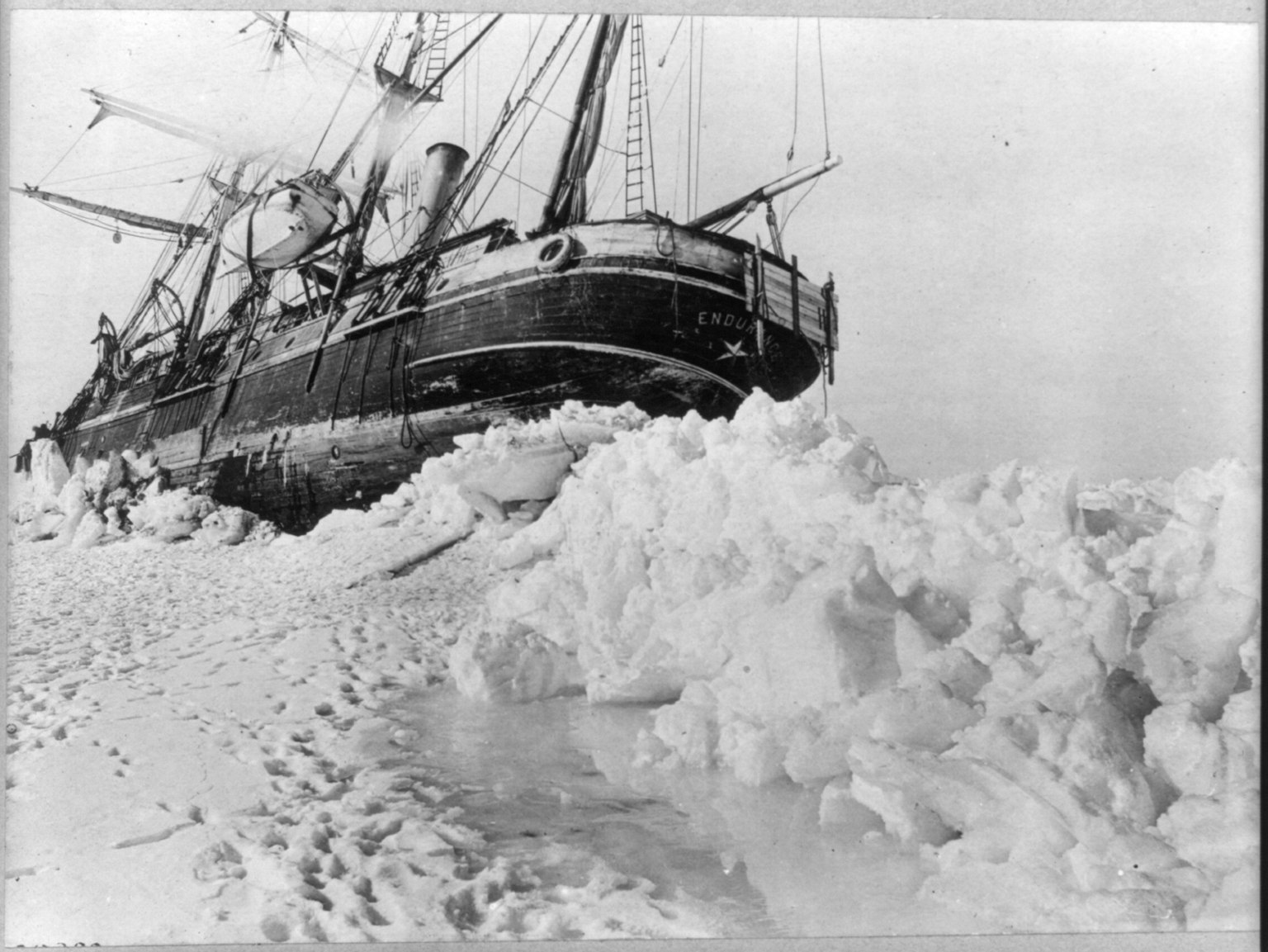
While Violet Jessop was working aboard ill-fated luxury liners, adventurers from around the world were scrambling to explore Antarctica. In 1914, British explorer Sir Ernest Shackleton and 27 other men departed South Georgia Island and sailed for Antarctica in an attempt to trek across the frozen continent by land. However, their ship, the Endurance, became trapped in ice before they even made it ashore, and they drifted on pack ice in the Weddell Sea for nearly a year. Eventually, on 27 October 1915, the Endurance was crushed by the sea ice and soon after sank to a depth of over 3,000 meters.
Now focused solely on survival in subzero temperatures, the men attempted to march across the ice to a handful of islands that may have food stores. Unfortunately, those islands were all over 500 kilometers (310 miles) away, and the men only were averaging 11 kilometers (7 miles) a day. Shackleton saw the writing on the wall and said, “It would take us over three hundred days to reach the land” and called the march to a halt. They then setup camp on the ice and named it “Patience Camp”.
For over three months, they remained at Patience Camp, but by April 1916, the ice beneath them was starting to break up. They had three 22 foot lifeboats from the Endurance, so they piled into them and made a perilous journey to Elephant Island. Elephant Island was remote and uninhabited, so they would have to summon help. The men decided to outfit one of the lifeboats, the James Caird, for a 1,300 kilometer (800 mile) voyage across the treacherous Southern Ocean back to South Georgia Island, where the expedition first began in 1914.
Shackleton and 5 other men then left in the specially outfitted lifeboat on 24 April. They battled the elements for two weeks until they reached South Georgia on 10 May. There, they split into two groups of three. Three men camped with the boat while Shackleton and two other men trekked for 36 hours across the mountains to a whaling station called Stromness. Here, they were able to get help from the whalers, who picked up the three men from the other side of the island. Then, they attempted to rescue the 22 remaining men at Elephant Island. After three failed attempts, Shackleton convinced the Chilean Navy to send him on the seatug Yelcho, captained by officer Luis Pardo. On 30 August 1916, nearly two years after the expedition began, they reached Elephant Island and rescued the remaining men.
Despite their hardships, all 28 men survived the failed expedition. Shackleton credited their unbelievable survival to divine providence. He and the two other men even reported seeing a fourth person guiding them on their difficult hike to the whaling station. What’s crazy is that, on the opposite side of Antarctica, the Aurora, the ship that was supposed to assist and pick up Shackleton and his men, also became trapped in ice and floated out to sea. In this case, the shore party, known as the Ross Sea Party, was stuck on Antarctica for eight months before the Aurora (with Shackleton aboard) was able to return to rescue them.
(Bonus) Alexander Selkirk

This one is an honorable mention. Scottish privateer Alexander Selkirk didn’t end up in a shipwreck himself, but he did avoid being in one. In September 1704, he was serving as the sailing master aboard the Cinque Ports under Captain Thomas Stradling. He questioned the seaworthiness of their vessel, which had become dangerously leaky, and asked to be left on the desert island where they were resupplying.
Captain Stradling took him up on his word and left him on the island, even after Selkirk changed his mind. This turned out to be a blessing in disguise because the ship eventually wrecked off Malpelo Island near modern day Colombia, and Captain Stradling and his crew were taken prisoner by the Spanish. Meanwhile, Selkirk ended up surviving four years and four months alone on the island until he was rescued. His story inspired Robinson Crusoe, and the island on which he was marooned is now known as Robinson Crusoe Island.
I hope you found these tales of survival at sea inspirational. We may endure many hardships in our lives, but even in the darkest nights, there’s always a light. Please don’t forget that. If you liked this article, please give it a like, leave a comment down below, and follow Tidewater Teddy! Thanks, and have a great day!

 Tidewater Teddy